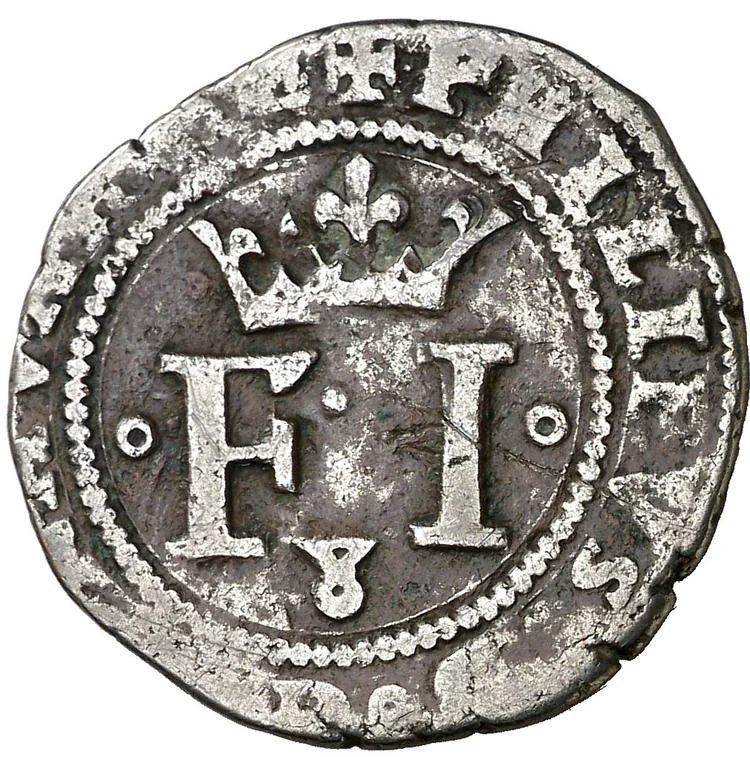
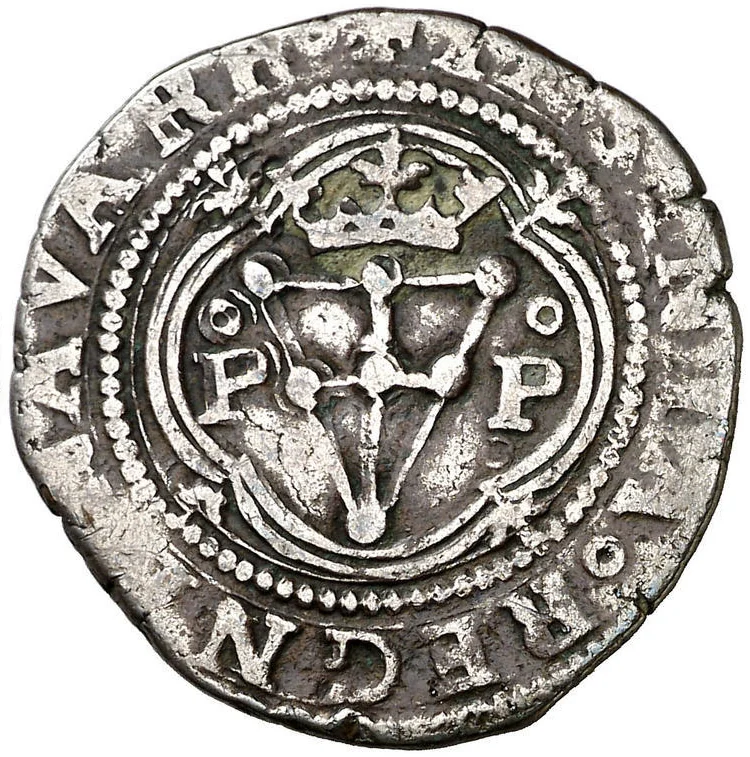
In 1621, the Kingdom of Navarre existed in a complex and unique monetary situation, split between two sovereigns. The lands north of the Pyrenees (Lower Navarre) were part of the Kingdom of France, using the French livre, sol, and denier. Meanwhile, the larger southern territory (Upper Navarre) had been annexed by the Crown of Castile in 1512 and was governed by the Spanish Habsburgs, primarily utilizing the Castilian monetary system based on maravedís and reales. This political division created a fractured economic zone where different currencies circulated on either side of the Pyrenees, complicating trade and administration.
Within Spanish Navarre, the currency in daily use was a mixture of local, regional, and royal coinage. While royal Castilian coins like the silver
real and the gold
escudo were the standard for larger transactions and official purposes, the kingdom also minted its own low-denomination
moneda negra (black money), such as the
liard or
cuartillo. These billon coins (made of copper with a small amount of silver) were essential for small, everyday purchases but were frequently debased, leading to inflation and public distrust. Furthermore, a plethora of foreign coins, particularly French and from other Spanish territories, circulated freely, reflecting Navarre's position as a crossroads.
The year 1621 marked a significant turning point, as it was the first full year of reign for the young King Louis XIII of France in the north and Philip IV of Spain in the south. Both monarchs inherited economies strained by the ongoing Thirty Years' War and domestic fiscal pressures. In Spanish Navarre, this period saw increased royal efforts to control and standardize currency, often clashing with local
fueros (charters) that granted the kingdom certain minting privileges and tax autonomies. Thus, the currency situation was not merely a matter of exchange but a point of tension between centralizing royal authority and traditional Navarrese rights.