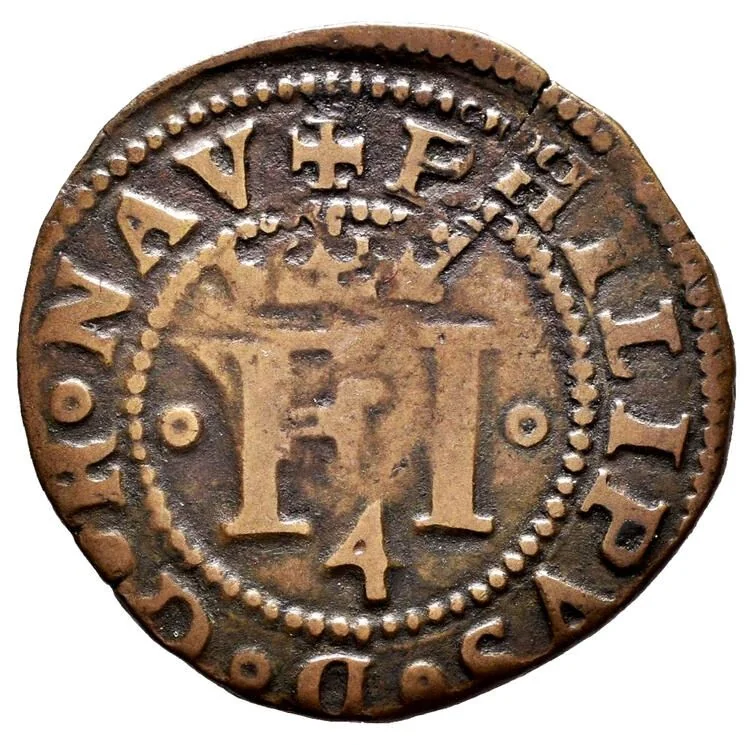
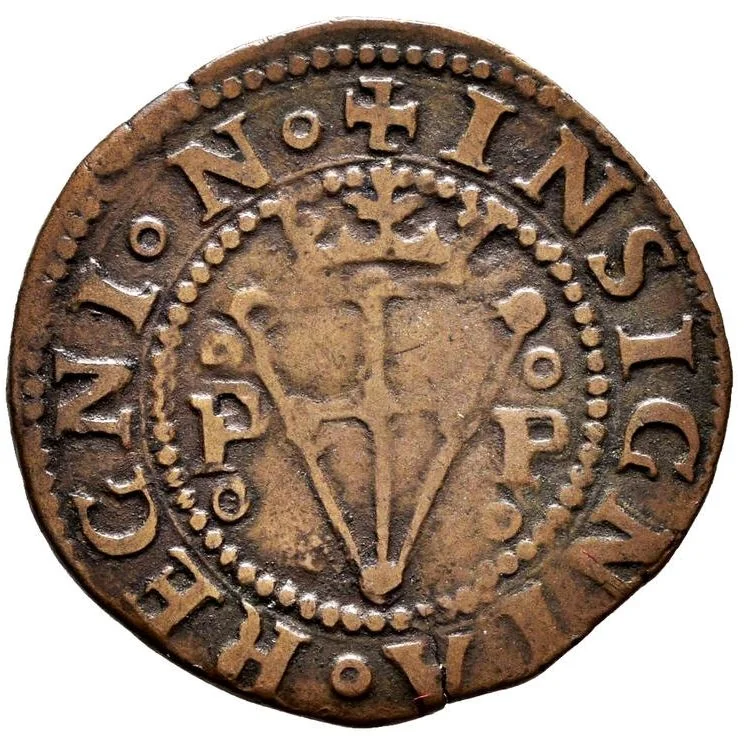
In 1612, the Kingdom of Navarre existed in a complex and transitional monetary state, split by the Pyrenees. Continental Navarre north of the mountains was under the French Crown, while peninsular Navarre to the south had been annexed by the Crown of Castile in 1512 but retained its own laws and institutions. This political division created a dual-currency zone. In the southern realm, the official currency was the
Navarrese pound (libra) subdivided into 20
shillings (sueldos) or 240
diners (dinerales), but in practice, the powerful and abundant currency of neighbouring Castile—the
real and the
maravedí—circulated widely and was essential for larger transactions and trade with the rest of the Iberian Peninsula.
The co-existence of these systems led to chronic problems of valuation and exchange. The intrinsic value of coins (their precious metal content) often differed from their official face value, leading to practices like clipping and the hoarding of "good" coinage. Furthermore, the influx of silver from the Spanish Americas, which flowed through Castile, affected the broader economy but also created inflationary pressures that destabilized local valuations. The
Cortes (parliament) of Navarre and the royal authorities issued frequent ordinances to fix exchange rates between the
libra, the
real, and the
maravedí, but these were difficult to enforce, indicating a constant struggle to maintain monetary order.
Thus, the currency situation in 1612 was one of formal duality but practical multiplicity, characterized by administrative effort and market confusion. The Navarrese monetary system was legally autonomous but economically dependent and permeable, caught between the gravitational pull of the massive Castilian economy and the need to manage its own local transactions. This unstable equilibrium reflected the kingdom's broader political reality: a distinct realm trying to preserve its identity while being increasingly integrated into the fiscal and commercial orbit of the Spanish Habsburg monarchy.