Logo Title
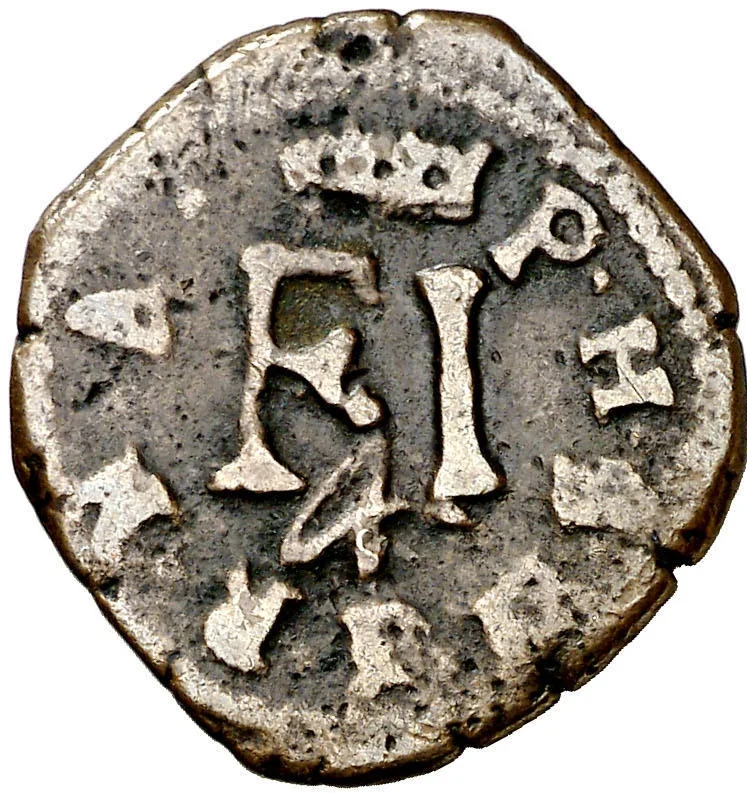
obverse
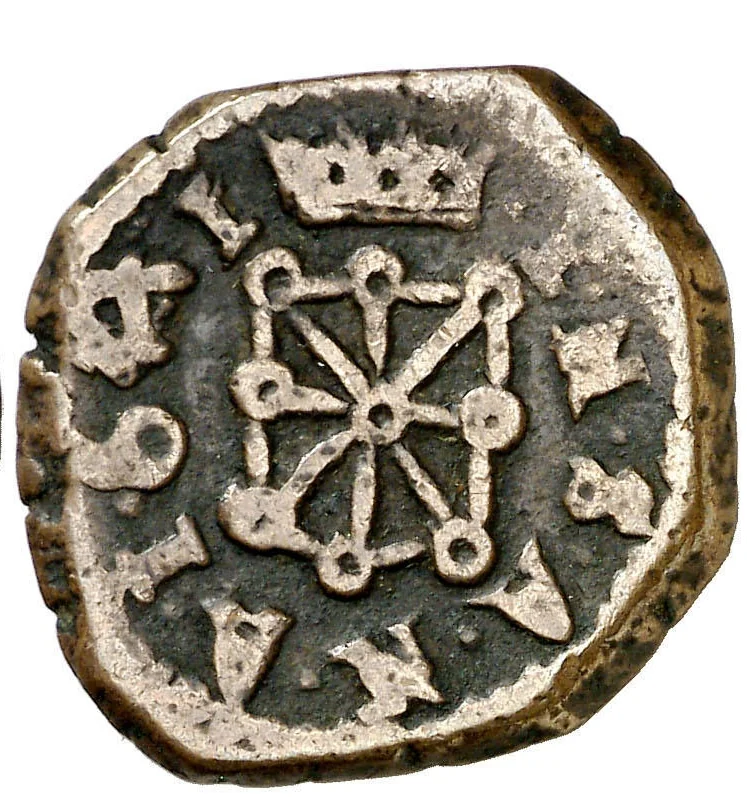
reverse
Aureo & Calicó S.L., subastas numismáticas

4 Deniers – Kingdom of Navarre

Spain
Context
Years: 1641–1653
Country: Spain Country flag
Ruler: Philip VI
Currency:
Demonetized: Yes
Material
Weight: 1.7 g
Composition: Copper
Magnetic: No
Technique: Hammered
References
KM: #Click to copy to clipboard30
Numista: #109780

Obverse

Description:
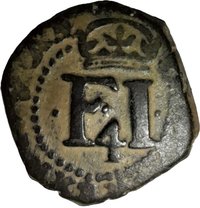
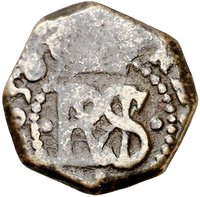
Crowned FI monogram. Value in beaded circle, legend around.
Inscription:
PHS D G REX NAVARRA
Script: Latin

Reverse

Description:
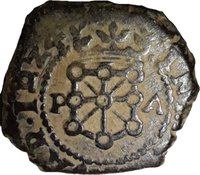
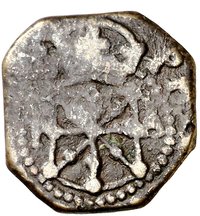
Crowned arms between P and A within beaded circle, legend and date around.
Inscription:
INSIGNIA REGNI NAVARRAE 1641
Script: Latin

Edge

Mints

NameMark
Pamplona

Mintings

YearMint MarkMintageQualityCollection
1641
1644
1645
1650
1651
1652
1653

Historical background

In 1641, the Kingdom of Navarre was a fractured polity, divided between its northern and southern parts. The lands north of the Pyrenees, known as Lower Navarre or Navarra Continental, were under French sovereignty following their conquest in 1512 and subsequent confirmation in the Treaty of the Pyrenees (1659). Here, the currency situation was integrated into the French monetary system, with the livre tournois as the primary unit of account, though local and Spanish coins still circulated due to cross-border trade and historical ties.

The southern region, Upper Navarre (Navarra Peninsular), was a semi-autonomous kingdom (reino) within the Spanish Habsburg Monarchy. Its currency was therefore part of the broader, and deeply troubled, Spanish monetary system. By 1641, Spain was embroiled in the Thirty Years' War and the concurrent revolts of Portugal and Catalonia (the Reapers' War), which placed immense fiscal strain on the crown. This led to repeated debasements of the ubiquitous silver real and the issuance of vast quantities of low-value vellón (copper) coinage, causing severe inflation and a loss of confidence in the currency.

Consequently, in both parts of Navarre, 1641 was a period of monetary instability and complexity. In the south, prices were distorted by the flood of copper coins and the scarcity of silver, disrupting local economies. In the north, while more stable under France, the monetary environment was still one of heterogeneity, with multiple foreign coins in circulation. Across the entire Pyrenean region, the economic dislocation of the mid-17th century wars meant that trade and daily transactions in Navarre were conducted amidst a confusing mix of depreciating coins, reflecting the kingdom's divided political status and the wider crisis of the Spanish Empire.
Legendary