

10 Cash – Kiangsi Province
China
Context
Year: 1912
Country: China 
Issuer: Kiangsi Province
Period:
(1912—1949)
Currency:
(1902—1949)
Demonetized: Yes
Material
References
Y: #Click to copy to clipboard412a
Numista: #93183
Obverse
Description:
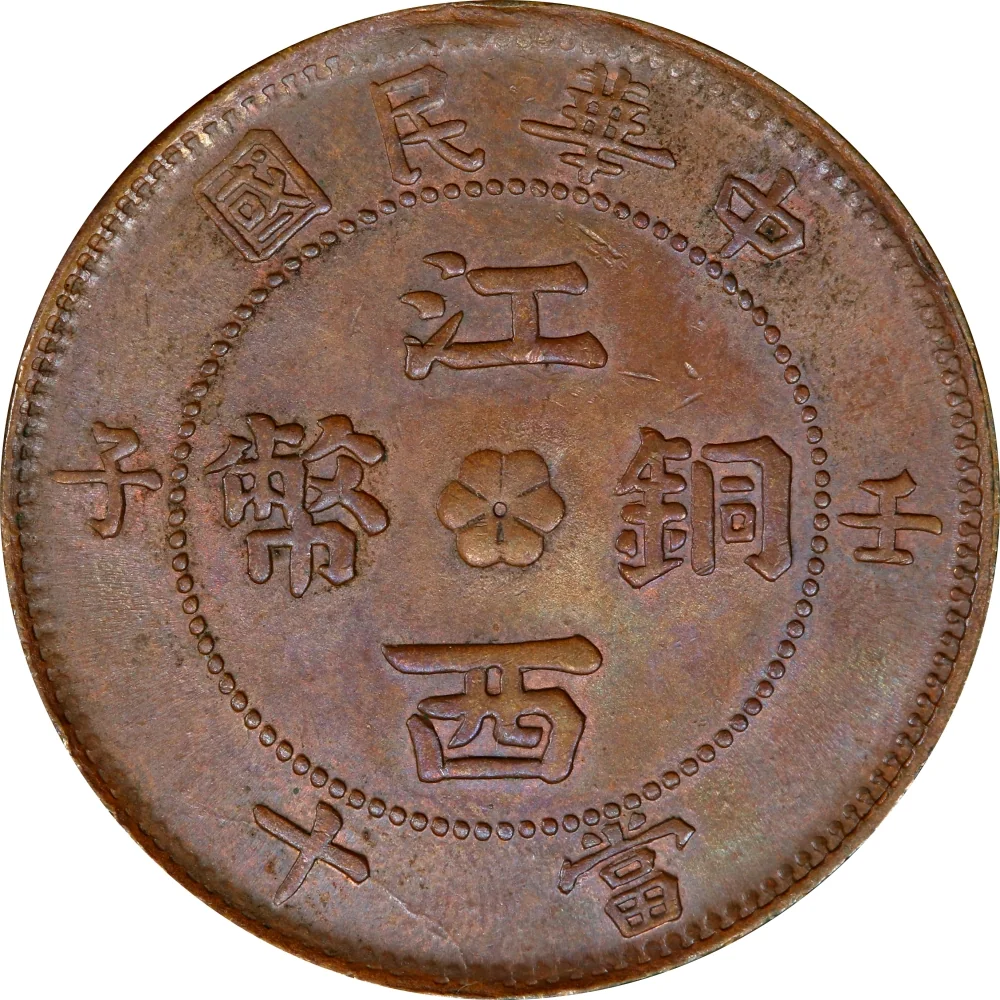
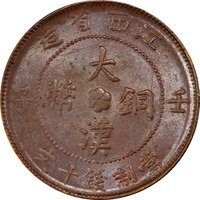
Four Chinese characters read vertically, centered around a flower, surrounded by more characters.
Inscription:
國民華中
子壬
江
幣銅
西
十當
子壬
江
幣銅
西
十當
Translation:
Tenth Year of the Republic of China
Made in Guangxi
Ten Cents
Copper Coin
Made in Guangxi
Ten Cents
Copper Coin
Language: Chinese
Reverse
Description:
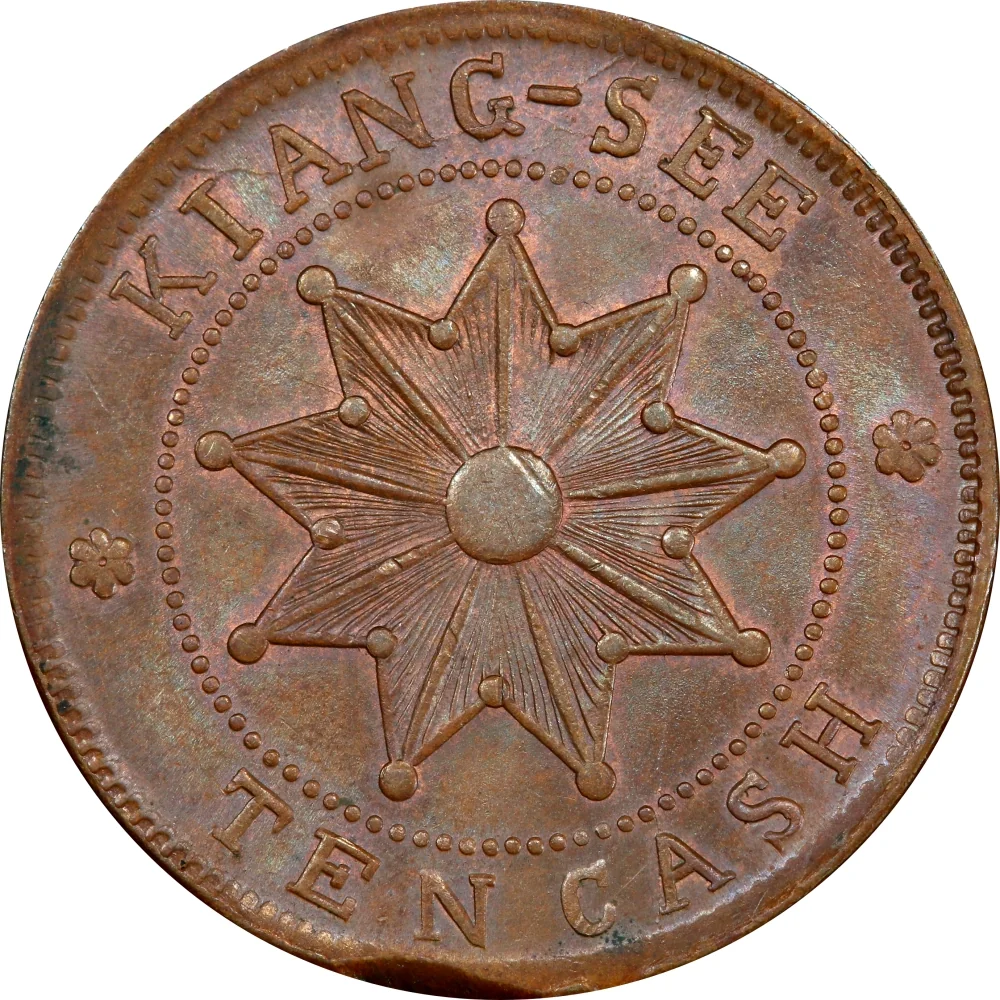
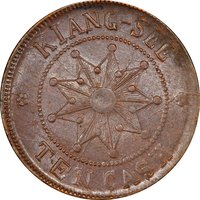
Nine-pointed star encircled by English text.
Inscription:
KIANG-SEE
TEN CASH
TEN CASH
Edge
Plain
Mintings
| Year | Mint Mark | Mintage | Quality | Collection |
|---|---|---|---|---|
| 1912 | — | — |
Historical background
Following the collapse of the Qing Dynasty in 1911, Kiangsi (Jiangxi) Province in 1912 was plunged into the chaotic monetary landscape that defined early Republican China. The province operated under a fractured system where traditional silver sycee (ingots), copper cash coins, and a multitude of privately issued banknotes from local "native banks" and merchant guilds all circulated simultaneously. This created significant complexity in trade, as the value and authenticity of each medium required expert assessment, and exchange rates fluctuated wildly between cities and even towns.
The new Republican authorities in Kiangsi, like those in other provinces, attempted to assert monetary control by authorizing the local Bank of Kiangsi to issue official provincial banknotes. These notes were intended to replace the heterogeneous private issues and fund the new administration's operations. However, lacking sufficient silver reserve backing and issued amidst political instability, these notes quickly suffered from depreciation and weak public confidence. Their circulation was often limited to the provincial capital of Nanchang and major commercial centers, failing to unify the wider provincial economy.
Consequently, the foundational currency of high-value transactions remained silver, primarily in the form of imported foreign silver dollars (like Mexican Eagles) and older Chinese dragon dollars, which were trusted for their standardized weight and purity. The result was a deeply unstable dual-system: a fragile, politicized paper currency for official and some commercial use, underpinned by a resilient but cumbersome silver-based system for securing real value. This instability hampered economic recovery and integration, reflecting Kiangsi's struggle to transition from imperial monetary practices to a modern, unified financial system amidst the wider turmoil of the Republic's infancy.
The new Republican authorities in Kiangsi, like those in other provinces, attempted to assert monetary control by authorizing the local Bank of Kiangsi to issue official provincial banknotes. These notes were intended to replace the heterogeneous private issues and fund the new administration's operations. However, lacking sufficient silver reserve backing and issued amidst political instability, these notes quickly suffered from depreciation and weak public confidence. Their circulation was often limited to the provincial capital of Nanchang and major commercial centers, failing to unify the wider provincial economy.
Consequently, the foundational currency of high-value transactions remained silver, primarily in the form of imported foreign silver dollars (like Mexican Eagles) and older Chinese dragon dollars, which were trusted for their standardized weight and purity. The result was a deeply unstable dual-system: a fragile, politicized paper currency for official and some commercial use, underpinned by a resilient but cumbersome silver-based system for securing real value. This instability hampered economic recovery and integration, reflecting Kiangsi's struggle to transition from imperial monetary practices to a modern, unified financial system amidst the wider turmoil of the Republic's infancy.
💎 Extremely Rare