

½ rupee – Bhutan
Add to wishlist
Bhutan
Context
Years: 1950–1955
Issuer: Bhutan
Ruler: Jigme Dorji
Currency:
(1789—1957)
Demonetized: Yes
Total mintage: 10,201,957
Material
References
KM: #
Numista: #9170
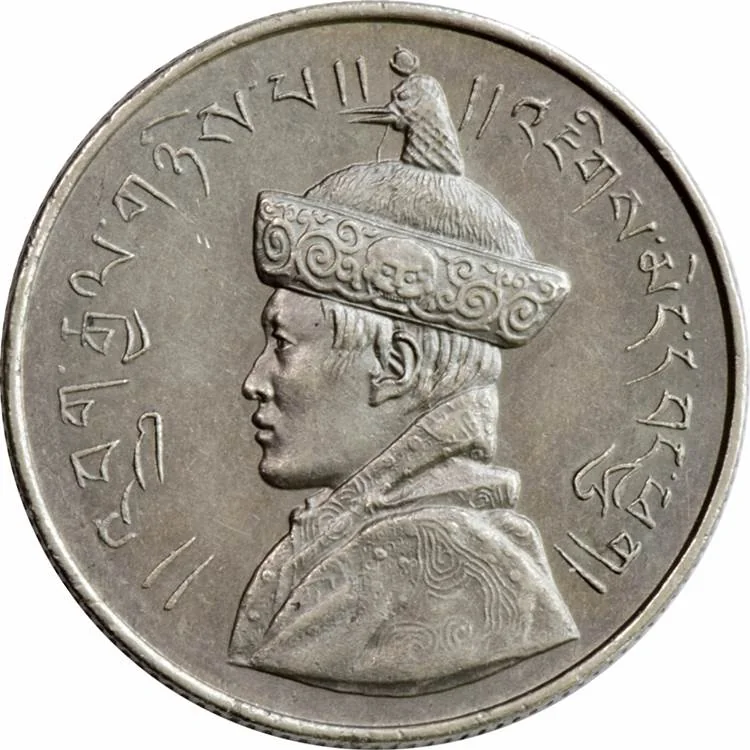
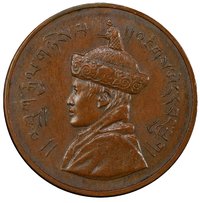
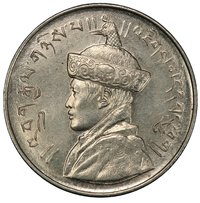
Obverse
Description:
King Jigme Wangchuck left-facing crowned bust.
Inscription:
། ། འ བྲུ ག ་ རྒྱ ལ ་ ཁ ཉི ས ་ པ ། ། ། ། འ ཇི ག ས ་ མེ ད ་ ད བ ང ་ ཕྱུ ག །
Translation:
། ། འབྲུག་རྒྱལ་ཁཉིས་པ། །
King of Bhutan the Second.
། ། འཇིགས་མེད་དབང་ཕྱུག །
Jigme Wangchuck.
King of Bhutan the Second.
། ། འཇིགས་མེད་དབང་ཕྱུག །
Jigme Wangchuck.
Script: Tibetan
Language: Tibetan
Engraver: Albert Pearson Spencer
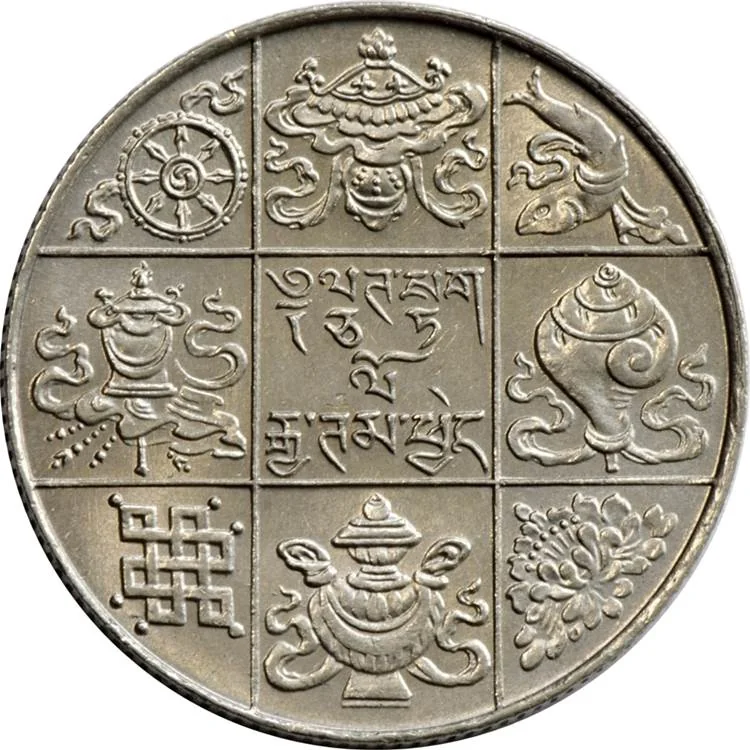
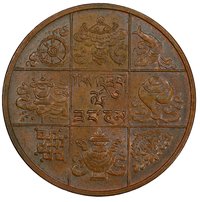
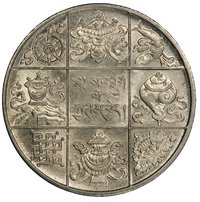
Reverse
Description:
Nine sections: eight outer panels display the Ashtamangala symbols, with a three-line legend in the center. The symbols, clockwise from top left, are: Dharma Wheel, sovereignty umbrella, golden fish, conch shell, lotus, treasure vase, endless knot, and victory banner.
Inscription:
༆ལྕཊ་སྟག
ལོ
རྒྱ་ཊམ་ཕྱེད
ལོ
རྒྱ་ཊམ་ཕྱེད
Translation:
Half Tanka of the Tiger Year.
Script: Tibetan
Language: Tibetan
Edge
Reeded
Mints
| Name | Mark |
|---|---|
| Kolkata / Calcutta / Murshidabad | — |
Mintings
| Year | Mint Mark | Mintage | Quality | Collection |
|---|---|---|---|---|
| 1950 | — | 10,000,000 | ||
| 1955 | — | 201,957 |
Historical background
In 1950, Bhutan's currency situation was one of transition and dual circulation, deeply influenced by its historical ties to British India. The country had no independent national currency; instead, the primary medium of exchange was the Indian Rupee (INR), which had been formally adopted under the 1910 Treaty of Punakha. This made Bhutan's economy functionally an extension of the Indian monetary zone, with silver and copper coins from India, alongside Bhutan's own archaic silver chetrum coins, circulating informally in rural areas. The rupee's dominance facilitated all official trade and government accounts, binding Bhutan's financial stability directly to India's.
Simultaneously, a traditional barter economy persisted, particularly in remote regions. Taxes and local trade were often settled in kind—with rice, butter, wool, and other agricultural goods—reflecting a subsistence economy not yet fully monetized. The Bhutanese government, under the Wangchuck monarchy, recognized the limitations of this system for modern state-building and economic development. However, the nation lacked the minting capability, central bank, or formal financial institutions to issue or manage a sovereign currency.
This period set the crucial preconditions for future monetary reform. The reliance on the Indian Rupee and the evident need for a symbolic instrument of national sovereignty would lead, just over a decade later, to the creation of the Ngultrum in 1974. The 1950 currency landscape, therefore, was defined by its dependency, with the Indian Rupee serving as the practical currency of the state while traditional systems endured, awaiting a deliberate push toward financial modernization that would emerge in the coming decades.
Simultaneously, a traditional barter economy persisted, particularly in remote regions. Taxes and local trade were often settled in kind—with rice, butter, wool, and other agricultural goods—reflecting a subsistence economy not yet fully monetized. The Bhutanese government, under the Wangchuck monarchy, recognized the limitations of this system for modern state-building and economic development. However, the nation lacked the minting capability, central bank, or formal financial institutions to issue or manage a sovereign currency.
This period set the crucial preconditions for future monetary reform. The reliance on the Indian Rupee and the evident need for a symbolic instrument of national sovereignty would lead, just over a decade later, to the creation of the Ngultrum in 1974. The 1950 currency landscape, therefore, was defined by its dependency, with the Indian Rupee serving as the practical currency of the state while traditional systems endured, awaiting a deliberate push toward financial modernization that would emerge in the coming decades.
🌱 Very Common