

50000 Yen – Japan
Non-circulating coins
Commemoration: Wedding of Crown Prince Naruhito and Masako Owada
Japan
Context
Year: 1993
Japanese - Heisei era Year: 5
Issuer: Japan 
Ruler: Heisei
Currency:
(since 1871)
Total mintage: 2,000,000
Material

References
Y: #Click to copy to clipboard109
Numista: #84829
Value
Exchange value: 50000 JPY = $320.39
Bullion value: $2999.36
Inflation-adjusted value: 57763.50 JPY
Obverse
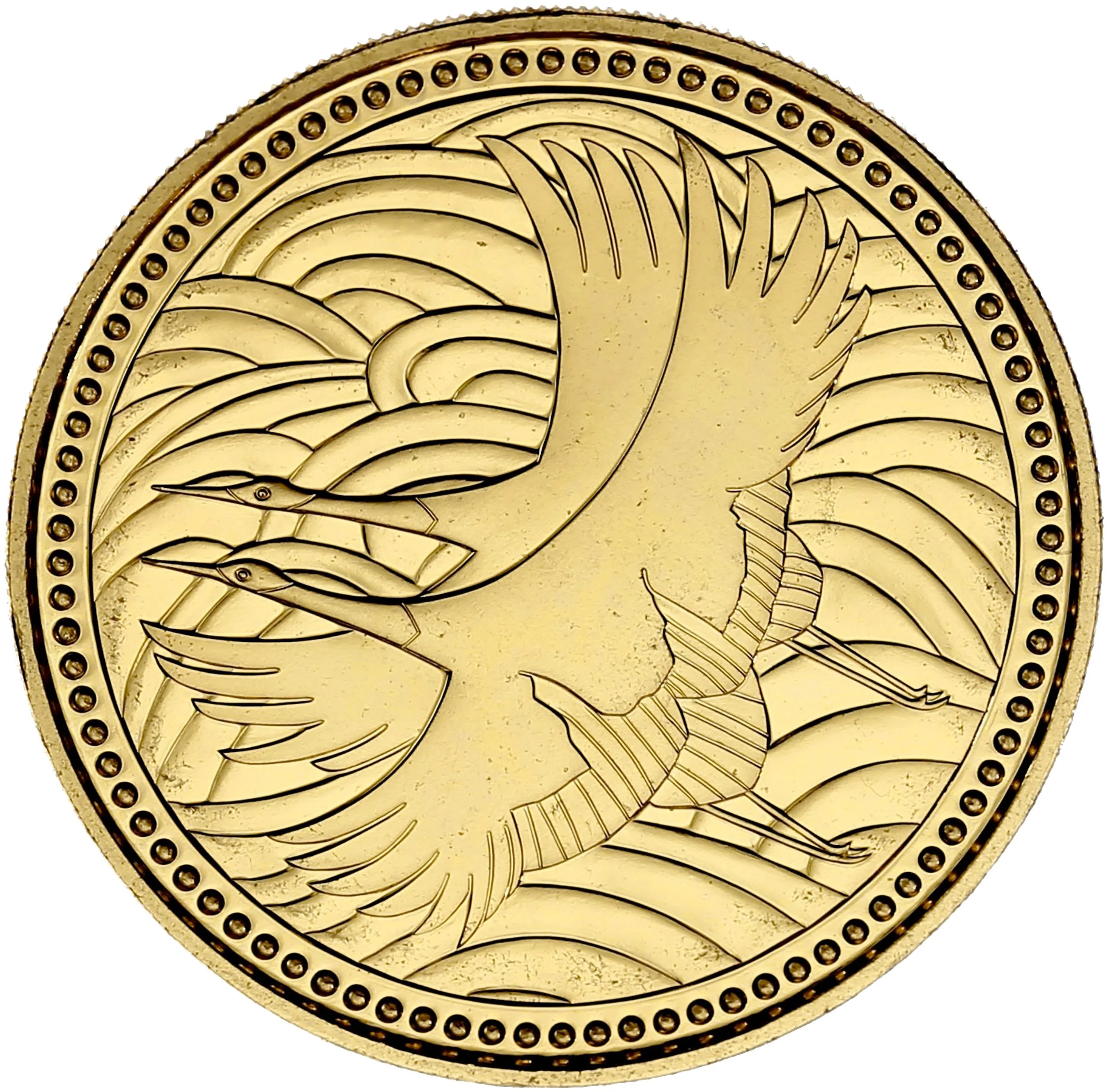
Description:
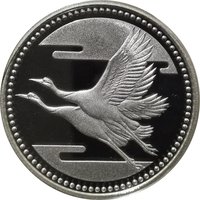
Herons on a stylized wave.
Reverse
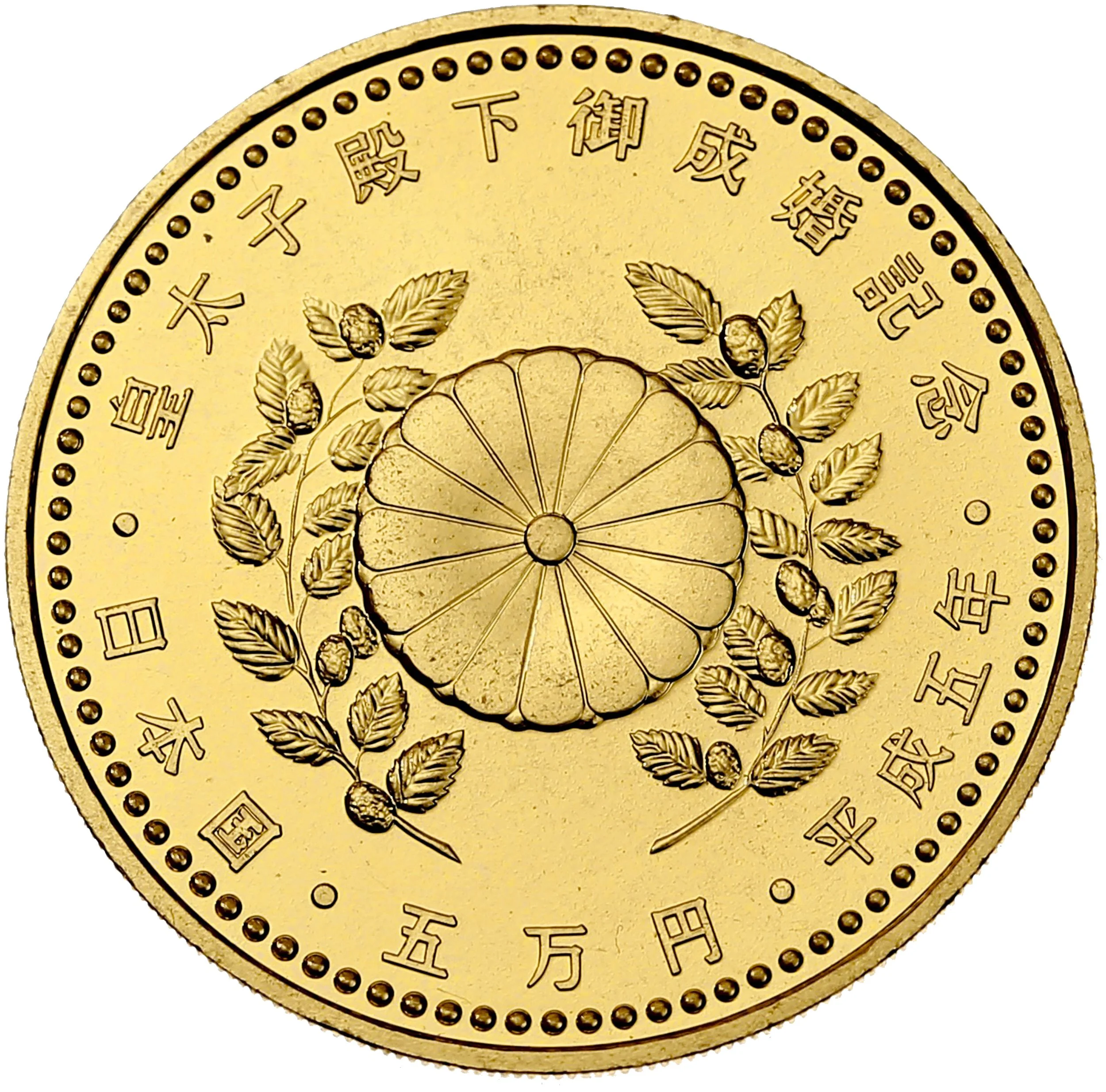
Description:
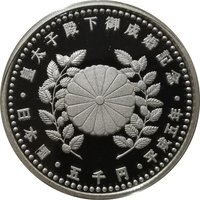
The Crown Prince's personal emblem, featuring the Imperial Chrysanthemum Crest with Catalpa sprigs.
Inscription:
• 皇太子殿下御成婚記念 •
日 本 国 • 五万円 • 平成五年
日 本 国 • 五万円 • 平成五年
Translation:
His Imperial Highness the Crown Prince's Marriage Commemoration;
Japan; 50,000 Yen; Heisei 5
Japan; 50,000 Yen; Heisei 5
Language: Japanese
Edge
Reeded
Mintings
| Year | Mint Mark | Mintage | Quality | Collection |
|---|---|---|---|---|
| 1993 | — | 1,900,000 | ||
| 1993 | — | 100,000 | Proof |
Historical background
In 1993, Japan's currency situation was dominated by the aftermath of the asset price bubble's collapse and the beginning of a prolonged period of economic stagnation known as the "Lost Decade." The yen (¥) was experiencing a period of significant and volatile appreciation, driven not by domestic economic strength but by external pressures and capital flows. The most dramatic event was the yen's sharp surge following the failure of international talks on coordinated intervention at the G7 meeting in February 1993, which led to the currency breaking through the psychologically important barrier of ¥115 to the US dollar and continuing to strengthen throughout the year.
This relentless appreciation posed a severe threat to Japan's export-dependent economy, as it made Japanese goods more expensive overseas and squeezed corporate profits. The Bank of Japan (BOJ) was caught in a policy dilemma: while a weaker yen was desirable for exporters, the domestic economy was mired in a post-bubble hangover of bad debts and weak demand. Consequently, the BOJ maintained a low-interest-rate policy, having cut the official discount rate to a historic low of 1.75% in 1992, which remained in effect through 1993. This rate differential with other major economies, particularly the United States, ironically contributed to the yen's strength by encouraging speculative capital inflows seeking stable returns.
By the end of 1993, the yen had appreciated approximately 20% against the dollar over two years, trading around ¥111 to the dollar. This environment forced a major corporate restructuring, as manufacturers accelerated the shift of production offshore ("hollowing out") to mitigate exchange rate risks. The currency strength, combined with domestic deflationary pressures, underscored the complex challenges facing Japanese policymakers: managing a volatile external currency while battling a deepening domestic financial and economic crisis, setting the stage for the zero-interest-rate policy that would follow later in the decade.
This relentless appreciation posed a severe threat to Japan's export-dependent economy, as it made Japanese goods more expensive overseas and squeezed corporate profits. The Bank of Japan (BOJ) was caught in a policy dilemma: while a weaker yen was desirable for exporters, the domestic economy was mired in a post-bubble hangover of bad debts and weak demand. Consequently, the BOJ maintained a low-interest-rate policy, having cut the official discount rate to a historic low of 1.75% in 1992, which remained in effect through 1993. This rate differential with other major economies, particularly the United States, ironically contributed to the yen's strength by encouraging speculative capital inflows seeking stable returns.
By the end of 1993, the yen had appreciated approximately 20% against the dollar over two years, trading around ¥111 to the dollar. This environment forced a major corporate restructuring, as manufacturers accelerated the shift of production offshore ("hollowing out") to mitigate exchange rate risks. The currency strength, combined with domestic deflationary pressures, underscored the complex challenges facing Japanese policymakers: managing a volatile external currency while battling a deepening domestic financial and economic crisis, setting the stage for the zero-interest-rate policy that would follow later in the decade.
✨ Legendary