

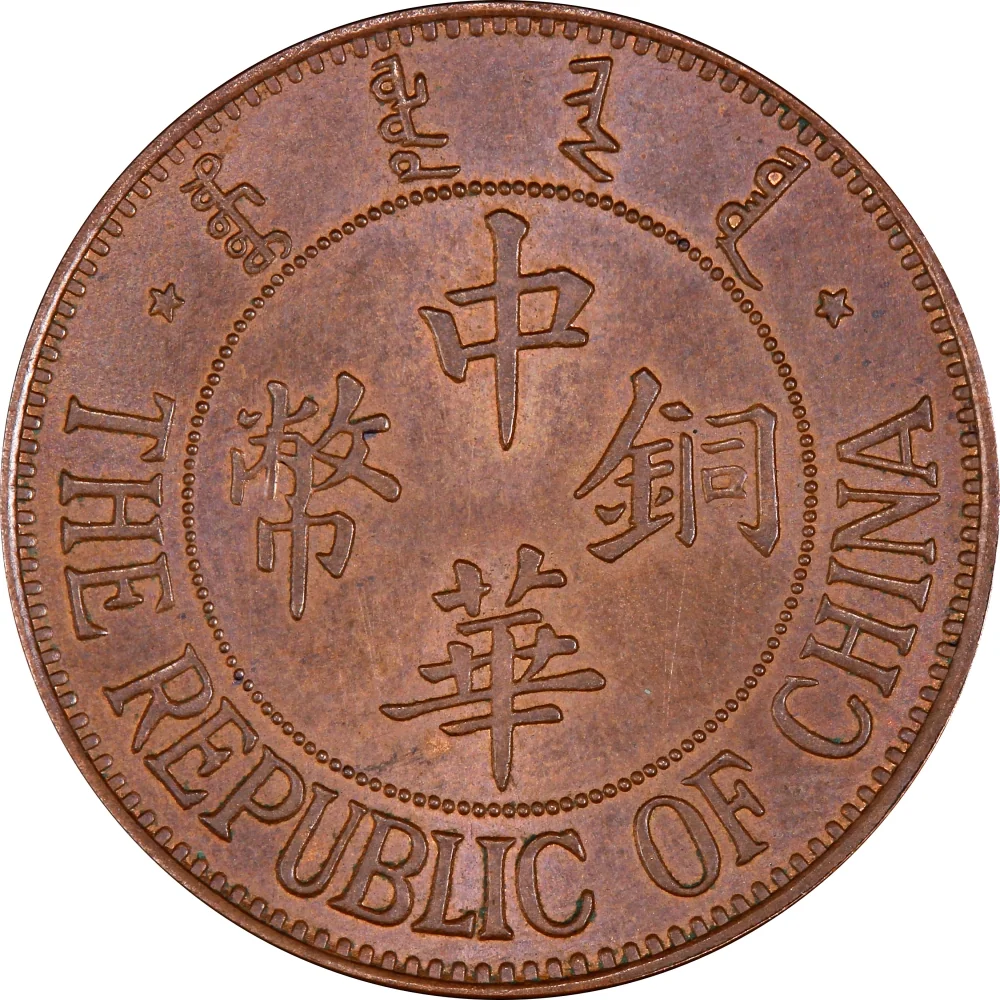
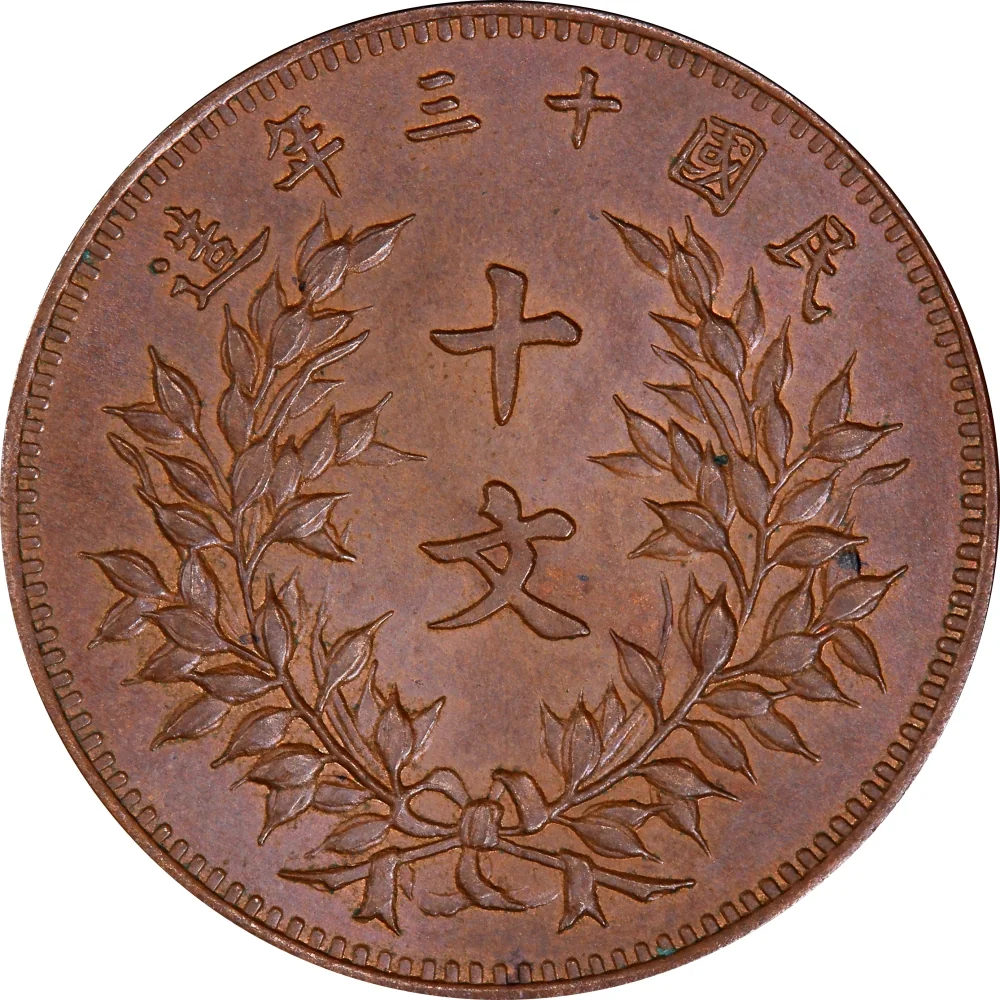
10 cash – Republic of China
Add to wishlist
China
Context
Year: 1924
Chinese republican Year:: 13
Country: China
Issuer: Republic of China
Period:
(1912—1949)
Currency:
(1912—1948)
Demonetized: Yes
Material
References
Y: #
Numista: #71003
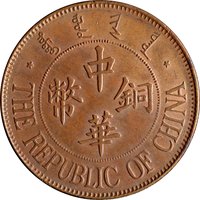
Obverse
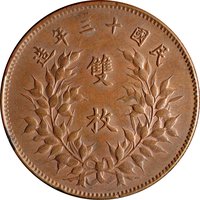
Reverse
Description:
Chinese ideograms within and above a wreath.
Inscription:
造年三十國民
十
文
十
文
Translation:
Made in the 30th Year of the Republic
Ten
Wen
Ten
Wen
Language: Chinese
Edge
Plain
Mintings
| Year | Mint Mark | Mintage | Quality | Collection |
|---|---|---|---|---|
| 1924 | — | — |
Historical background
In 1924, the currency situation in the Republic of China was one of profound complexity and instability, characteristic of the Warlord Era. The central government in Beijing exerted minimal effective control, and the country was fragmented under regional militarists. This political decentralization was mirrored in the monetary system, which was a chaotic patchwork of various circulating media. The primary units of account were the silver yuan (or dollar) and the copper cash, but their value and acceptability varied drastically from region to region.
Numerous entities issued currency, creating a bewildering multiplicity. These included notes from the official Central Bank of China and the Bank of Communications, provincial banks controlled by local warlords, and countless private commercial banks and even merchants. Furthermore, large quantities of foreign silver dollars, particularly the Mexican "Eagle" dollar and the British trade dollar, circulated alongside Chinese minted yuan, all valued by their actual silver weight and purity. This system was inherently inefficient, hindered national trade, and facilitated currency manipulation by warlords who often printed unbacked notes to finance their military campaigns, leading to frequent depreciation and loss of public trust.
Consequently, the public faced severe practical hardships. Exchange rates between different banknotes, silver coins, and copper cash fluctuated daily, creating a boon for money changers and immense uncertainty for ordinary people. Inflation was a persistent threat, especially in areas where warlords forced the circulation of their debased paper. While a movement for monetary reform and unification, advocating for a centralized "silver standard," was discussed among intellectuals and some bankers, the lack of a powerful central authority in 1924 made any substantive nationwide reform impossible. The currency chaos was both a symptom and a cause of the country's political disintegration.
Numerous entities issued currency, creating a bewildering multiplicity. These included notes from the official Central Bank of China and the Bank of Communications, provincial banks controlled by local warlords, and countless private commercial banks and even merchants. Furthermore, large quantities of foreign silver dollars, particularly the Mexican "Eagle" dollar and the British trade dollar, circulated alongside Chinese minted yuan, all valued by their actual silver weight and purity. This system was inherently inefficient, hindered national trade, and facilitated currency manipulation by warlords who often printed unbacked notes to finance their military campaigns, leading to frequent depreciation and loss of public trust.
Consequently, the public faced severe practical hardships. Exchange rates between different banknotes, silver coins, and copper cash fluctuated daily, creating a boon for money changers and immense uncertainty for ordinary people. Inflation was a persistent threat, especially in areas where warlords forced the circulation of their debased paper. While a movement for monetary reform and unification, advocating for a centralized "silver standard," was discussed among intellectuals and some bankers, the lack of a powerful central authority in 1924 made any substantive nationwide reform impossible. The currency chaos was both a symptom and a cause of the country's political disintegration.
💎 Extremely Rare