

10000 Yen (Emperor Showa's Reign) – Japan
Non-circulating coins
Commemoration: 60th Anniversary of the Reign of Emperor Showa
Japan
Context
Year: 1986
Japanese - Shōwa era Year: 61
Issuer: Japan 
Ruler: Shōwa
Currency:
(since 1871)
Total mintage: 10,000,000
Material
References
Y: #Click to copy to clipboard91
Numista: #35952
Value
Exchange value: 10000 JPY = $64.08
Bullion value: $56.52
Inflation-adjusted value: 12974.60 JPY
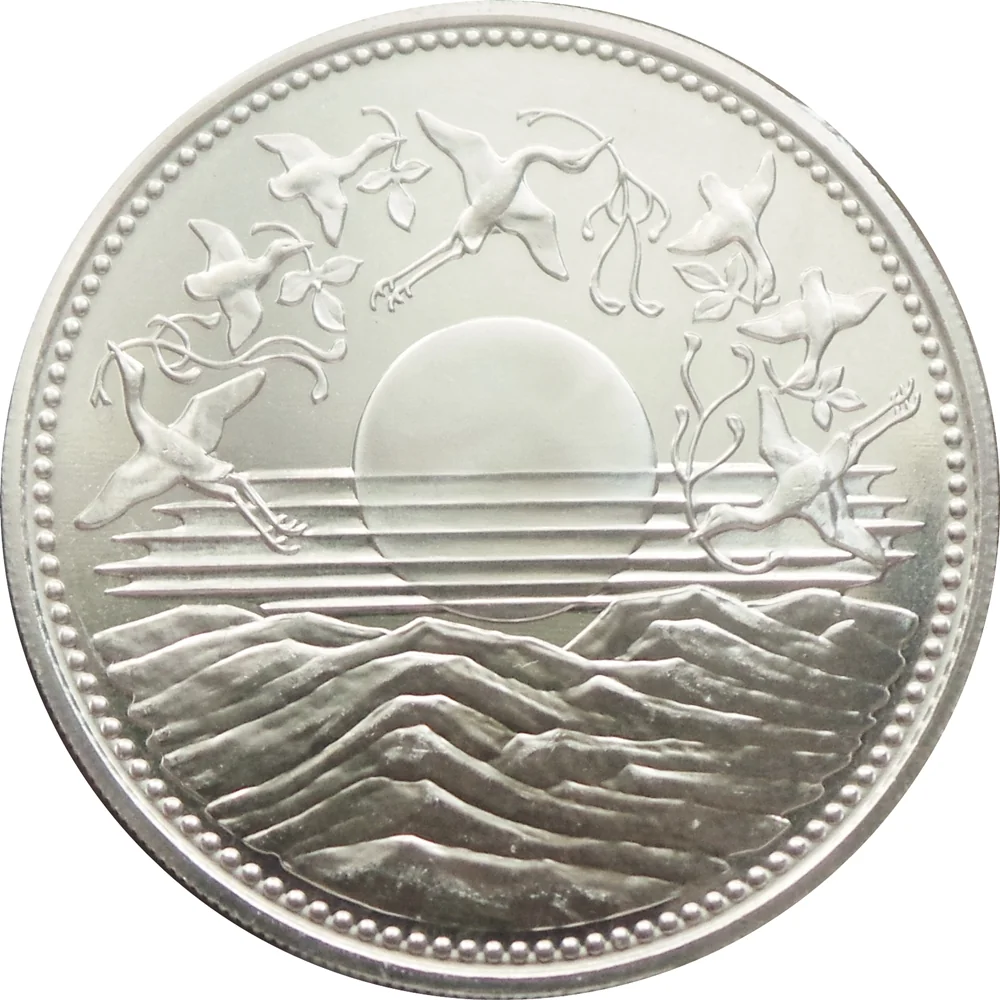
Obverse
Description:
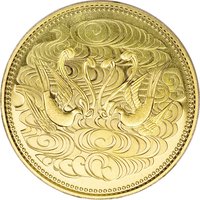
Birds over hills and lines.
Engraver: Ikuo Hirayama
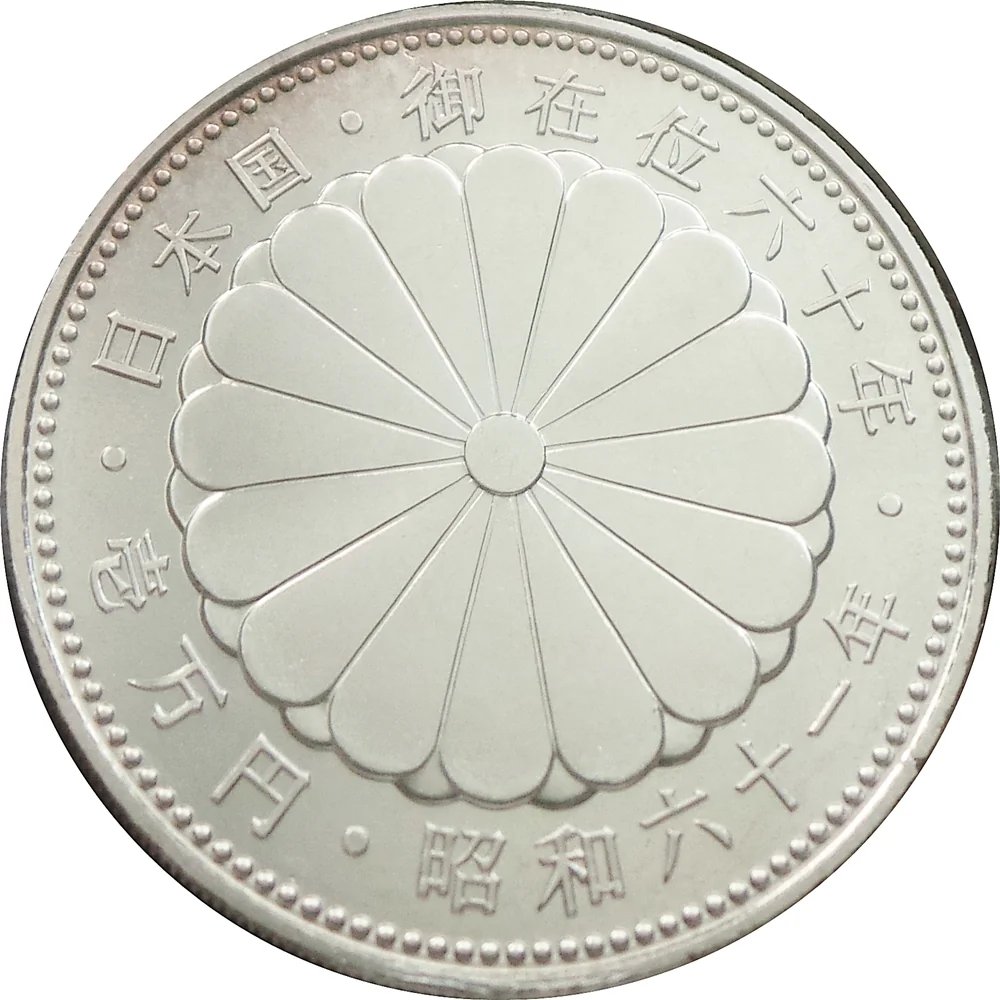
Reverse
Description:
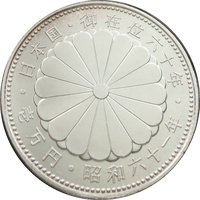
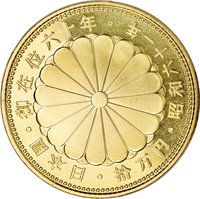
Legendary giant chrysanthemum.
Inscription:
• 日本国 • 御在位六十年 •
壱万円 • 昭和六十一年
壱万円 • 昭和六十一年
Translation:
Japan; 60th Year of Reign;
10,000 Yen; Showa 61
10,000 Yen; Showa 61
Language: Japanese
Engraver: Ikuo Hirayama
Edge
Reeded
Mintings
| Year | Mint Mark | Mintage | Quality | Collection |
|---|---|---|---|---|
| 1986 | — | 10,000,000 |
Historical background
In 1986, Japan's currency situation was dominated by the dramatic and rapid appreciation of the yen following the Plaza Accord of September 1985. This landmark agreement, orchestrated by the G5 nations (the US, Japan, West Germany, France, and the UK), aimed to correct the US dollar's overvaluation by coordinating market interventions to drive it down, particularly against the yen and Deutsche Mark. The effect was immediate and severe for Japan: the yen, which had traded around ¥240 to the dollar in early 1985, surged to approximately ¥160 by the end of 1986, a staggering appreciation of over 40% in just over a year.
This sharp endaka (high yen) presented a profound dual challenge to the Japanese economy. On one hand, it severely damaged the competitiveness of the nation's export-oriented industries, such as automobiles and electronics, which were the engine of its economic miracle. Corporate profits slumped as overseas sales became more expensive, triggering fears of a recession and industrial hollowing-out. On the other hand, the strong yen drastically increased the purchasing power of Japanese entities abroad, fueling an unprecedented wave of overseas investment and asset acquisition, from Hawaiian real estate to iconic American corporations.
In response, the Bank of Japan and the Ministry of Finance pursued aggressively accommodative policies to counteract the deflationary pressures of the strong yen and support domestic demand. The official discount rate was cut in several steps, reaching a historic low of 2.5% by early 1987. This massive injection of cheap liquidity succeeded in averting an immediate recession but had the unintended consequence of channeling vast sums of speculative capital into domestic stock and real estate markets. Thus, 1986 stands as the pivotal year when the currency shock of the Plaza Accord directly set the stage for the infamous "bubble economy" of the late 1980s.
This sharp endaka (high yen) presented a profound dual challenge to the Japanese economy. On one hand, it severely damaged the competitiveness of the nation's export-oriented industries, such as automobiles and electronics, which were the engine of its economic miracle. Corporate profits slumped as overseas sales became more expensive, triggering fears of a recession and industrial hollowing-out. On the other hand, the strong yen drastically increased the purchasing power of Japanese entities abroad, fueling an unprecedented wave of overseas investment and asset acquisition, from Hawaiian real estate to iconic American corporations.
In response, the Bank of Japan and the Ministry of Finance pursued aggressively accommodative policies to counteract the deflationary pressures of the strong yen and support domestic demand. The official discount rate was cut in several steps, reaching a historic low of 2.5% by early 1987. This massive injection of cheap liquidity succeeded in averting an immediate recession but had the unintended consequence of channeling vast sums of speculative capital into domestic stock and real estate markets. Thus, 1986 stands as the pivotal year when the currency shock of the Plaza Accord directly set the stage for the infamous "bubble economy" of the late 1980s.
⭐ Somewhat Rare