

½ won – Korean Empire
Add to wishlist
Context
Year: 1901
Korean - Gwangmu era Year:: 5
Country: Korea
Issuer: Korean Empire
Currency:
(1901—1910)
Demonetized: Yes
Total mintage: 1,831,000
Material
References
KM: #
Numista: #35117
Value
Bullion value: $29.80
Obverse
Description:
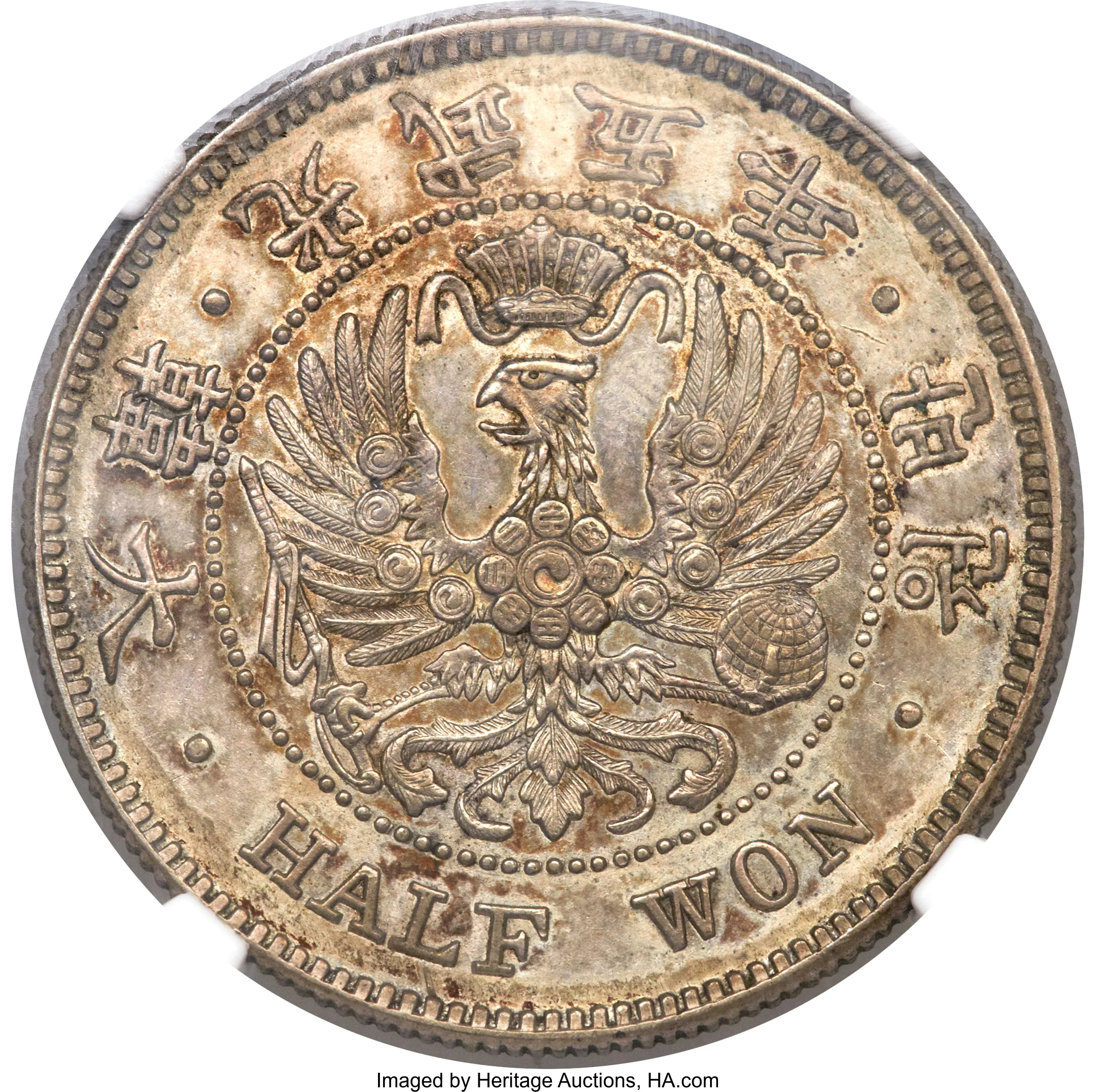
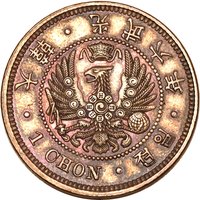
Imperial eagle, date above, denomination below.
Inscription:
• 大韓 • 光武五年 • 반원 • HALF WON
Translation:
KOREA; 5th Year of Gwangmu; HALF WON
Reverse
Description:
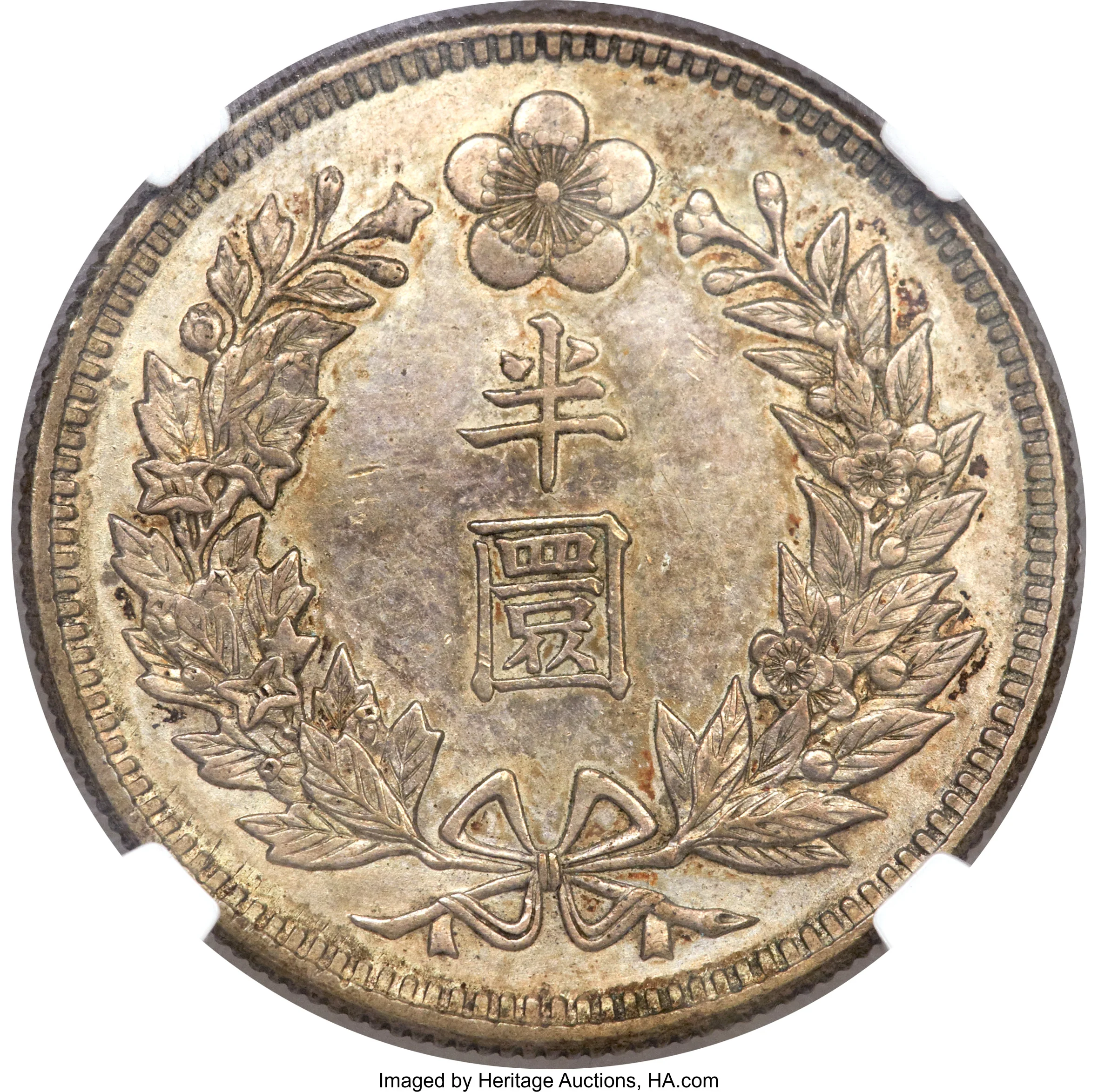
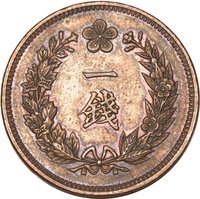
Denomination with wreath and plum flower (Imperial Seal of Korea).
Inscription:
半
圜
圜
Translation:
Half Dollar
Scripts: Chinese (traditional, regular script)
Language: Chinese
Edge
Mintings
| Year | Mint Mark | Mintage | Quality | Collection |
|---|---|---|---|---|
| 1901 | — | 1,831,000 |
Historical background
By 1901, the currency situation in the Korean Empire was one of profound instability and foreign domination, a direct reflection of the nation's precarious sovereignty. The monetary system was a chaotic mix of traditional Korean yang (copper coins) and mun (cash), alongside a flood of foreign silver currencies, primarily the Mexican silver dollar and the Japanese yen. This lack of a unified, state-controlled currency severely hampered domestic trade and government finance, while making the economy vulnerable to external manipulation. The imperial government, under Emperor Gojong, recognized this crisis and had attempted reform with the introduction of the whan (also called the yang) in 1894, but the effort failed due to insufficient silver reserves, poor public trust, and rampant counterfeiting.
The vacuum of monetary authority was aggressively filled by foreign powers, particularly Japan. Japanese banks, especially the Dai-Ichi Ginko, established a powerful financial presence, circulating large quantities of yen notes that began to function as a de facto currency in key ports and trade centers. This was not merely an economic convenience but a deliberate instrument of imperialist policy, part of Japan's broader strategy to bring Korea into its sphere of influence following its victory in the First Sino-Japanese War (1894-95). The Russian Empire also exerted financial influence, further complicating the landscape. Consequently, Korea’s ability to conduct independent fiscal policy was eroding as its economy became increasingly yen-denominated.
In response, the Korean government made a final, desperate attempt to assert monetary sovereignty in 1901 by planning a new gold-standard currency. Emperor Gojong authorized the establishment of a national mint and contracted with a German firm, Weber & Co., to produce new coinage. However, this initiative was doomed from the start. Intense diplomatic pressure from Japan, which rightly saw a stable Korean currency as a threat to its own controlling interests, forced the project to be abandoned. The failure of the 1901 reform cemented the reality that Korea had effectively lost control over its monetary system, a critical prelude to the complete loss of political sovereignty with the advent of the Japanese Residency-General in 1905 and formal annexation in 1910.
The vacuum of monetary authority was aggressively filled by foreign powers, particularly Japan. Japanese banks, especially the Dai-Ichi Ginko, established a powerful financial presence, circulating large quantities of yen notes that began to function as a de facto currency in key ports and trade centers. This was not merely an economic convenience but a deliberate instrument of imperialist policy, part of Japan's broader strategy to bring Korea into its sphere of influence following its victory in the First Sino-Japanese War (1894-95). The Russian Empire also exerted financial influence, further complicating the landscape. Consequently, Korea’s ability to conduct independent fiscal policy was eroding as its economy became increasingly yen-denominated.
In response, the Korean government made a final, desperate attempt to assert monetary sovereignty in 1901 by planning a new gold-standard currency. Emperor Gojong authorized the establishment of a national mint and contracted with a German firm, Weber & Co., to produce new coinage. However, this initiative was doomed from the start. Intense diplomatic pressure from Japan, which rightly saw a stable Korean currency as a threat to its own controlling interests, forced the project to be abandoned. The failure of the 1901 reform cemented the reality that Korea had effectively lost control over its monetary system, a critical prelude to the complete loss of political sovereignty with the advent of the Japanese Residency-General in 1905 and formal annexation in 1910.
💎 Extremely Rare