

1 Yuan – North Shensi Soviet
China
Context
Year: 1936
Chinese soviet republican Year: 5
Country: China 
Issuer: North Shensi Soviet
Issuing organization: Chinese Soviet Republic Szechuan-Shensi Provincial Worker's and Farmer's Bank
Currency:
(1930—1936)
Demonetized: Yes
Material
References
KM: #Click to copy to clipboard2
Numista: #298057
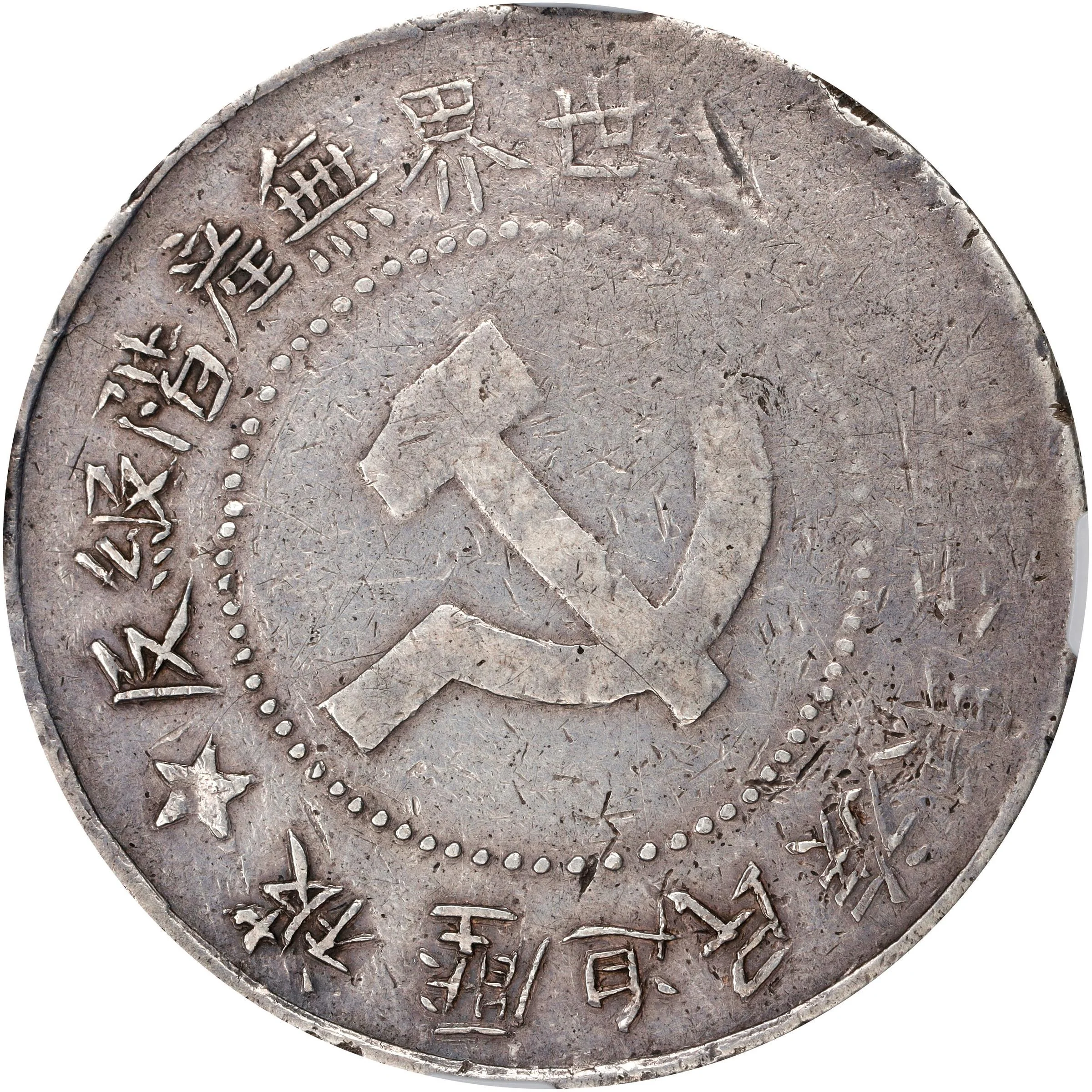
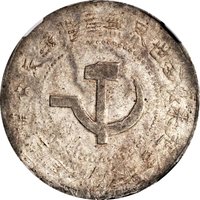
Obverse
Description:
Hammer and sickle with Chinese characters.
Inscription:
全世界無產階級及被壓迫民族聯合起來
Translation:
Proletarians and oppressed peoples of the world, unite!
Language: Chinese
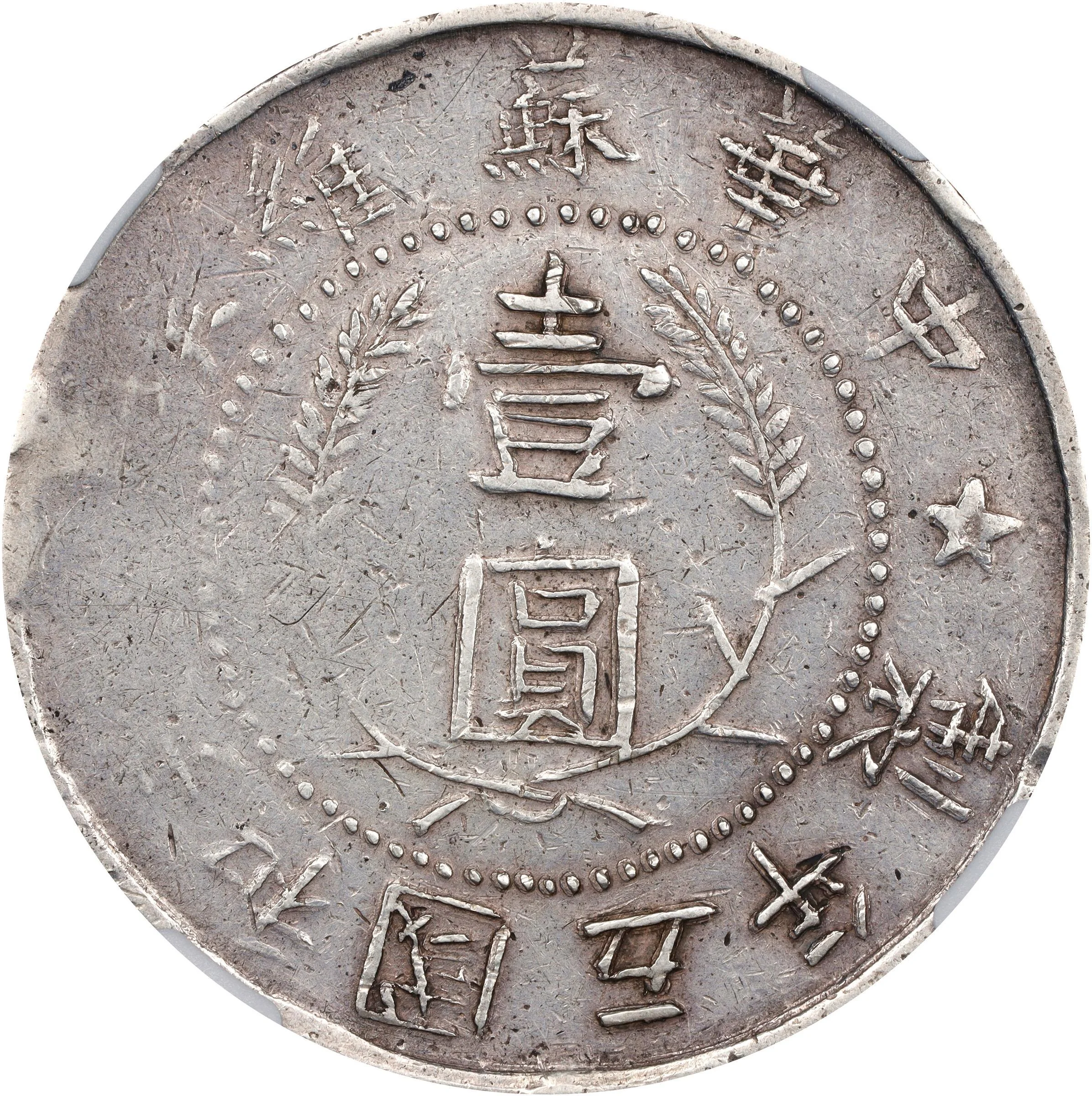
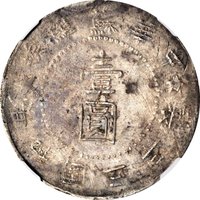
Reverse
Description:
Two Chinese characters in a wreath, encircled by more characters.
Inscription:
埃維蘇華中製年五國和共
壹
圓
壹
圓
Translation:
Made in the 5th Year of the Republic of China
One
Dollar
One
Dollar
Language: Chinese
Edge
Reeded.
Categories
| Symbol> Hammer and sickle |
| Symbol> Wreath |
Mintings
| Year | Mint Mark | Mintage | Quality | Collection |
|---|---|---|---|---|
| 1936 | — | — |
Historical background
In 1936, the currency situation in the North Shaanxi Soviet, the final base area of the Chinese Communist Party (CCP) after the Long March, was defined by severe scarcity and practical innovation. The remote, blockaded region had a largely agrarian and barter-based economy, with formal currency circulation being minimal. The soviet government, led from Bao'an (and soon to move to Yan'an), issued its own paper notes, known as "Soviet Currency" (Suibi), but its circulation was limited and its value derived almost entirely from political authority and necessity rather than substantial reserves. The primary "currency" for most transactions, especially for the rural population, remained physical goods like grain, cloth, and salt.
The financial system operated under extreme duress due to the ongoing civil war against the Nationalist (Kuomintang) forces, who enforced a strict economic blockade. This made acquiring printing materials, ink, and metallic reserves for coinage extraordinarily difficult. Consequently, the CCP relied heavily on resourceful policies like the "currency struggle," which involved using silver dollars collected from confiscations or trade to destabilize the Nationalist currency in border areas, while also banning the use of rival currencies within the soviet zone to enforce the monopoly of their own notes. Stability was also underpinned by the collection of agricultural tax in kind (grain), which gave the government essential resources without relying on a fragile monetary system.
Ultimately, the currency of the North Shaanxi Soviet was not a stable store of value but a functional instrument of revolutionary policy and wartime mobilization. Its acceptance was enforced by administrative decree and bolstered by the political credibility of the CCP in its core area. This experience of managing a besieged economy with a simple and politically-backed currency provided crucial, pragmatic lessons for the CCP's future financial cadres, who would later apply these insights to the broader monetary challenges of the Anti-Japanese War and the eventual establishment of a national currency for the People's Republic of China.
The financial system operated under extreme duress due to the ongoing civil war against the Nationalist (Kuomintang) forces, who enforced a strict economic blockade. This made acquiring printing materials, ink, and metallic reserves for coinage extraordinarily difficult. Consequently, the CCP relied heavily on resourceful policies like the "currency struggle," which involved using silver dollars collected from confiscations or trade to destabilize the Nationalist currency in border areas, while also banning the use of rival currencies within the soviet zone to enforce the monopoly of their own notes. Stability was also underpinned by the collection of agricultural tax in kind (grain), which gave the government essential resources without relying on a fragile monetary system.
Ultimately, the currency of the North Shaanxi Soviet was not a stable store of value but a functional instrument of revolutionary policy and wartime mobilization. Its acceptance was enforced by administrative decree and bolstered by the political credibility of the CCP in its core area. This experience of managing a besieged economy with a simple and politically-backed currency provided crucial, pragmatic lessons for the CCP's future financial cadres, who would later apply these insights to the broader monetary challenges of the Anti-Japanese War and the eventual establishment of a national currency for the People's Republic of China.
✨ Legendary