

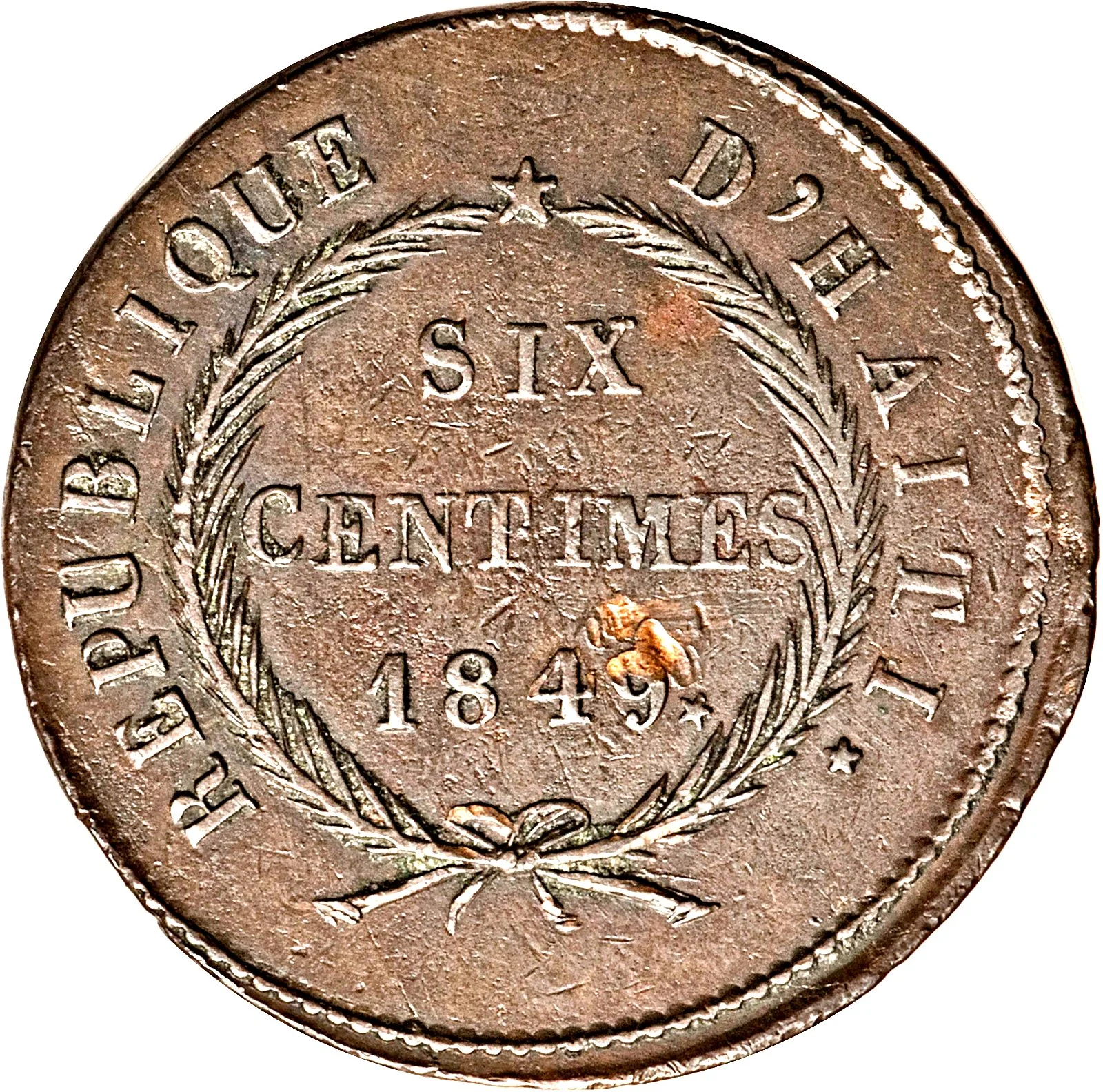
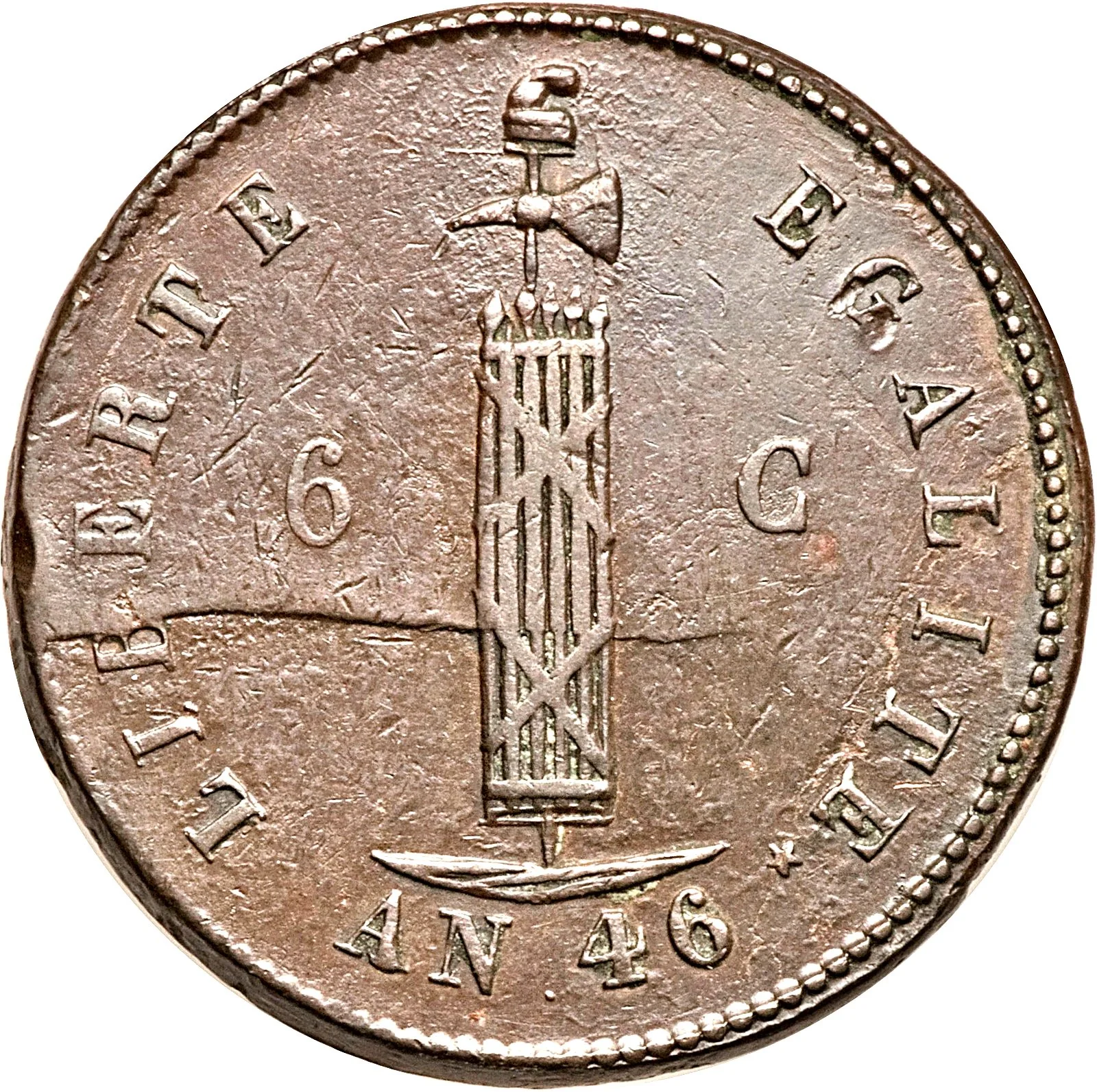
6 Centimes – Haiti
Haiti
Context
Year: 1849
Haitian republican Year: 46
Issuer: Haiti 
Period:
(1859—1957)
Currency:
(1813—1870)
Demonetized: Yes
Material
References
KM: #Click to copy to clipboard32
Numista: #28716
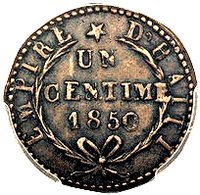
Obverse
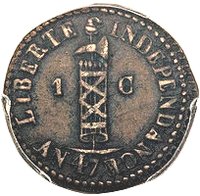
Reverse
Edge
Plain
Mintings
| Year | Mint Mark | Mintage | Quality | Collection |
|---|---|---|---|---|
| 1849 | — | — |
Historical background
In 1849, Haiti's currency situation was deeply troubled, rooted in the economic isolation imposed by external powers and the fiscal policies of Emperor Faustin Soulouque, who had come to power in 1847. The nation, still not recognized by France or other major powers following its independence in 1804, struggled under the weight of the 1825 "Independence Debt" imposed by France. This crippling financial obligation, finally agreed to in 1838 at a reduced but still onerous 90 million gold francs, drained the treasury of specie (gold and silver coin), leaving the domestic economy chronically short of hard currency.
Internally, the primary circulating medium was the gourde, but its value and form were problematic. The country relied heavily on copper and billon (debased silver) coins for everyday transactions, as precious metal was exported to service the foreign debt. This led to a severe scarcity of sound coinage, encouraging widespread counterfeiting and the circulation of worn and clipped foreign coins, particularly Spanish and American pieces. The instability undermined both commerce and public confidence in the monetary system.
Emperor Faustin I's government attempted to address this through monetary reforms in 1849 and 1850, authorizing the minting of new copper coins to standardize the currency and facilitate smaller transactions. However, these measures were largely ineffective in the long term. The fundamental issues—the external debt drain, lack of international recognition and credit, and the government's own fiscal challenges—remained unresolved. Consequently, Haiti's currency system stayed fragile and unreliable, reflecting the broader economic stagnation and political turmoil of the period.
Internally, the primary circulating medium was the gourde, but its value and form were problematic. The country relied heavily on copper and billon (debased silver) coins for everyday transactions, as precious metal was exported to service the foreign debt. This led to a severe scarcity of sound coinage, encouraging widespread counterfeiting and the circulation of worn and clipped foreign coins, particularly Spanish and American pieces. The instability undermined both commerce and public confidence in the monetary system.
Emperor Faustin I's government attempted to address this through monetary reforms in 1849 and 1850, authorizing the minting of new copper coins to standardize the currency and facilitate smaller transactions. However, these measures were largely ineffective in the long term. The fundamental issues—the external debt drain, lack of international recognition and credit, and the government's own fiscal challenges—remained unresolved. Consequently, Haiti's currency system stayed fragile and unreliable, reflecting the broader economic stagnation and political turmoil of the period.
💎 Extremely Rare