

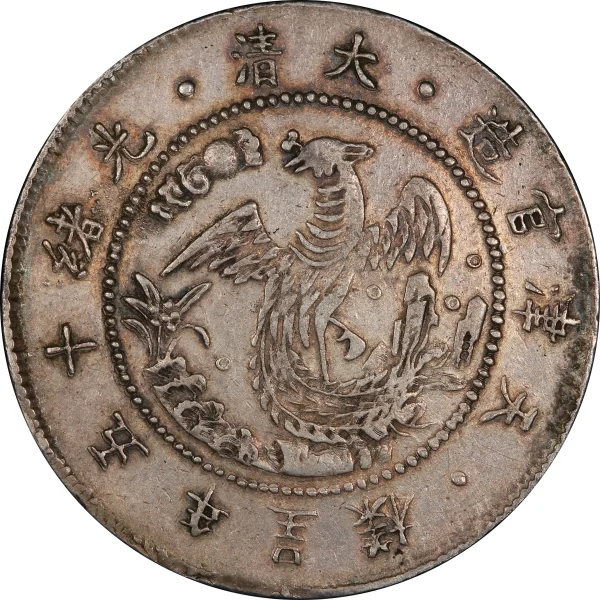
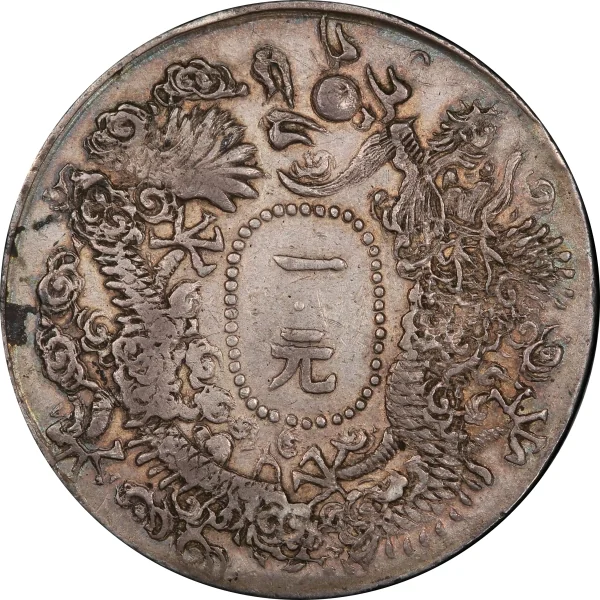
1 Yuan – Chihli Province
China
Context
Year: 1889
Chinese - Guangxu era Year: 15
Country: China 
Issuer: Chihli Province
Ruler: Guangxu
Currency:
(1896—1940)
Demonetized: Yes
Material
References
Numista: #274578
Value
Bullion value: $75.15
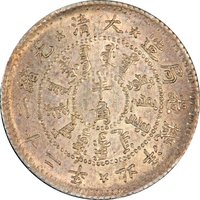
Obverse
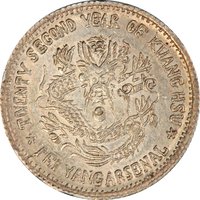
Reverse
Edge
Mintings
| Year | Mint Mark | Mintage | Quality | Collection |
|---|---|---|---|---|
| 1889 | — | — |
Historical background
In 1889, the currency situation in Chihli Province (modern-day Hebei, containing the imperial capital Beijing) was a complex and strained microcosm of the wider monetary crisis engulfing the late Qing Dynasty. The province operated under a chaotic bimetallic system with severe discrepancies between the official tael unit of account and the actual silver and copper coins in circulation. The primary medium for everyday transactions was the copper cash coin, but its value against silver had been depreciating for decades due to debasement, counterfeiting, and a scarcity of silver. This created a "silver famine" that squeezed peasants, who earned in copper but often had to pay taxes assessed in the more expensive silver tael, effectively increasing their burdens.
This instability was exacerbated by the aggressive influx of foreign silver dollars, particularly Mexican "Eagle" dollars, which circulated widely in treaty ports like Tianjin. These coins were valued for their reliable silver content and uniform weight, leading them to trade at a premium over the awkwardly shaped sycee (silver ingots). Furthermore, the province saw increasing circulation of privately minted copper coins and paper notes (qianpiao) issued by local banks, merchant guilds, and even pawnshops to facilitate trade. While providing necessary liquidity, this unregulated proliferation led to frequent failures and note repudiations, further eroding public trust in the monetary system.
The situation in Chihli was of paramount concern to the central government, given the province's political and economic significance. Efforts at reform, including attempts to standardize coinage, were piecemeal and largely ineffective against the entrenched systemic issues. The currency disorder in Chihli in 1889 thus reflected the Qing state's diminishing capacity to control its own economy, highlighting the corrosive effects of internal decay and foreign economic pressure, which would fuel broader calls for monetary and institutional reform in the decades to follow.
This instability was exacerbated by the aggressive influx of foreign silver dollars, particularly Mexican "Eagle" dollars, which circulated widely in treaty ports like Tianjin. These coins were valued for their reliable silver content and uniform weight, leading them to trade at a premium over the awkwardly shaped sycee (silver ingots). Furthermore, the province saw increasing circulation of privately minted copper coins and paper notes (qianpiao) issued by local banks, merchant guilds, and even pawnshops to facilitate trade. While providing necessary liquidity, this unregulated proliferation led to frequent failures and note repudiations, further eroding public trust in the monetary system.
The situation in Chihli was of paramount concern to the central government, given the province's political and economic significance. Efforts at reform, including attempts to standardize coinage, were piecemeal and largely ineffective against the entrenched systemic issues. The currency disorder in Chihli in 1889 thus reflected the Qing state's diminishing capacity to control its own economy, highlighting the corrosive effects of internal decay and foreign economic pressure, which would fuel broader calls for monetary and institutional reform in the decades to follow.
✨ Legendary