

10 won – Korean Empire
Add to wishlist
Context
Year: 1909
Korean - Sunjong era Year:: 3
Country: Korea
Issuer: Korean Empire
Period:
(1907—1910)
Currency:
(1901—1910)
Demonetized: Yes
Total mintage: 2
Material
References
KM: #
Numista: #24486
Value
Bullion value: $1148.72
Obverse
Description:
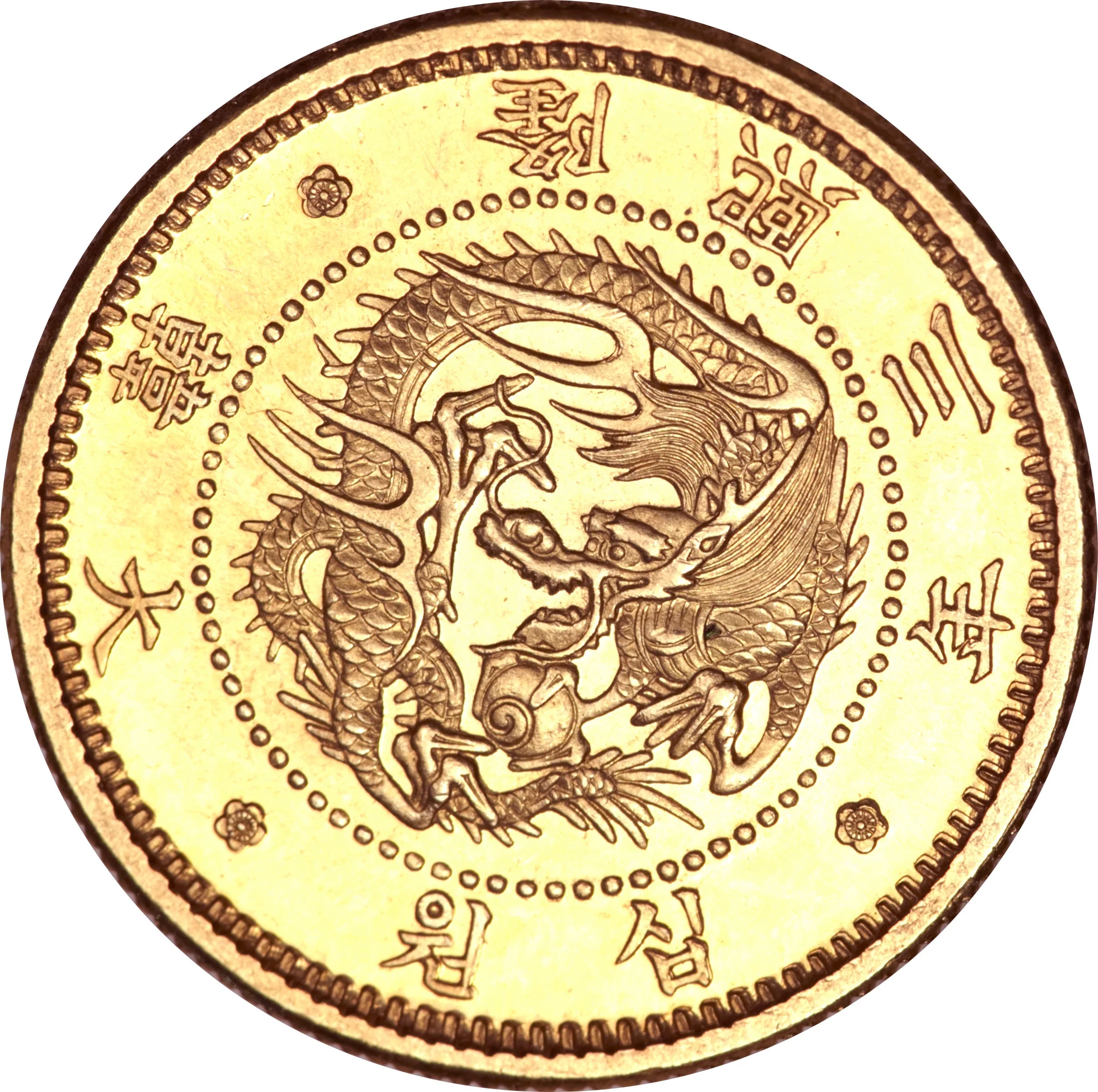
Dragon above, date below, denomination beneath.
Inscription:
• 大韓 • 隆熙三年 • 십원
Translation:
THE GREAT HAN;
YONGHEE THIRD YEAR;
TEN WON
YONGHEE THIRD YEAR;
TEN WON
Reverse
Description:
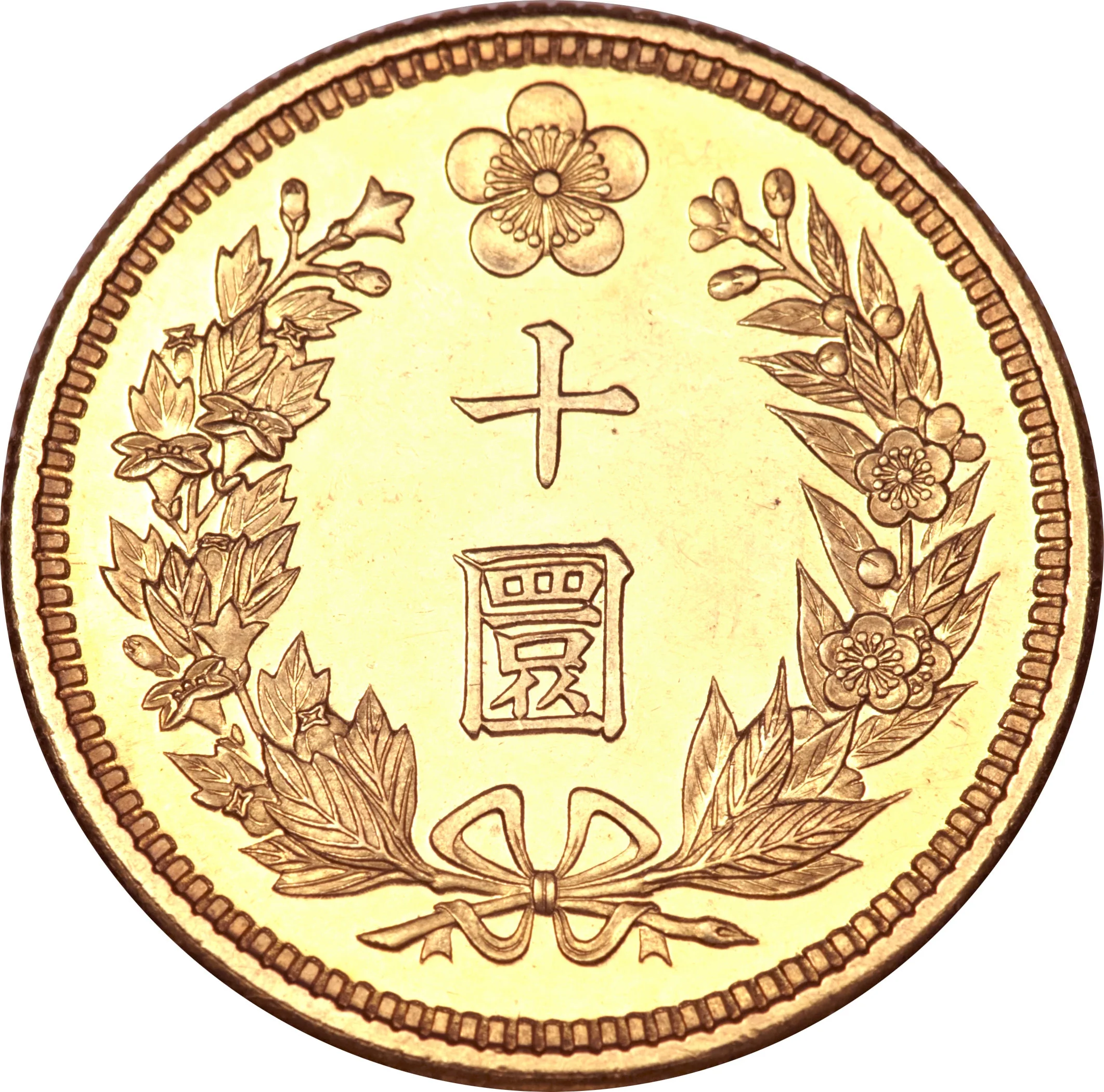
Denomination with wreath and plum flower (Imperial Seal of Korea).
Inscription:
十
圜
圜
Translation:
Ten Coins
Scripts: Chinese (traditional, regular script)
Language: Chinese
Edge
Categories
| Mythology> Fantastic animal |
| Plants> Flower |
| Symbols> Coat of Arms |
| Symbol> Wreath |
Mintings
| Year | Mint Mark | Mintage | Quality | Collection |
|---|---|---|---|---|
| 1909 | — | 2 |
Historical background
By 1909, the currency situation in the Korean Empire was one of profound instability and foreign domination, marking the final stage of its financial sovereignty. The national currency, the yang, had been severely debased and discredited due to years of excessive printing by the government to cover fiscal shortfalls, leading to rampant inflation and a loss of public trust. This monetary chaos was systematically exploited by Japan, which, following the 1905 Protectorate Treaty, was tightening its control over all Korean institutions, including finance.
The key feature of the period was the forced dual-currency system, where the Japanese yen circulated alongside the deprecated yang. The Japanese-controlled Bank of Korea (established in 1909, replacing the earlier Korean Central Bank) was the central financial instrument, issuing banknotes backed by Japanese capital and gradually pushing the yang out of circulation. This process was not economic but political, designed to bind the Korean economy inextricably to Japan's and facilitate colonial administration, which would be formally annexed just a year later in 1910.
Thus, the currency situation in 1909 was less an independent monetary policy and more a reflection of a dying empire's subjugation. The collapse of the yang and its replacement by the yen symbolized the effective end of Korean economic autonomy. The financial disarray provided Japan with a pretext for further intervention, finalizing a process where control over money became the mechanism for complete political control, paving the way for the full colonization of the peninsula.
The key feature of the period was the forced dual-currency system, where the Japanese yen circulated alongside the deprecated yang. The Japanese-controlled Bank of Korea (established in 1909, replacing the earlier Korean Central Bank) was the central financial instrument, issuing banknotes backed by Japanese capital and gradually pushing the yang out of circulation. This process was not economic but political, designed to bind the Korean economy inextricably to Japan's and facilitate colonial administration, which would be formally annexed just a year later in 1910.
Thus, the currency situation in 1909 was less an independent monetary policy and more a reflection of a dying empire's subjugation. The collapse of the yang and its replacement by the yen symbolized the effective end of Korean economic autonomy. The financial disarray provided Japan with a pretext for further intervention, finalizing a process where control over money became the mechanism for complete political control, paving the way for the full colonization of the peninsula.
✨ Legendary