

50 Yuan – Republic of China
China
Context
Year: 1927
Chinese republican Year: 16
Country: China 
Issuer: Republic of China
Period:
(1912—1949)
Currency:
(1912—1948)
Demonetized: Yes
Material
References
Y: #Click to copy to clipboard–
Numista: #240783
Obverse
Description:
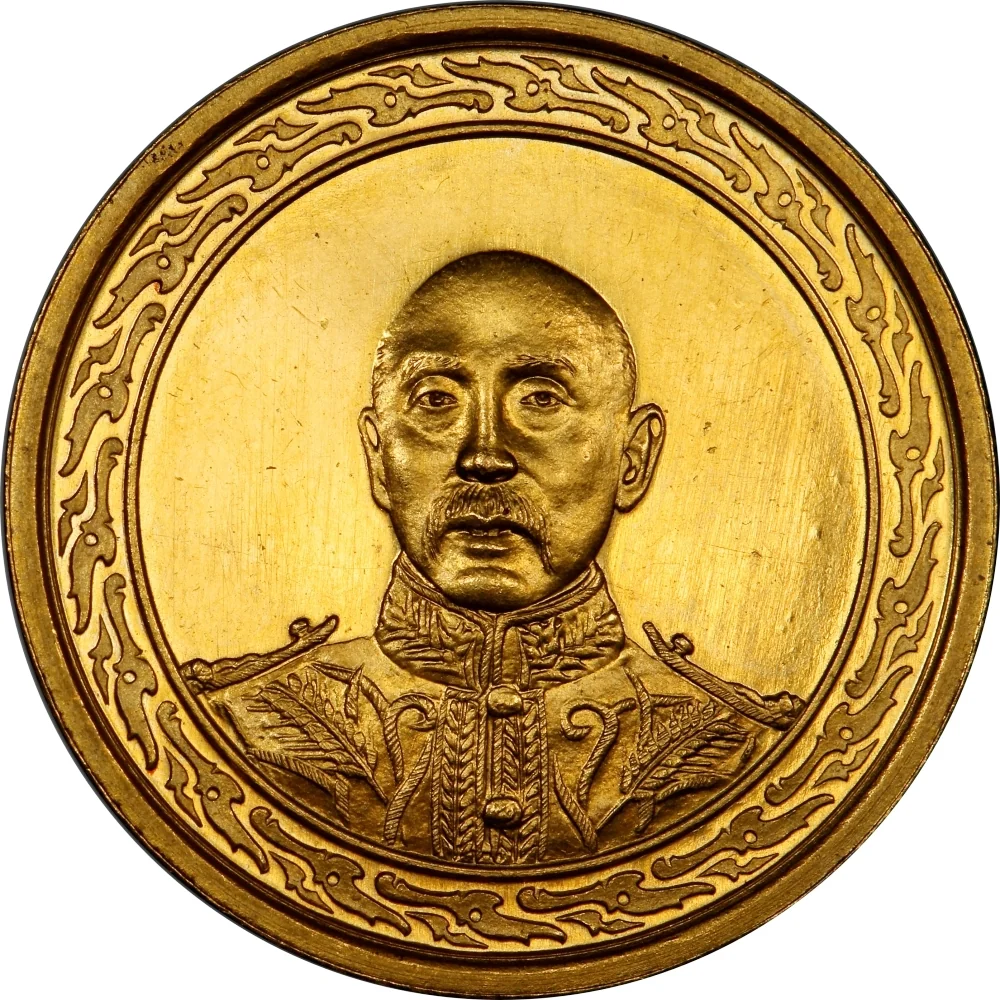
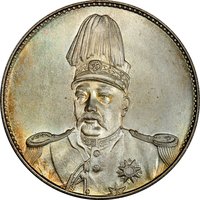
Zhang Zuolin's bust in a decorative border.
Reverse
Description:
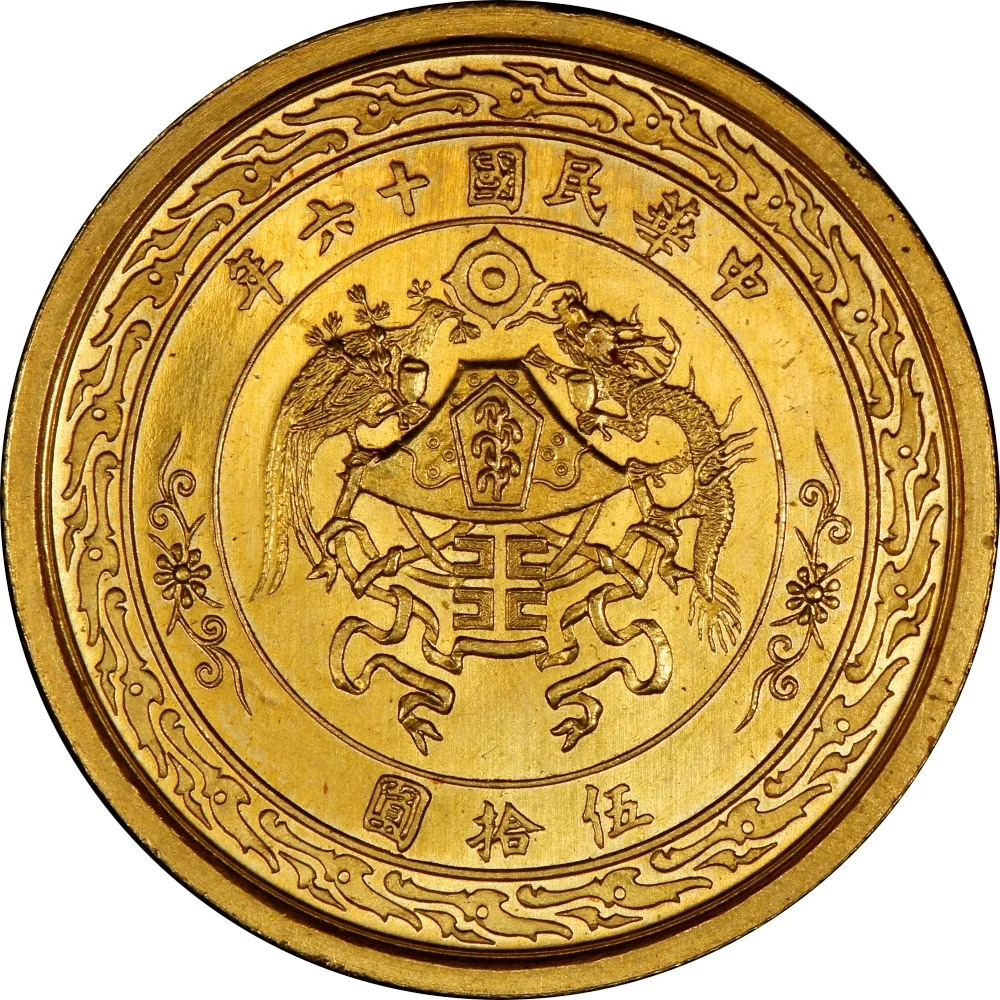
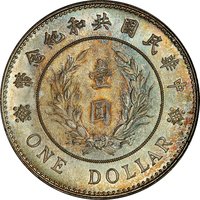
China's Twelve Symbols emblem (1913–1928) features a dragon and phoenix holding cups over an axe, flanked by flowers, with Chinese characters above and below, all within a decorative border.
Inscription:
年六十國民華中
圓拾伍
圓拾伍
Translation:
The 60th Year of the Republic of China
Fifteen Dollars
Fifteen Dollars
Language: Chinese
Edge
Categories
| Mythology> Fantastic animal |
| Symbols> Coat of Arms |
| Person> Politician |
| Mustache/Beard |
| Plants> Flower |
Mintings
| Year | Mint Mark | Mintage | Quality | Collection |
|---|---|---|---|---|
| 1927 | — | — |
Historical background
By 1927, the currency situation in the Republic of China was one of profound fragmentation and instability, a direct reflection of the country's political disunity. Following the collapse of the Qing Dynasty, there was no unified national monetary system. Instead, the economy operated on a complex and chaotic mix of currencies: silver sycee (by weight), various provincial and bank-issued silver and copper coins, and a flood of paper notes from numerous commercial banks, provincial authorities, and military warlords. The credibility of these notes depended entirely on the issuing authority's power and reserves, leading to wide disparities in value and frequent bank runs.
The period was dominated by a silver standard, but the actual medium of exchange varied wildly by region. Foreign silver dollars, like the Mexican Eagle and later the Chinese "Fat Man" dollar, circulated alongside traditional silver ingots. Crucially, the political context defined the monetary chaos. The Northern Warlord government in Beijing, recognized internationally but weakening, struggled to exert authority. Meanwhile, the Nationalist (Kuomintang) government, having launched the Northern Expedition from its base in Guangzhou, was advancing northward. As it captured territory, it sought to impose financial order, establishing the Central Bank of China in 1924 as its future monetary authority.
Therefore, 1927 stands as a pivotal year of transition within this chaos. With the Nationalists capturing Nanjing and Shanghai (the financial heart of the country), they began serious efforts to dismantle the warlord-era monetary system. The stage was set for the major currency reforms that would follow, most notably the 1933 Fei Liang Gai Yuan (abolition of the tael unit in favor of the silver dollar) and the later 1935 Fabi reform, which abolished the silver standard. The currency situation in 1927 was thus the chaotic prelude to a decade of attempted centralization under the Nanjing Decade.
The period was dominated by a silver standard, but the actual medium of exchange varied wildly by region. Foreign silver dollars, like the Mexican Eagle and later the Chinese "Fat Man" dollar, circulated alongside traditional silver ingots. Crucially, the political context defined the monetary chaos. The Northern Warlord government in Beijing, recognized internationally but weakening, struggled to exert authority. Meanwhile, the Nationalist (Kuomintang) government, having launched the Northern Expedition from its base in Guangzhou, was advancing northward. As it captured territory, it sought to impose financial order, establishing the Central Bank of China in 1924 as its future monetary authority.
Therefore, 1927 stands as a pivotal year of transition within this chaos. With the Nationalists capturing Nanjing and Shanghai (the financial heart of the country), they began serious efforts to dismantle the warlord-era monetary system. The stage was set for the major currency reforms that would follow, most notably the 1933 Fei Liang Gai Yuan (abolition of the tael unit in favor of the silver dollar) and the later 1935 Fabi reform, which abolished the silver standard. The currency situation in 1927 was thus the chaotic prelude to a decade of attempted centralization under the Nanjing Decade.
✨ Legendary