

Haiti
Context
Material
References
KM: #Click to copy to clipboardA23
Numista: #19946
Value
Bullion value: $30.46
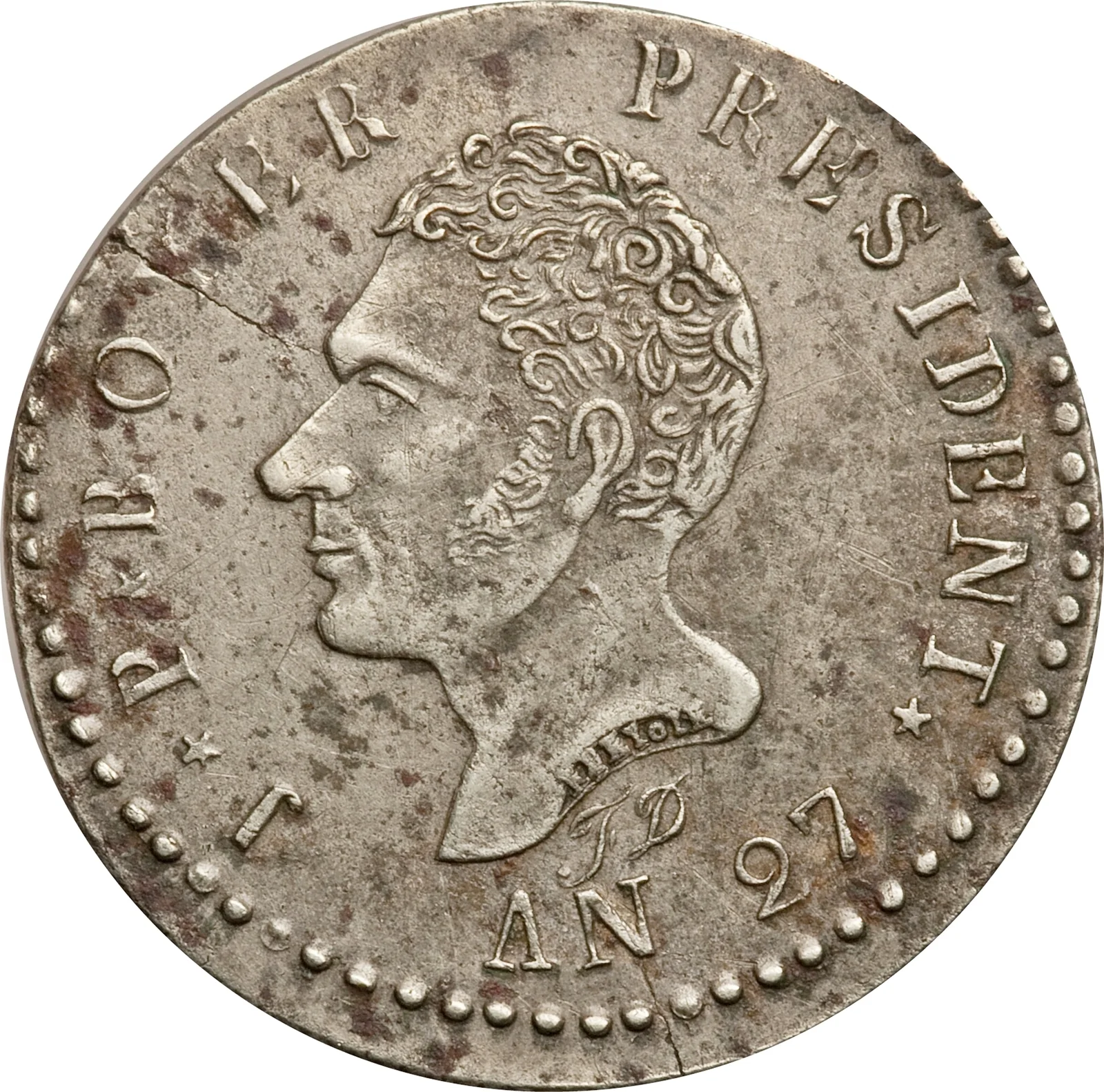
Obverse
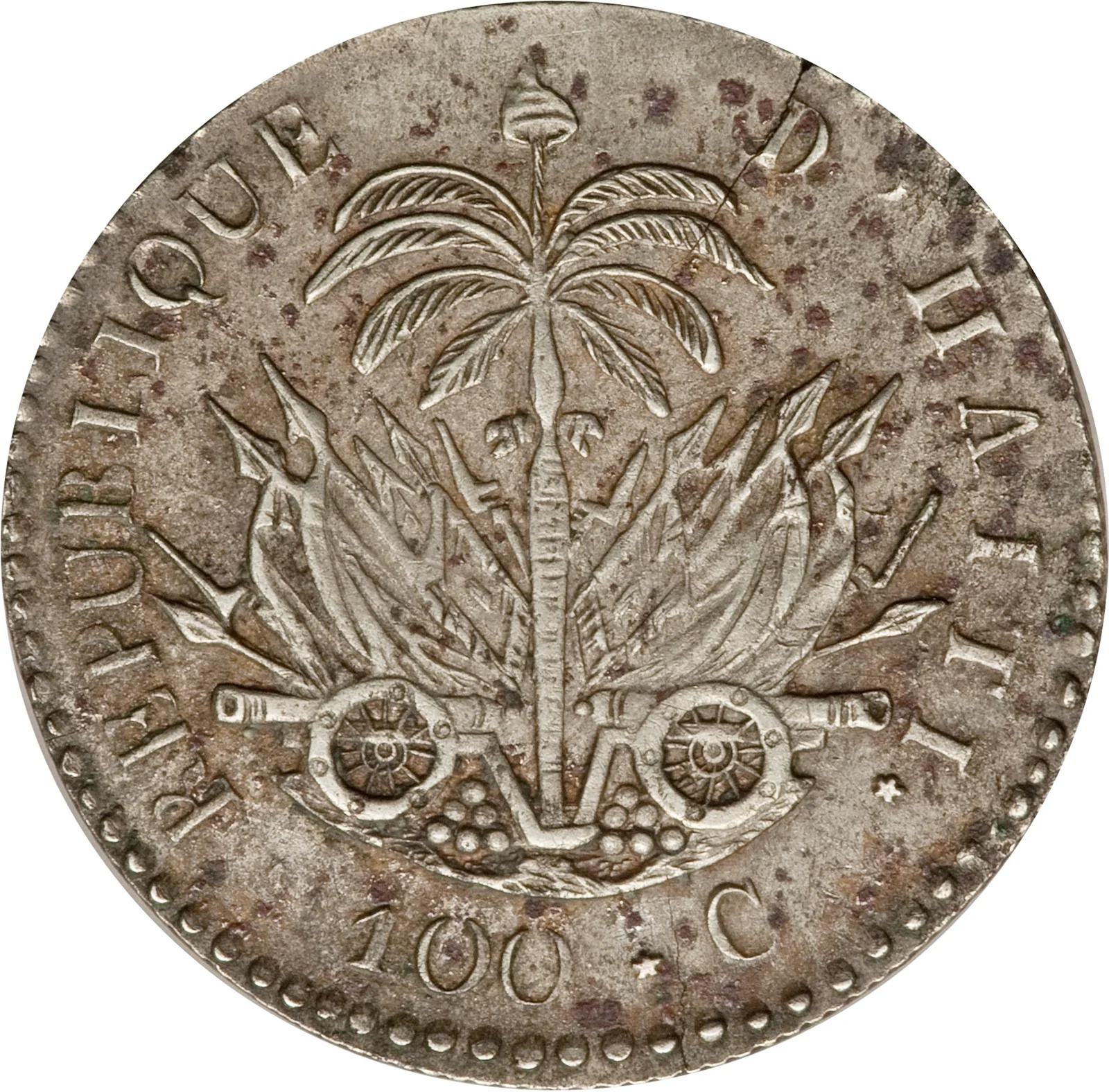
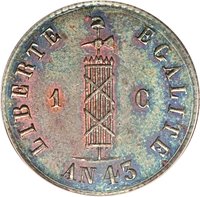
Reverse
Edge
Reeded
Mintings
| Year | Mint Mark | Mintage | Quality | Collection |
|---|---|---|---|---|
| 1829 | — | — | ||
| 1830 | — | — | ||
| 1833 | — | — |
Historical background
In 1829, the currency situation in the Republic of Haiti was a complex and challenging legacy of its hard-won independence, characterized by a severe shortage of official coinage and a reliance on a chaotic mix of foreign and obsolete currencies. Following the revolution and the crippling indemnity of 150 million francs imposed by France in 1825 to secure recognition, the Haitian government, under President Jean-Pierre Boyer, was financially strained. The indemnity payments, made in French francs, drained the treasury of hard currency, leaving the domestic economy with a critical scarcity of reliable, standardized money for everyday transactions.
Consequently, the Haitian economy operated on a de facto system where various foreign coins—primarily Spanish and Mexican silver pesos (pieces of eight), French francs, and British pounds—circulated alongside the dwindling supply of Haiti's own earlier coinage from the Henri Christophe era. The most common unit of account was the gourde, but it existed primarily as a notional value tied to the French franc. This system was highly inefficient and prone to confusion, as merchants and citizens had to constantly calculate values based on fluctuating exchange rates and the varying metallic content of worn foreign coins, which led to widespread fraud and hindered commerce.
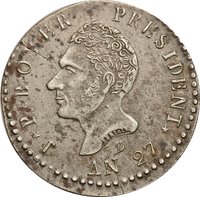
Recognizing this monetary anarchy as an impediment to national sovereignty and economic stability, President Boyer took decisive action in 1829. He commissioned the first official national coinage of the unified Republic, minted in England. These new coins, in denominations of 50, 25, 10, and 6 centimes, bore Boyer's portrait and were intended to replace the foreign mosaic in circulation. While this was a significant symbolic step toward financial independence, the new coinage was limited in quantity and did not immediately resolve the deep-seated scarcity, as the state's fiscal burdens continued to constrain a full monetary reform. Thus, 1829 stands as a pivotal year of attempted correction within a prolonged period of monetary difficulty.
Consequently, the Haitian economy operated on a de facto system where various foreign coins—primarily Spanish and Mexican silver pesos (pieces of eight), French francs, and British pounds—circulated alongside the dwindling supply of Haiti's own earlier coinage from the Henri Christophe era. The most common unit of account was the gourde, but it existed primarily as a notional value tied to the French franc. This system was highly inefficient and prone to confusion, as merchants and citizens had to constantly calculate values based on fluctuating exchange rates and the varying metallic content of worn foreign coins, which led to widespread fraud and hindered commerce.
Recognizing this monetary anarchy as an impediment to national sovereignty and economic stability, President Boyer took decisive action in 1829. He commissioned the first official national coinage of the unified Republic, minted in England. These new coins, in denominations of 50, 25, 10, and 6 centimes, bore Boyer's portrait and were intended to replace the foreign mosaic in circulation. While this was a significant symbolic step toward financial independence, the new coinage was limited in quantity and did not immediately resolve the deep-seated scarcity, as the state's fiscal burdens continued to constrain a full monetary reform. Thus, 1829 stands as a pivotal year of attempted correction within a prolonged period of monetary difficulty.
⭐ Rare