

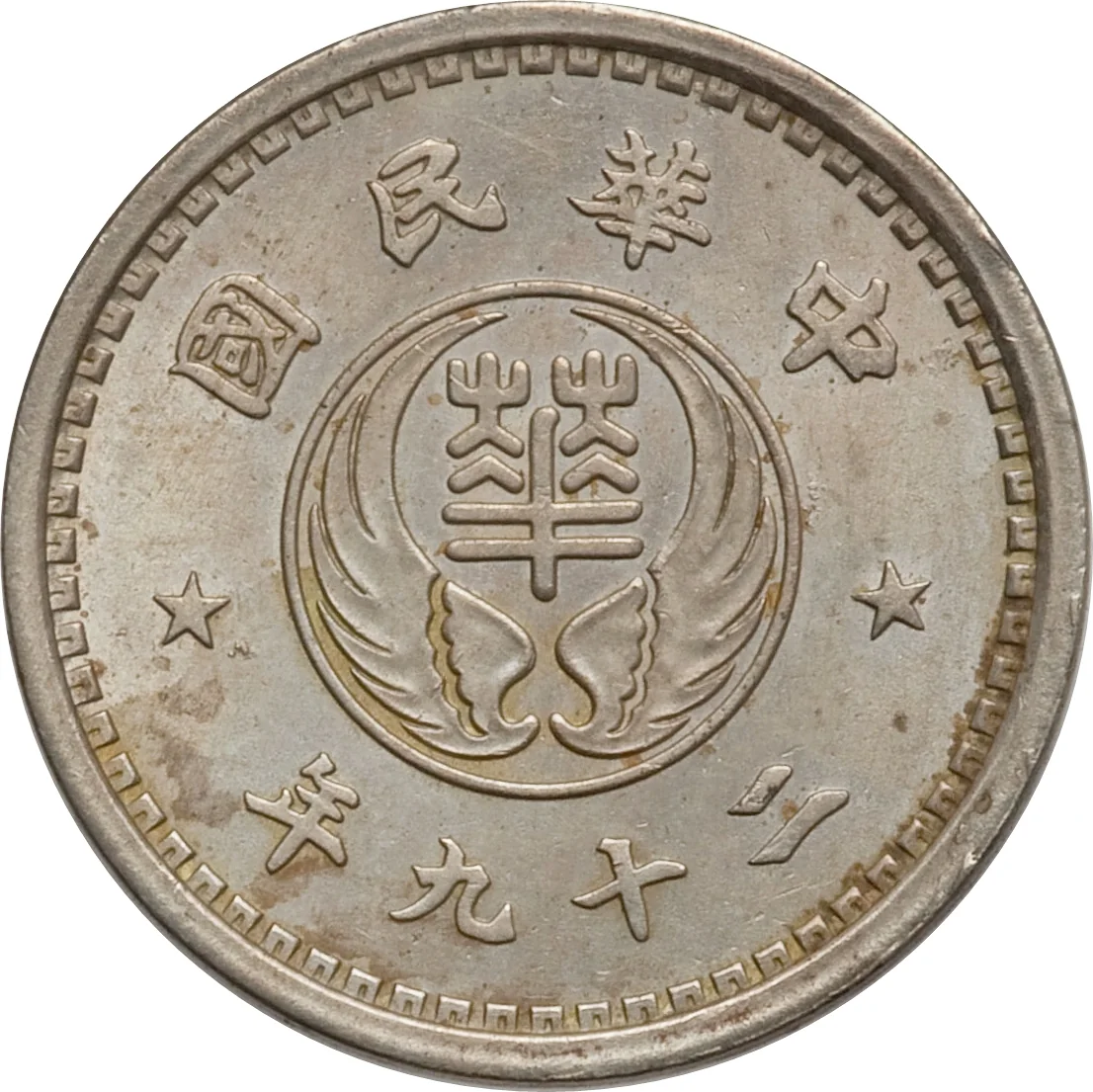
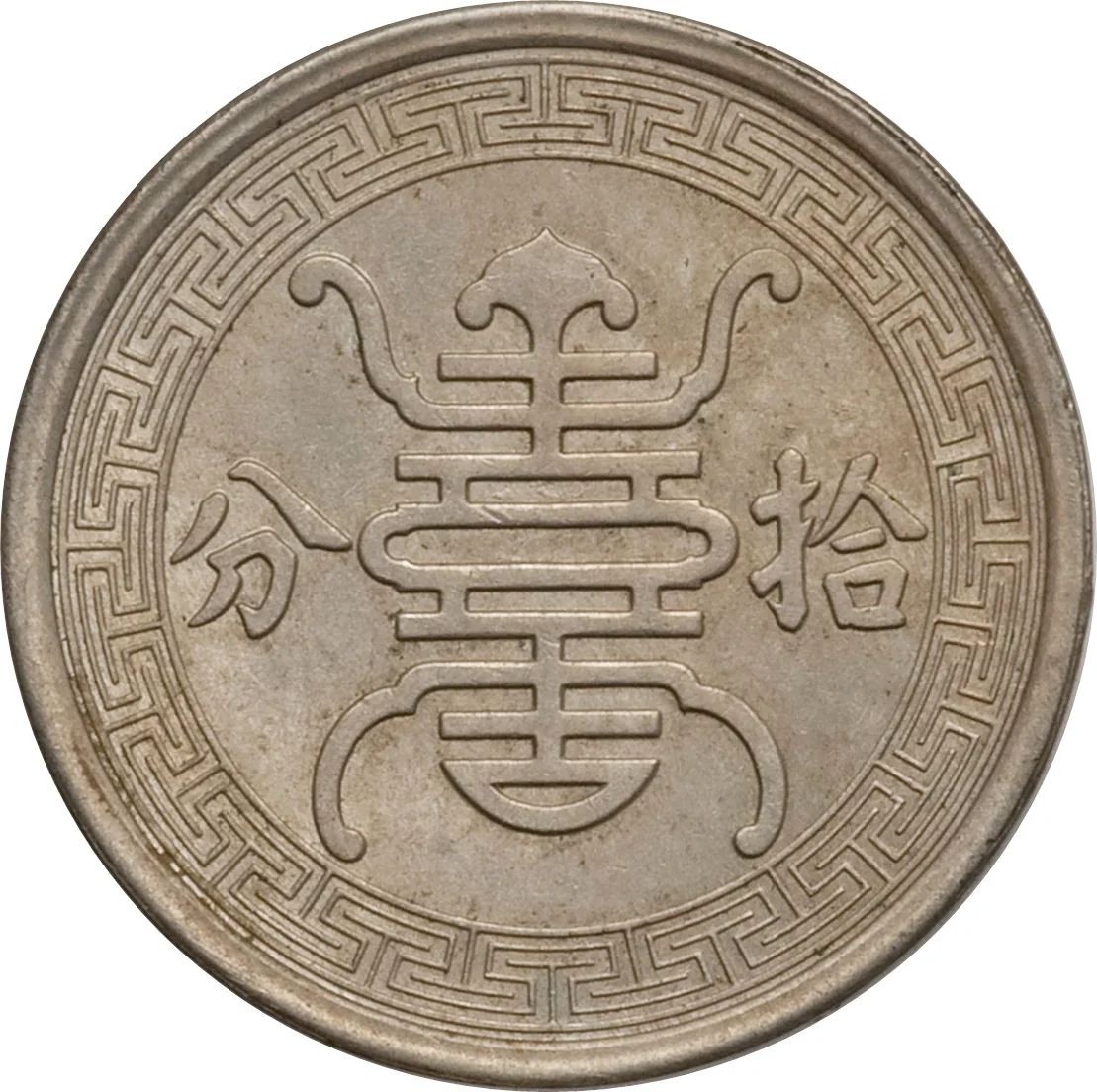
10 fen – Reformed Government of the Republic of China
Add to wishlist
China
Context
Year: 1940
Chinese republican Year:: 29
Country: China
Period:
(1938—1940)
Currency:
(1938—1941)
Demonetized: Yes
Material
Diameter: 18 mm
Weight: 3 g
Thickness: 1.5 mm
Shape: Round
Composition: Copper-nickel
Technique: Milled
Alignment: Medal alignment
flip
References
Y: #
Numista: #18349
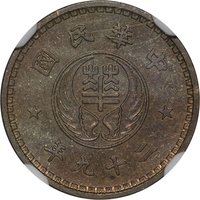
Obverse
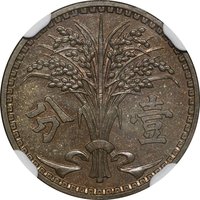
Reverse
Description:
Stylized Greek character splits value.
Inscription:
分 夀 拾
Translation:
Ten Fen Shou
Language: Chinese
Edge
Plain
Mints
| Name | Mark |
|---|---|
| Japan Mint | — |
Mintings
| Year | Mint Mark | Mintage | Quality | Collection |
|---|---|---|---|---|
| 1940 | — | — |
Historical background
The currency situation within the Reformed Government of the Republic of China (RGRC) in 1940 was a direct manifestation of its status as a Japanese puppet administration. Established in 1938 in Nanjing to rival Chiang Kai-shek's Nationalist government, the RGRC lacked genuine fiscal sovereignty. Its central financial instrument was the "Federal Reserve Bank of China" (FRB) note, introduced in 1939, which was not a true central bank but a Japanese-controlled entity designed to finance occupation and undermine Chinese nationalist currency.
The primary Japanese objective was to displace the legal tender of the Republic of China, the fabi issued by the National Government, and integrate North China's economy into the Yen Bloc. FRB notes were declared the sole legal tender in areas under RGRC and its northern counterpart, the Provisional Government, but they faced widespread public distrust and circulated at a forced discount. The currency was artificially linked to the Japanese yen, not backed by substantial reserves, and its value was maintained through coercive measures, including mandating its use for tax payments and threatening severe penalties for dealing in fabi.
Consequently, the monetary landscape was chaotic and multi-layered. While FRB notes circulated under duress, older nationalist fabi and local banknotes often continued in use, especially in private transactions, reflecting popular resistance. Furthermore, Japanese military scrip and the currency of the separate Wang Jingwei regime (which absorbed the RGRC in March 1940) added to the confusion. This fragmented system facilitated Japanese resource extraction and caused severe inflation, impoverishing the population and crippling the local economy, making the currency a stark symbol of occupation and economic exploitation.
The primary Japanese objective was to displace the legal tender of the Republic of China, the fabi issued by the National Government, and integrate North China's economy into the Yen Bloc. FRB notes were declared the sole legal tender in areas under RGRC and its northern counterpart, the Provisional Government, but they faced widespread public distrust and circulated at a forced discount. The currency was artificially linked to the Japanese yen, not backed by substantial reserves, and its value was maintained through coercive measures, including mandating its use for tax payments and threatening severe penalties for dealing in fabi.
Consequently, the monetary landscape was chaotic and multi-layered. While FRB notes circulated under duress, older nationalist fabi and local banknotes often continued in use, especially in private transactions, reflecting popular resistance. Furthermore, Japanese military scrip and the currency of the separate Wang Jingwei regime (which absorbed the RGRC in March 1940) added to the confusion. This fragmented system facilitated Japanese resource extraction and caused severe inflation, impoverishing the population and crippling the local economy, making the currency a stark symbol of occupation and economic exploitation.
🌱 Fairly Common