

1 trade dollar – Japan
Add to wishlist
Japan
Context
Material
References
Y: #
Numista: #18307
Value
Exchange value: 105⁄104 JPY
Bullion value: $59.92
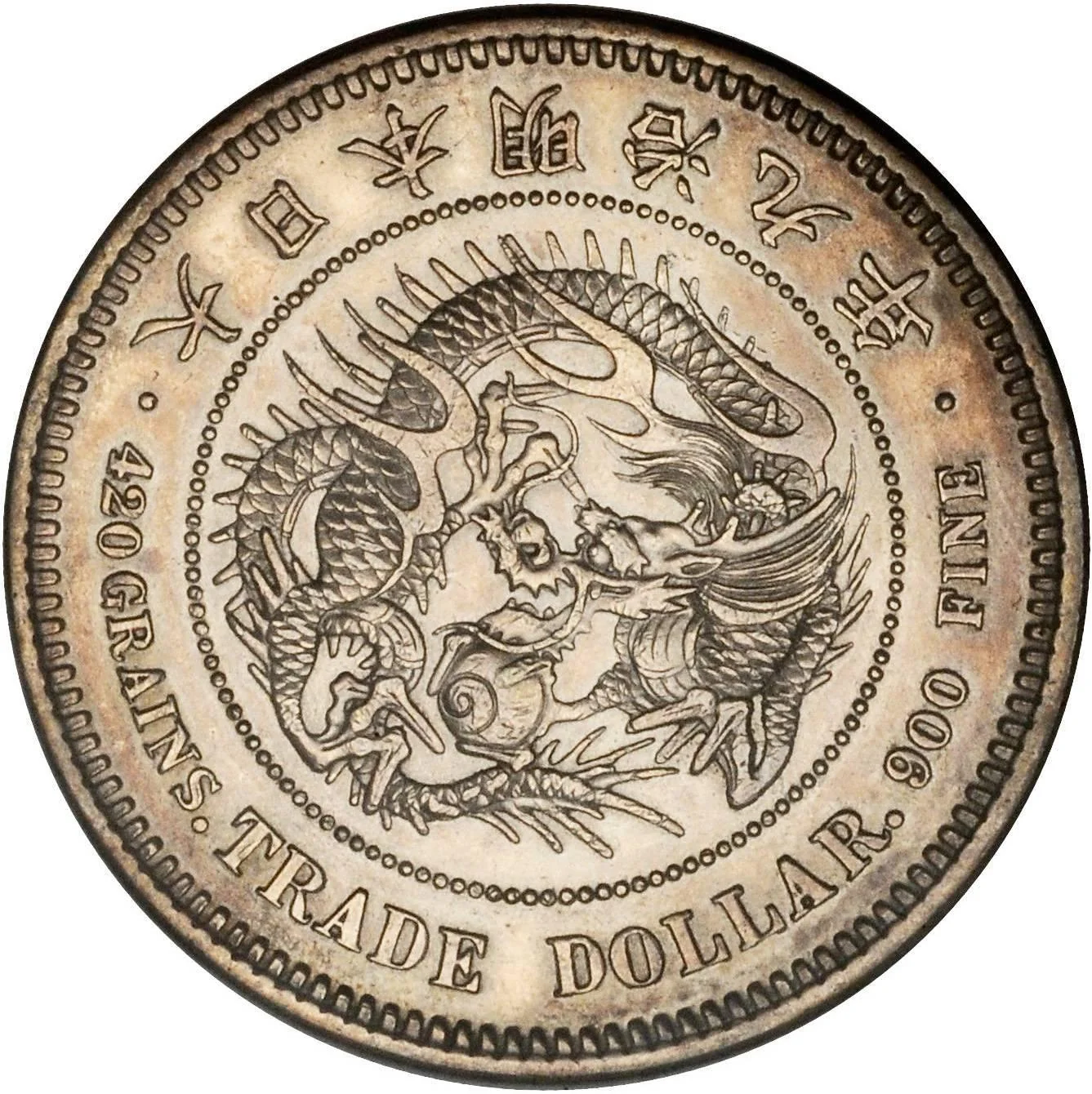
Obverse
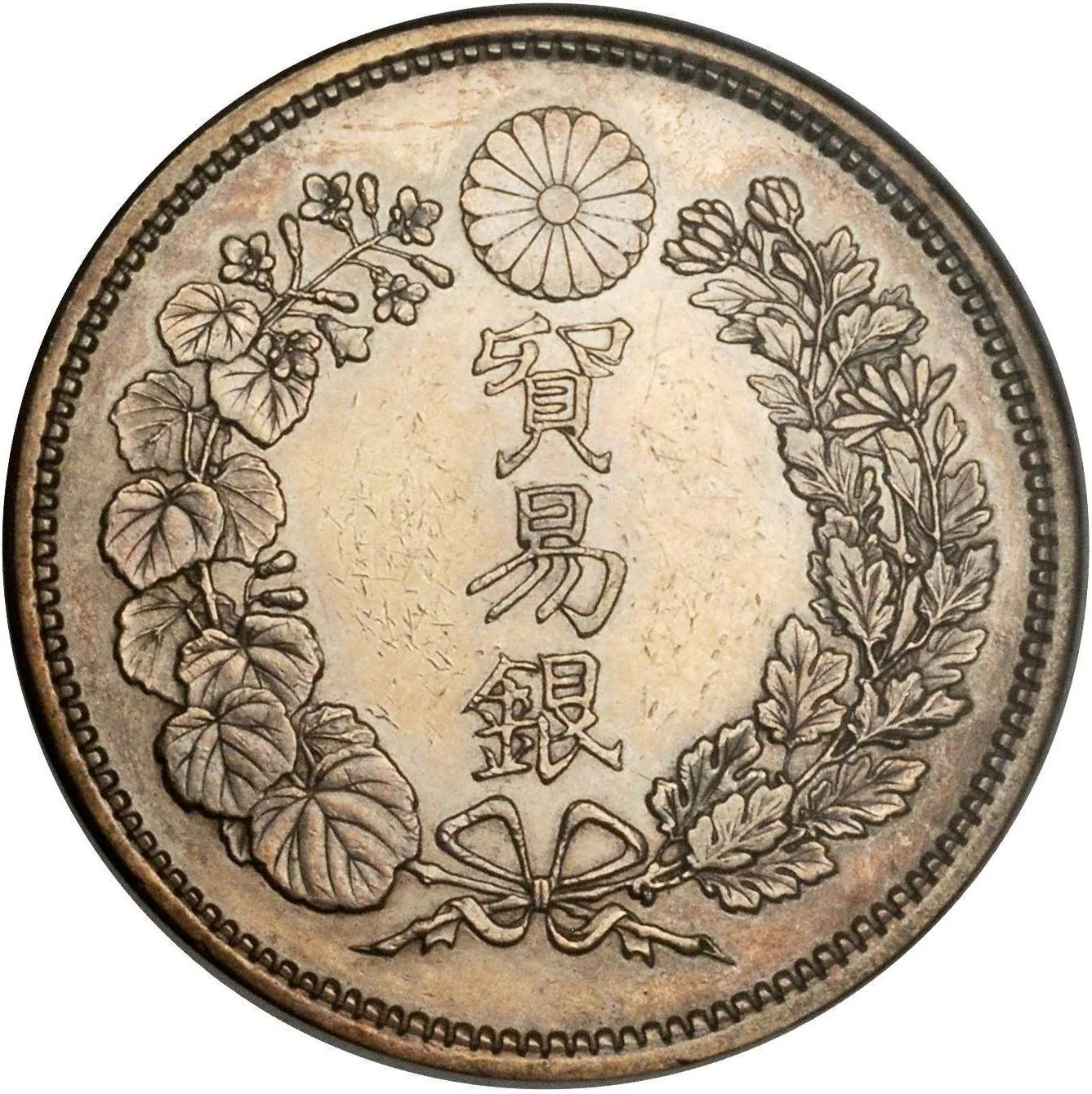
Reverse
Description:
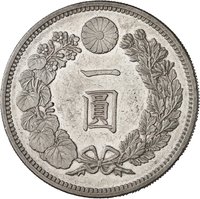
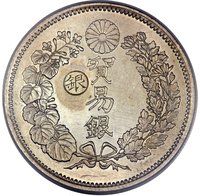
Chrysanthemum crest with paulownia and chrysanthemum branches flanking the value.
Inscription:
貿
易
銀
易
銀
Translation:
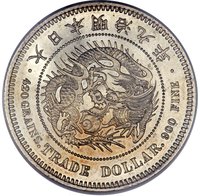
TRADE
DOLLAR
DOLLAR
Language: Chinese
Edge
Categories
| Mythology> Fantastic animal |
| Plants> Flower |
| Symbols> Coat of Arms |
| Symbol> Wreath |
Mints
| Name | Mark |
|---|---|
| Japan Mint | — |
Mintings
| Year | Mint Mark | Mintage | Quality | Collection |
|---|---|---|---|---|
| 1875 | — | 3,056,638 | ||
| 1876 | — | — | ||
| 1877 | — | — |
Historical background
In 1875, Japan was in the midst of the profound economic and social transformation of the Meiji Restoration. The government, having abolished the feudal han system, was aggressively centralizing power and modernizing the nation to compete with Western powers. A critical component of this project was the creation of a unified, stable, and modern currency system to replace the chaotic patchwork of clan notes, gold, silver, and copper coins that had circulated under the Tokugawa shogunate. The foundational law for this new system, the New Currency Act of 1871, had established the yen as the decimal-based unit, but by 1875 the transition was still fraught with difficulty and inflation.
The primary challenge was the over-issuance of non-convertible government notes, known as Dajōkansatsu, to finance modernization projects and suppress samurai rebellions like the Saga Rebellion (1874). This led to significant inflation, as the paper yen rapidly depreciated against silver and gold. Furthermore, the initial attempt to adopt a gold standard was undermined by the global price differentials that caused Japan's new gold coins to be exported and melted down for profit. Consequently, by 1875, Japan was effectively operating on a fluctuating silver standard for foreign trade while its domestic economy struggled with depreciating paper currency.
Recognizing the crisis, the Meiji government under Finance Minister Ōkuma Shigenobu was actively pursuing stabilization policies in 1875. Efforts included the consolidation of various paper issues and the establishment of a reserve fund to prepare for eventual convertibility. These steps were precursors to the more decisive actions of the following decade, which would lead to the establishment of the Bank of Japan in 1882 and the achievement of a stable convertible currency. Thus, 1875 represents a pivotal, turbulent year in which the framework of a modern monetary system was in place, but its stability and international credibility were yet to be secured.
The primary challenge was the over-issuance of non-convertible government notes, known as Dajōkansatsu, to finance modernization projects and suppress samurai rebellions like the Saga Rebellion (1874). This led to significant inflation, as the paper yen rapidly depreciated against silver and gold. Furthermore, the initial attempt to adopt a gold standard was undermined by the global price differentials that caused Japan's new gold coins to be exported and melted down for profit. Consequently, by 1875, Japan was effectively operating on a fluctuating silver standard for foreign trade while its domestic economy struggled with depreciating paper currency.
Recognizing the crisis, the Meiji government under Finance Minister Ōkuma Shigenobu was actively pursuing stabilization policies in 1875. Efforts included the consolidation of various paper issues and the establishment of a reserve fund to prepare for eventual convertibility. These steps were precursors to the more decisive actions of the following decade, which would lead to the establishment of the Bank of Japan in 1882 and the achievement of a stable convertible currency. Thus, 1875 represents a pivotal, turbulent year in which the framework of a modern monetary system was in place, but its stability and international credibility were yet to be secured.
⭐ Somewhat Rare