

100 yen – Japan
Add to wishlist
Circulating commemorative coins
Commemoration: 1964 Summer Olympics, Tokyo
Japan
Context
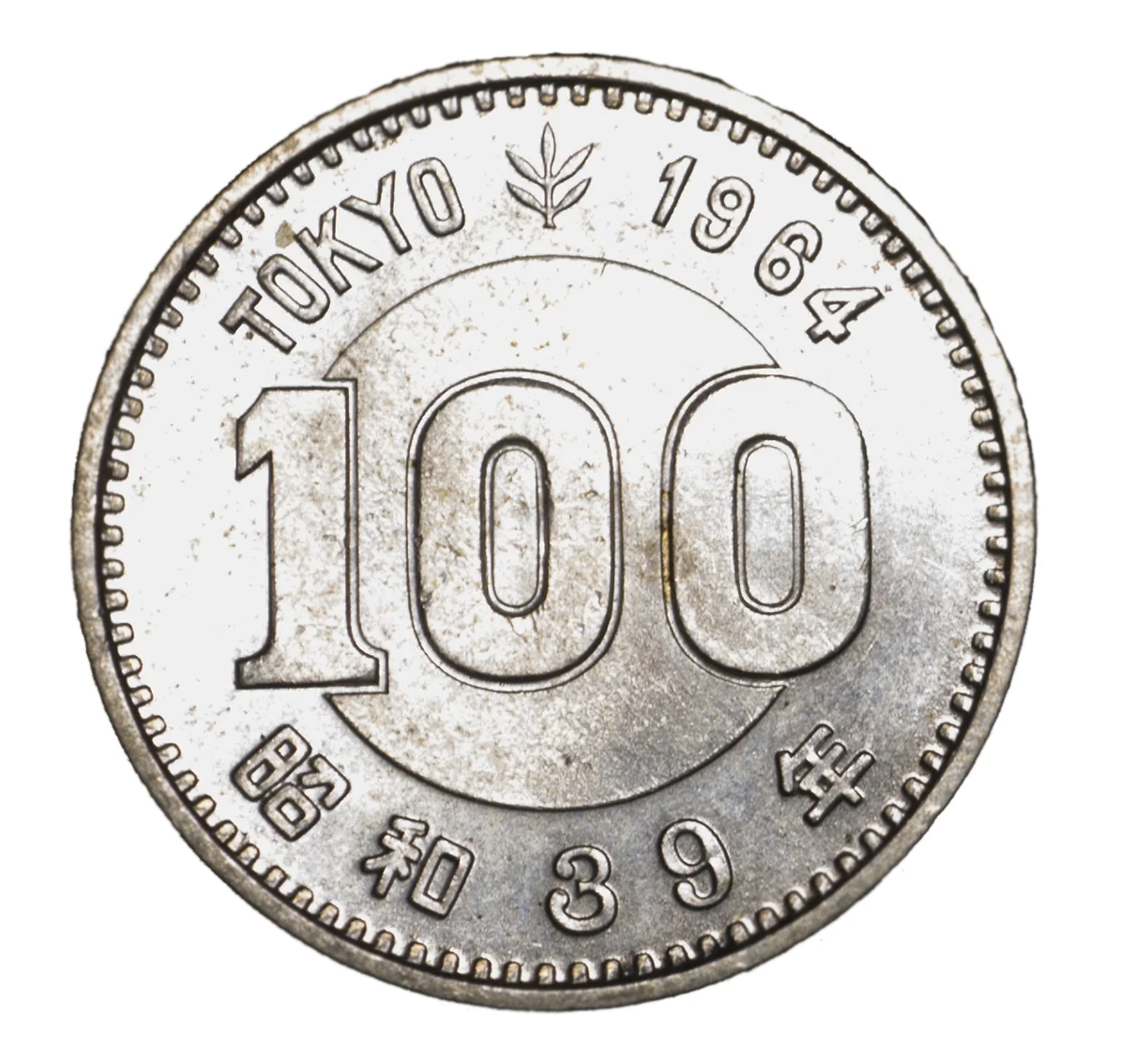
Year: 1964
Japanese - Shōwa era Year:: 39
Issuer: Japan
Ruler: Shōwa
Currency:
(since 1871)
Total mintage: 80,000,000
Material
References
Y: #
Numista: #9584
Value
Exchange value: 100 JPY
Bullion value: $7.22
Inflation-adjusted value: 502.63 JPY
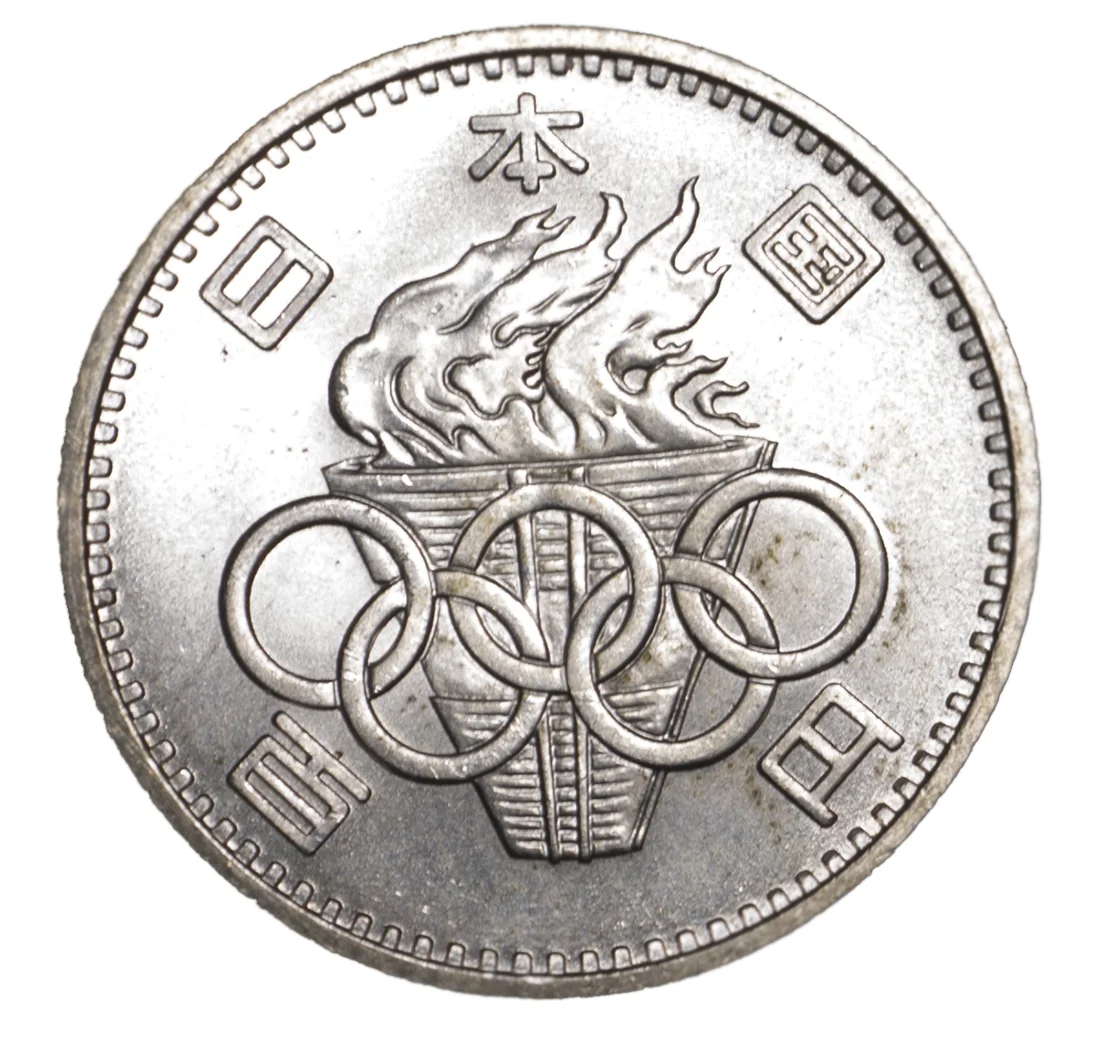
Obverse
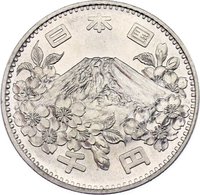
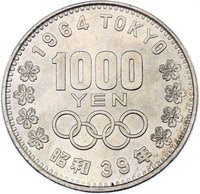
Description:
Olympic rings before the torch, authority atop, value beneath.
Inscription:
日 本 国
百 円
百 円
Translation:
Japan
One Hundred Yen
One Hundred Yen
Language: Japanese
Reverse
Edge
Reeded
Categories
| Sport> Summer Olympic Games |
Mints
| Name | Mark |
|---|---|
| Japan Mint | — |
Mintings
| Year | Mint Mark | Mintage | Quality | Collection |
|---|---|---|---|---|
| 1964 | — | 80,000,000 |
Historical background
In 1964, Japan's currency situation was characterized by stability and international integration, marking a significant departure from the post-war era of controls. The yen, fixed at 360 to the US dollar since 1949 under the Bretton Woods system, provided a bedrock of predictability that was crucial for the period of rapid economic growth known as the "Japanese Economic Miracle." This fixed exchange rate facilitated booming exports, particularly in industries like electronics and automobiles, by shielding businesses from foreign exchange risk and underpinning long-term investment plans. Domestically, the Bank of Japan maintained a policy of low interest rates to support industrial expansion, with inflation remaining modest and public confidence in the currency high.
The year itself was a symbolic turning point, as Japan hosted the Tokyo Olympics, an event that showcased its economic recovery and modernization to the world. In preparation, the government introduced a new series of yen banknotes in 1963, featuring updated designs and enhanced anti-counterfeiting measures, which were in full circulation by 1964. More importantly, that same year, Japan formally accepted Article VIII obligations from the International Monetary Fund (IMF), committing to current account convertibility. This meant that yen earned from trade could be freely exchanged into other currencies, a major step in Japan's reintegration into the global financial system and a testament to the strength of its balance of payments.
However, this stable façade also contained the seeds of future challenges. The fixed 360-yen rate, while beneficial for export-led growth, began to be viewed by some trading partners as undervalued, contributing to growing trade surpluses, particularly with the United States. While not yet a point of major crisis in 1964, these imbalances would intensify over the following decade, leading to international pressure for revaluation. Thus, 1964 represented the peak of the post-war fixed-rate regime—a system of stability that had fueled Japan's rise but would soon face pressures from the very economic success it helped to create.
The year itself was a symbolic turning point, as Japan hosted the Tokyo Olympics, an event that showcased its economic recovery and modernization to the world. In preparation, the government introduced a new series of yen banknotes in 1963, featuring updated designs and enhanced anti-counterfeiting measures, which were in full circulation by 1964. More importantly, that same year, Japan formally accepted Article VIII obligations from the International Monetary Fund (IMF), committing to current account convertibility. This meant that yen earned from trade could be freely exchanged into other currencies, a major step in Japan's reintegration into the global financial system and a testament to the strength of its balance of payments.
However, this stable façade also contained the seeds of future challenges. The fixed 360-yen rate, while beneficial for export-led growth, began to be viewed by some trading partners as undervalued, contributing to growing trade surpluses, particularly with the United States. While not yet a point of major crisis in 1964, these imbalances would intensify over the following decade, leading to international pressure for revaluation. Thus, 1964 represented the peak of the post-war fixed-rate regime—a system of stability that had fueled Japan's rise but would soon face pressures from the very economic success it helped to create.
🌱 Very Common