

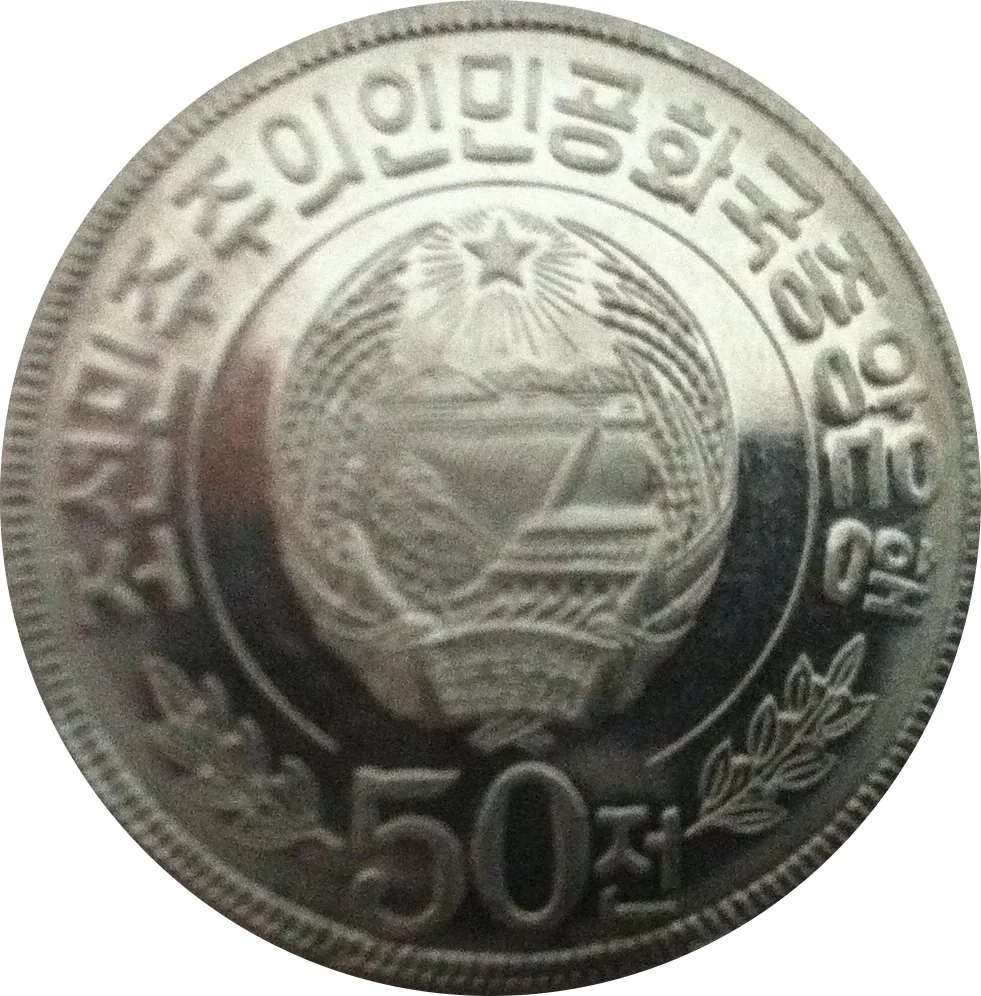
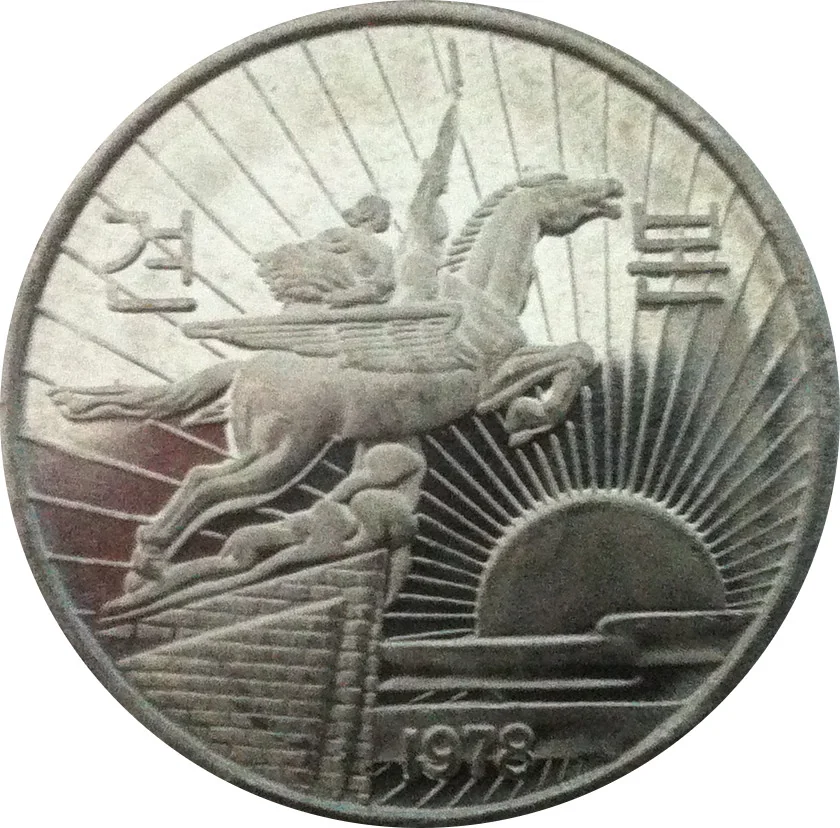
50 Chon (Peoples Republic of Korea) – North Korea
Non-circulating coins
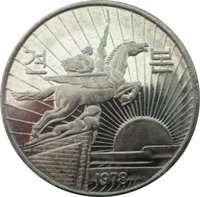
Commemoration: 30th Anniversary of Peoples Republic of Korea
North Korea
Context
Years: 1978–2010
Year: 1978
Issuer: North Korea 
Period:
(since 1948)
Currency:
(1959—2009)
Demonetized: Yes
Material
Diameter: 25 mm
Weight: 2.01 g
Thickness: 1.5 mm
Shape: Round
Composition: Copper-nickel
Technique: Milled
Alignment: Medal alignment
flip
References
Numista: #44543
Value
Exchange value: 0.50 KPW
Obverse
Reverse
Edge
Plain
Mintings
| Year | Mint Mark | Mintage | Quality | Collection |
|---|---|---|---|---|
| 1978 | — | — | Proof | |
| 2010 | — | — |
Historical background
In 1978, North Korea's currency situation was characterized by strict state control within a rigid command economy, yet it existed under the growing weight of systemic contradictions. Officially, the North Korean won (KPW) was a stable, non-convertible currency managed by the Central Bank of the Democratic People's Republic of Korea. Its value was set by government fiat, with an official exchange rate artificially pegged at a high value against foreign currencies like the US dollar and the Japanese yen. This official facade, however, masked an economy increasingly reliant on heavy foreign borrowing and subsidies from the Soviet Union and China to function, creating a hidden dependency that would later precipitate a crisis.
Domestically, the currency operated within a dual-track system that reflected the regime's ideological priorities. The majority of the population used won for rationed goods and services in the state distribution network, where prices were heavily subsidized and largely symbolic. Alongside this, a less formal but tolerated "farmers' market" system allowed for the limited exchange of surplus goods, providing a crucial outlet for basic necessities not covered by the state rations. Crucially, access to luxury or imported goods was restricted to a privileged elite through a separate network of "friendship stores" and special outlets that required not only won but also access to foreign "hard currency" or special certificates, creating a stark socio-economic divide.
The year 1978 itself was not marked by a specific monetary reform, but it fell within a period of accumulating pressure. The economy was beginning to strain under the cost of massive military spending, the grandiose architectural projects of the Juche ideology, and the inefficiencies of central planning. While the currency appeared stable on the surface, the foundations were weakening. The state's ability to maintain its comprehensive rationing system and the won's artificial value was becoming increasingly dependent on continuous foreign support, setting the stage for the severe economic deterioration and the traumatic currency reforms that would follow in the decades to come.
Domestically, the currency operated within a dual-track system that reflected the regime's ideological priorities. The majority of the population used won for rationed goods and services in the state distribution network, where prices were heavily subsidized and largely symbolic. Alongside this, a less formal but tolerated "farmers' market" system allowed for the limited exchange of surplus goods, providing a crucial outlet for basic necessities not covered by the state rations. Crucially, access to luxury or imported goods was restricted to a privileged elite through a separate network of "friendship stores" and special outlets that required not only won but also access to foreign "hard currency" or special certificates, creating a stark socio-economic divide.
The year 1978 itself was not marked by a specific monetary reform, but it fell within a period of accumulating pressure. The economy was beginning to strain under the cost of massive military spending, the grandiose architectural projects of the Juche ideology, and the inefficiencies of central planning. While the currency appeared stable on the surface, the foundations were weakening. The state's ability to maintain its comprehensive rationing system and the won's artificial value was becoming increasingly dependent on continuous foreign support, setting the stage for the severe economic deterioration and the traumatic currency reforms that would follow in the decades to come.
💎 Extremely Rare