

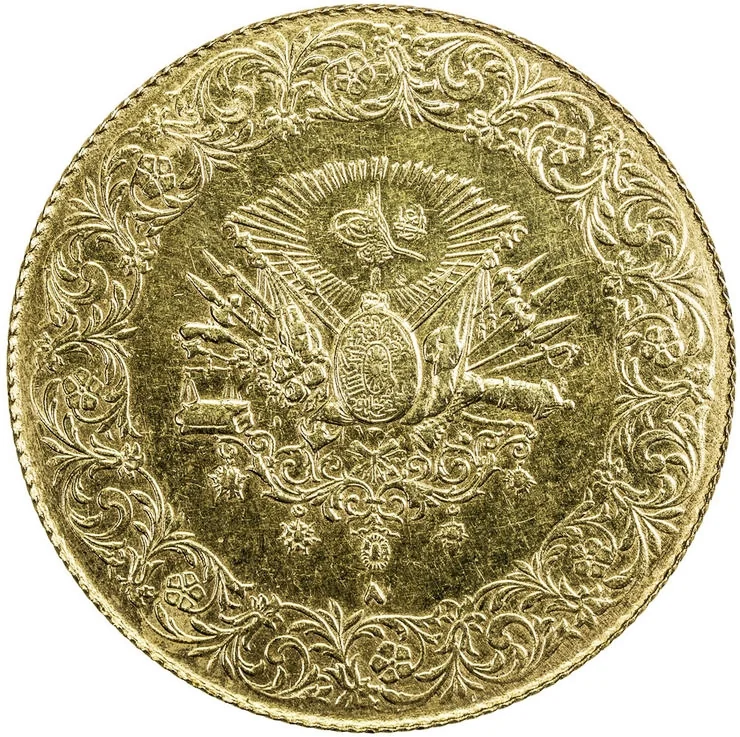
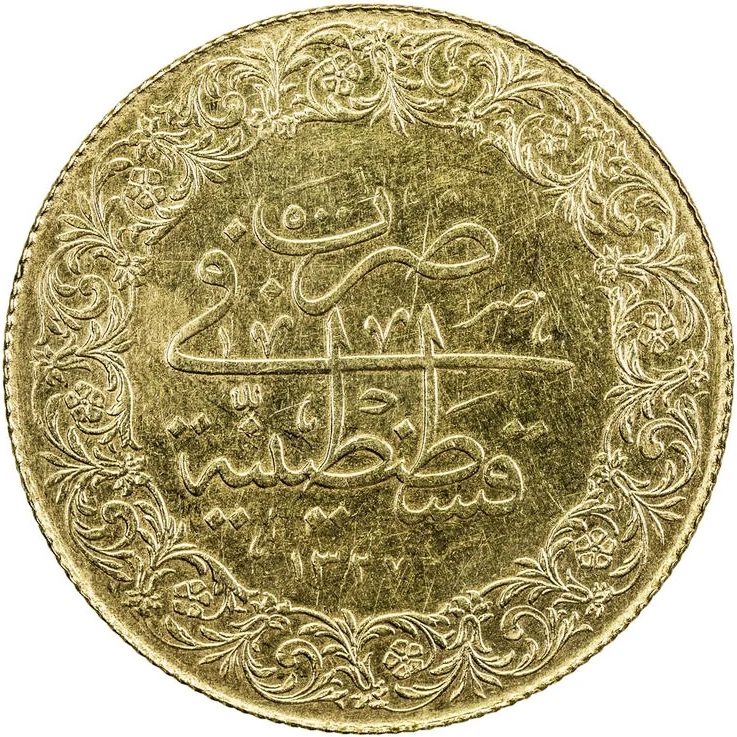
500 kurush – Ottoman Empire
Add to wishlist
Non-circulating coins
Commemoration: Monnaie de Luxe
Turkey
Context
Years: 1915–1916
Islamic (Hijri) Year:: 1327
Country: Turkey
Issuer: Ottoman Empire
Ruler: Mehmed V Reşâd
Currency:
(1844—1923)
Demonetized: Yes
Total mintage: 1,913
Material
References
KM: #
Numista: #145846
Value
Bullion value: $4951.92
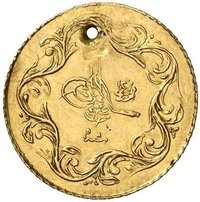
Obverse
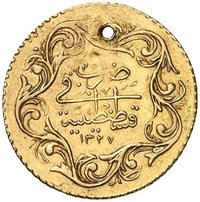
Reverse
Edge
Mints
| Name | Mark |
|---|---|
| Constantinople | — |
Mintings
| Year | Mint Mark | Mintage | Quality | Collection |
|---|---|---|---|---|
| 1915 | — | 295 | ||
| 1916 | — | 1,618 |
Historical background
By 1915, the Ottoman Empire's currency system was under severe strain due to the pressures of the First World War. The empire had long operated on a bimetallic system, but the cornerstone of its finances was the paper kaime, which was not backed by gold or silver reserves but by state promise. Entering the war in late 1914, the government, led by the Committee of Union and Progress (CUP), made the fateful decision to sever the Ottoman lira's link to gold, abandoning the gold standard. This move was intended to free the government to print money to finance massive wartime expenditures, but it immediately triggered a collapse in confidence and the beginning of rampant inflation.
The situation was exacerbated by the closure of the Ottoman Public Debt Administration, a European-controlled entity that had previously managed a significant portion of state revenues to service foreign debt. While this gave the CUP government temporary control over all revenue streams, it also cut off access to international capital markets. Consequently, the state relied almost entirely on the printing press, issuing vast quantities of kaime banknotes. This flood of paper money, chasing severely diminished goods in a blockaded and economically dislocated empire, led to a rapid devaluation. The currency's value plummeted, prices soared, and a large gap emerged between the official exchange rate and the black-market rate.
This monetary collapse had dire consequences on the home front. Soldiers' families struggled as their fixed salaries became nearly worthless, leading to widespread deprivation and social unrest. The government attempted coercive measures, including forced purchases of government bonds and price controls, but these failed to stabilize the currency. By 1915, the inflationary crisis was deeply entrenched, eroding living standards, undermining the war economy, and contributing to the severe hardships that would culminate in the empire's disintegration. The currency situation became both a symptom and a cause of the Ottoman state's fraying capacity to sustain itself.
The situation was exacerbated by the closure of the Ottoman Public Debt Administration, a European-controlled entity that had previously managed a significant portion of state revenues to service foreign debt. While this gave the CUP government temporary control over all revenue streams, it also cut off access to international capital markets. Consequently, the state relied almost entirely on the printing press, issuing vast quantities of kaime banknotes. This flood of paper money, chasing severely diminished goods in a blockaded and economically dislocated empire, led to a rapid devaluation. The currency's value plummeted, prices soared, and a large gap emerged between the official exchange rate and the black-market rate.
This monetary collapse had dire consequences on the home front. Soldiers' families struggled as their fixed salaries became nearly worthless, leading to widespread deprivation and social unrest. The government attempted coercive measures, including forced purchases of government bonds and price controls, but these failed to stabilize the currency. By 1915, the inflationary crisis was deeply entrenched, eroding living standards, undermining the war economy, and contributing to the severe hardships that would culminate in the empire's disintegration. The currency situation became both a symptom and a cause of the Ottoman state's fraying capacity to sustain itself.
✨ Legendary