

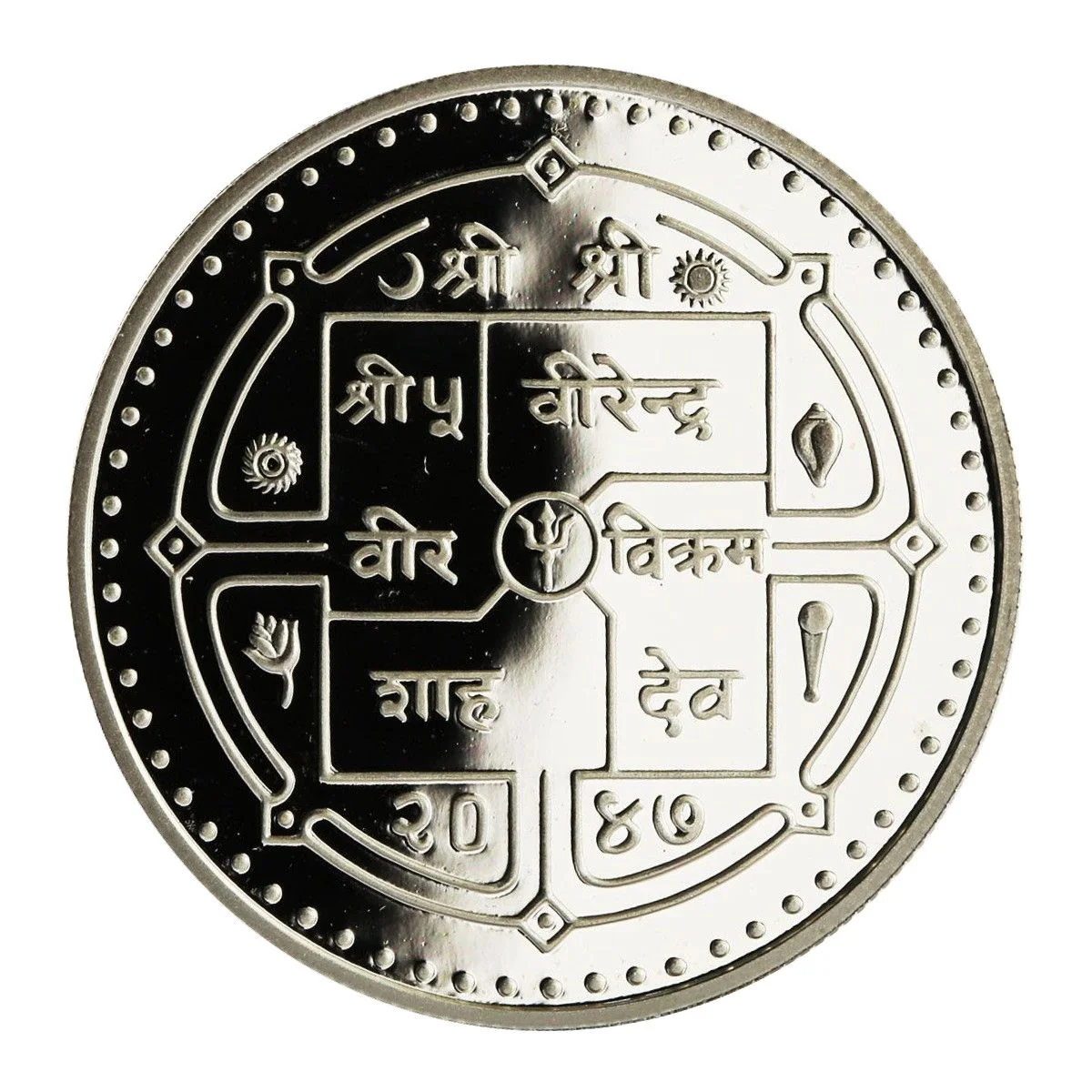
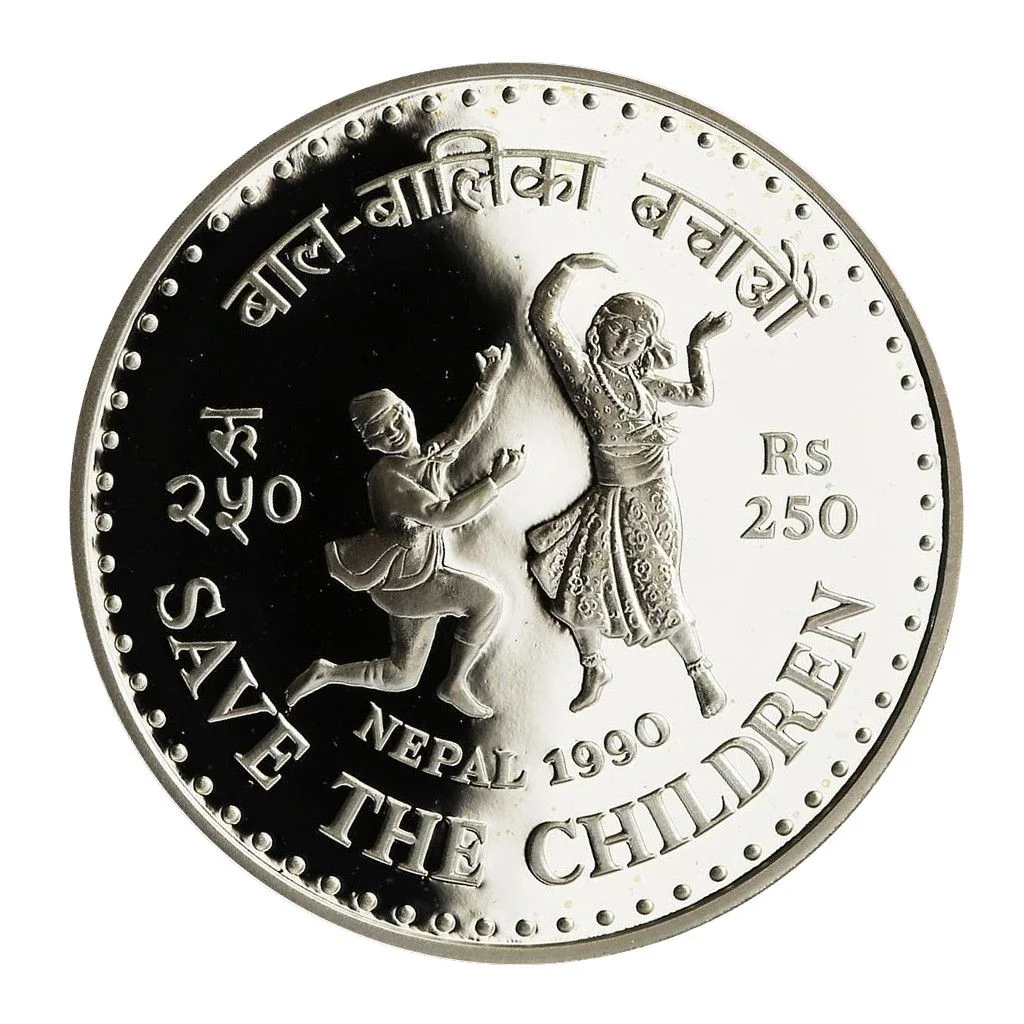
250 Rupees – Nepal
Non-circulating coins
Commemoration: Save the Children
Nepal
Context
Year: 1990
Vikram Samvat Year: 2047
Issuer: Nepal 
Ruler: Birendra Bir Bikram Shah
Currency:
(since 1932)
Material
References
KM: #Click to copy to clipboard1055
Numista: #97481
Value
Exchange value: 250 NPR
Bullion value: $52.16
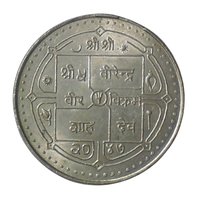
Obverse
Description:
Classic style
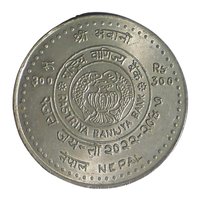
Reverse
Description:
Kids dancing
Edge
Reeded
Mintings
| Year | Mint Mark | Mintage | Quality | Collection |
|---|---|---|---|---|
| 1990 | — | — | Proof | |
| 1990 | — | — |
Historical background
In 1990, Nepal's currency situation was fundamentally defined by a fixed exchange rate regime pegged to the Indian rupee (INR), a system established in 1960. This meant the Nepalese rupee (NPR) had a stable, official exchange rate of NPR 1.60 = INR 1. This peg was crucial for Nepal's economy due to its overwhelming dependence on India for trade, investment, and transit, providing predictability for cross-border transactions and helping to control inflation by anchoring the currency to a larger, more stable economy.
However, this stability came with significant constraints. The fixed peg limited the Nepal Rastra Bank's (NRB) independent monetary policy, as interest rates and money supply often had to align with Indian economic conditions to maintain the parity. Furthermore, a thriving black market for foreign exchange, particularly for US dollars, operated alongside the official rate. This parallel market highlighted the pressures of limited foreign exchange reserves and the demands for hard currency that the official system could not fully meet, revealing underlying economic vulnerabilities.
The political context of 1990 was pivotal, as the Jana Andolan (People's Movement) restored multi-party democracy, ending the Panchayat system. This democratic transition set the stage for future economic liberalization, including currency reforms. While the fixed peg to the Indian rupee remained intact in the immediate aftermath, the new government and the central bank began to consider policies that would eventually lead to a more flexible and managed exchange rate system in the coming years, aiming to better reflect market realities and improve foreign reserve management.
However, this stability came with significant constraints. The fixed peg limited the Nepal Rastra Bank's (NRB) independent monetary policy, as interest rates and money supply often had to align with Indian economic conditions to maintain the parity. Furthermore, a thriving black market for foreign exchange, particularly for US dollars, operated alongside the official rate. This parallel market highlighted the pressures of limited foreign exchange reserves and the demands for hard currency that the official system could not fully meet, revealing underlying economic vulnerabilities.
The political context of 1990 was pivotal, as the Jana Andolan (People's Movement) restored multi-party democracy, ending the Panchayat system. This democratic transition set the stage for future economic liberalization, including currency reforms. While the fixed peg to the Indian rupee remained intact in the immediate aftermath, the new government and the central bank began to consider policies that would eventually lead to a more flexible and managed exchange rate system in the coming years, aiming to better reflect market realities and improve foreign reserve management.
✨ Legendary