

500 Tögrög – Mongolia
Non-circulating coins
Commemoration: Tibetan blue bear
Mongolia

Material
References
KM: #Click to copy to clipboard238
Numista: #115634
Value
Exchange value: 500 MNT
Bullion value: $52.58
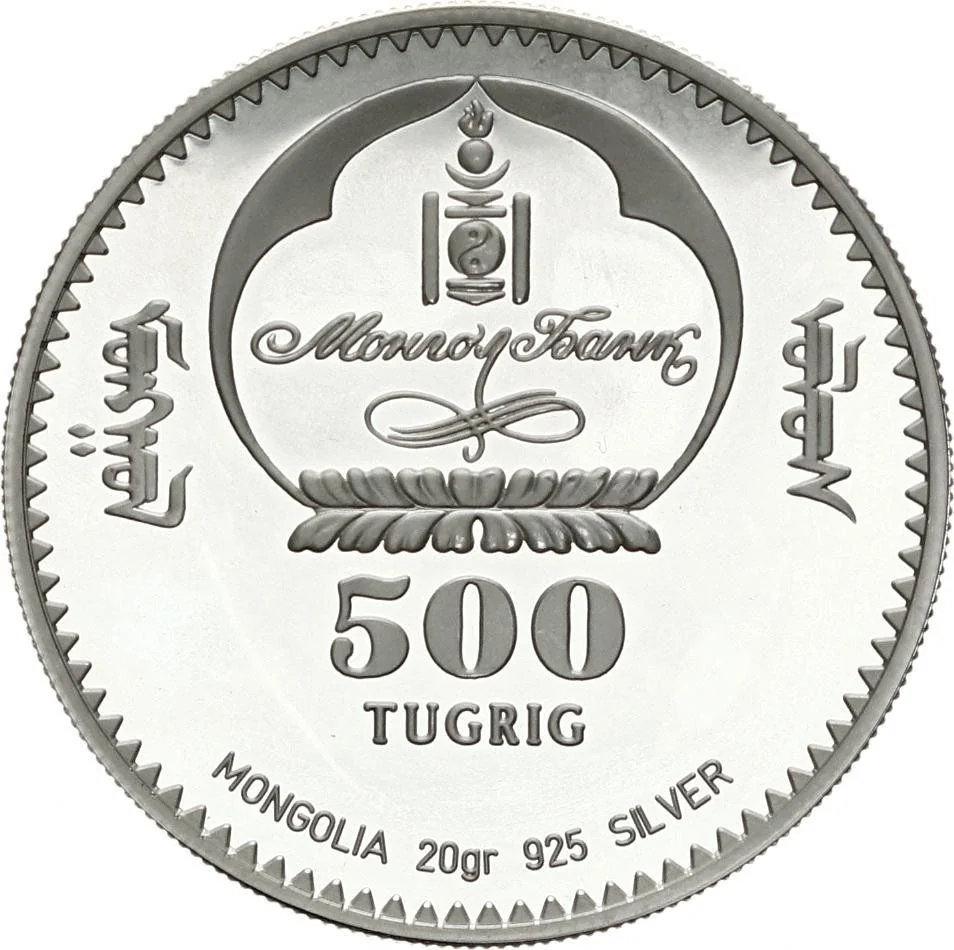
Obverse
Description:
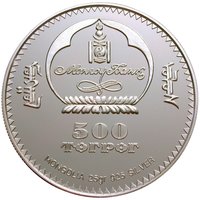
Bank emblem, value, and country above metallic composition.
Inscription:
MONGOLIA
Монгол Банк
ᠮᠤᠩᠭᠤᠯ ᠤᠯᠤᠰ
500
TӨГРӨГ
MONGOLIA 20gr 925 SILVER
Монгол Банк
ᠮᠤᠩᠭᠤᠯ ᠤᠯᠤᠰ
500
TӨГРӨГ
MONGOLIA 20gr 925 SILVER
Translation:
MONGOLIA
Mongol Bank
Mongolia
500
TÖGRÖG
MONGOLIA 20gr 925 SILVER
Mongol Bank
Mongolia
500
TÖGRÖG
MONGOLIA 20gr 925 SILVER
Languages: Classical Mongolian, Mongolian
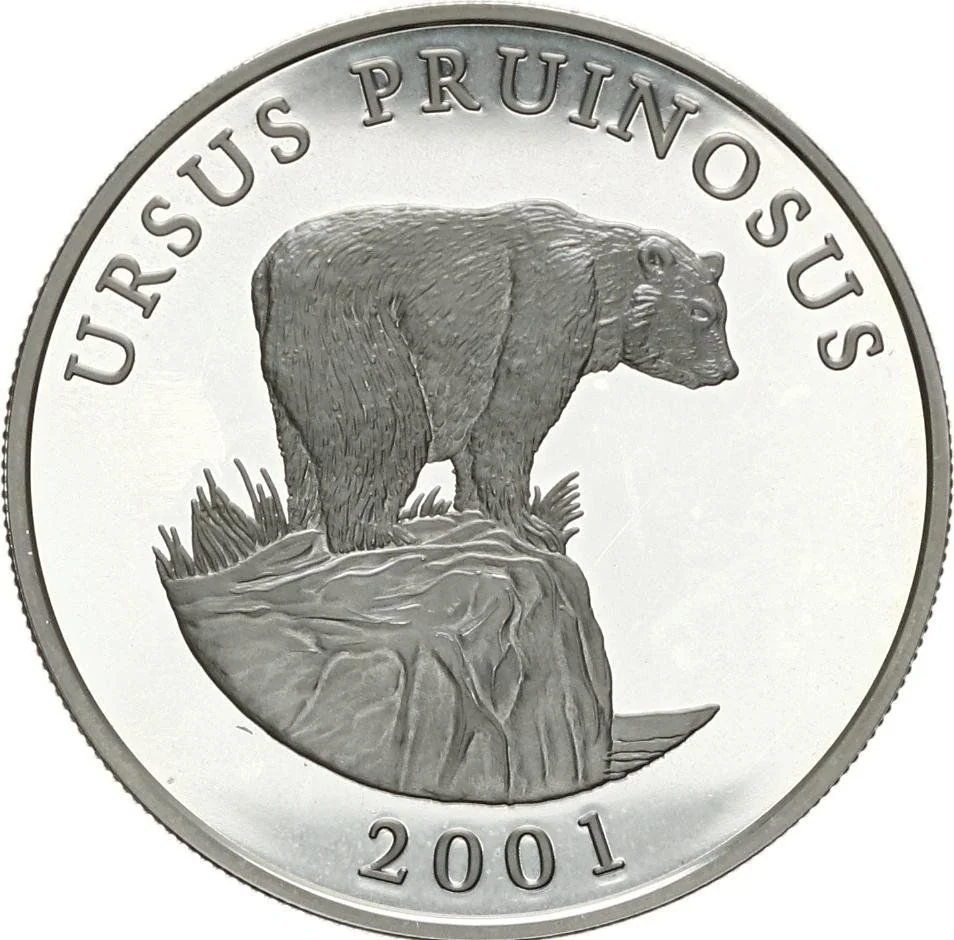
Reverse
Description:
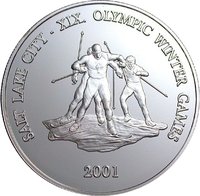
Bear on rock.
Inscription:
URSUS PRUINOSUS
2001
2001
Translation:
Frosty Bear
2001
2001
Language: Latin
Edge
Reeded
Mintings
| Year | Mint Mark | Mintage | Quality | Collection |
|---|---|---|---|---|
| 2001 | — | — | Proof |
Historical background
In 2001, Mongolia was navigating a fragile economic recovery following the tumultuous transition from a centrally planned to a market economy in the 1990s. The national currency, the tögrög (MNT), operated under a managed float, but its value was under persistent pressure. Key challenges included a high current account deficit, fueled by heavy reliance on imports of consumer goods and machinery, and a large fiscal deficit. The economy remained heavily dependent on the export of a narrow base of primary commodities, notably copper, cashmere, and gold, making the tögrög vulnerable to volatile global prices.
The banking sector, which had collapsed in the late 1990s, was still in a state of restructuring and weak capitalization. This limited credit availability and public confidence. Furthermore, the government's continued reliance on domestic financing from the Bank of Mongolia (the central bank) to cover budget shortfalls created persistent inflationary pressures. While inflation had been brought down from the hyperinflation of the early 1990s, it remained a concern, eroding purchasing power and creating uncertainty for both households and businesses.
Overall, the currency situation in 2001 was characterized by a cautious stability maintained by the central bank's interventions, but underlying structural weaknesses posed significant risks. The tögrög's value was largely propped up by IMF-led stabilization programs and foreign aid, which imposed strict fiscal and monetary conditions. The year represented a point of tentative equilibrium, but one that highlighted Mongolia's ongoing struggle to achieve sustainable macroeconomic stability and diversify its economy away from its vulnerable dependence on a few key export sectors.
The banking sector, which had collapsed in the late 1990s, was still in a state of restructuring and weak capitalization. This limited credit availability and public confidence. Furthermore, the government's continued reliance on domestic financing from the Bank of Mongolia (the central bank) to cover budget shortfalls created persistent inflationary pressures. While inflation had been brought down from the hyperinflation of the early 1990s, it remained a concern, eroding purchasing power and creating uncertainty for both households and businesses.
Overall, the currency situation in 2001 was characterized by a cautious stability maintained by the central bank's interventions, but underlying structural weaknesses posed significant risks. The tögrög's value was largely propped up by IMF-led stabilization programs and foreign aid, which imposed strict fiscal and monetary conditions. The year represented a point of tentative equilibrium, but one that highlighted Mongolia's ongoing struggle to achieve sustainable macroeconomic stability and diversify its economy away from its vulnerable dependence on a few key export sectors.

✨ Legendary