

50 Escudos (Discovery) – São Tomé and Príncipe
Circulating commemorative coins
Commemoration: 500th Anniversary of Discovery
Sao Tome and Principe
Context
Year: 1970
Country: Sao Tome and Principe 
Issuer: São Tomé and Príncipe
Period:
(1951—1975)
Currency:
(1914—1974)
Demonetized: Yes
Total mintage: 150,200
Material
References
KM: #Click to copy to clipboard21
Numista: #11996
Value
Bullion value: $33.49
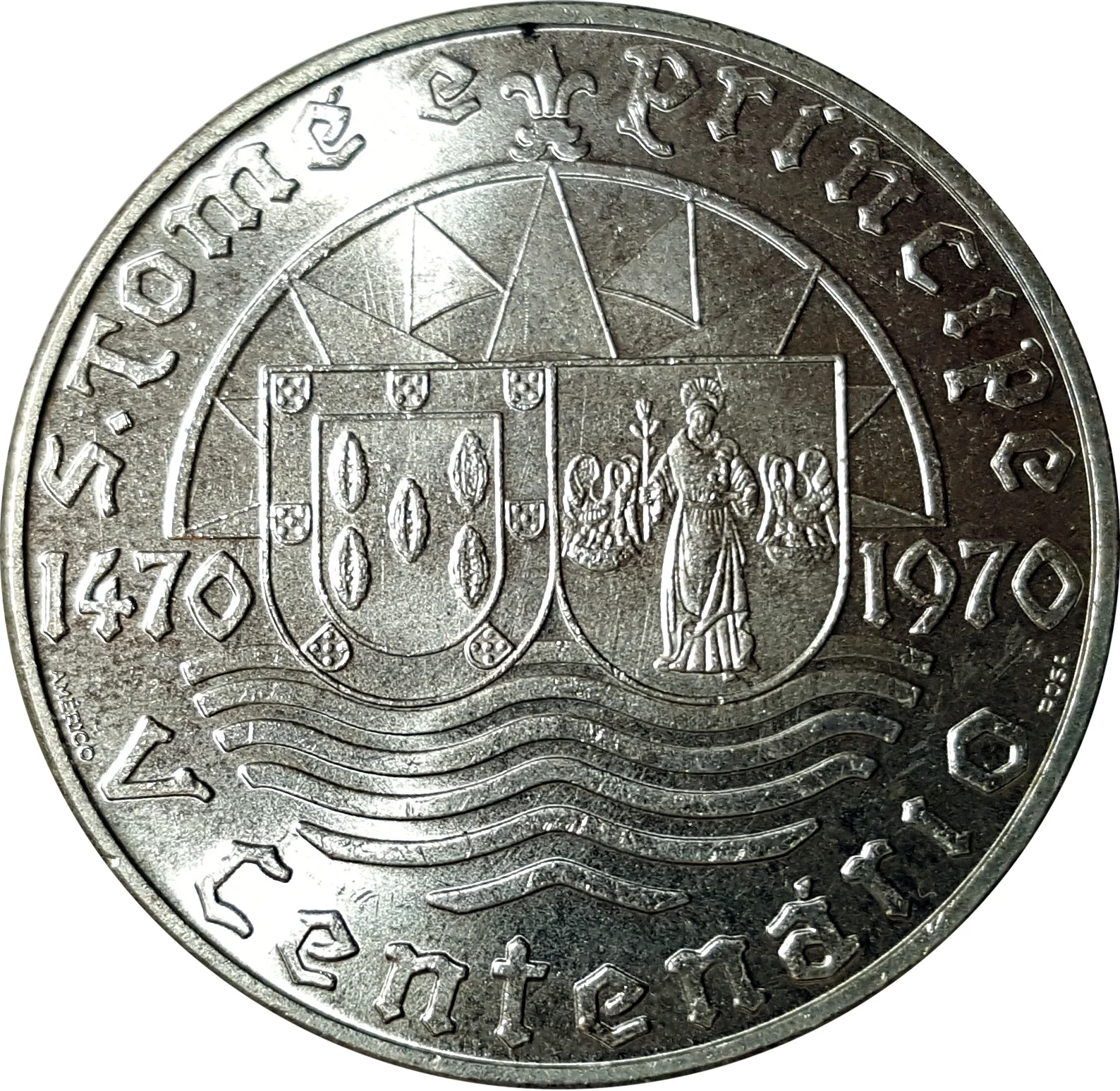
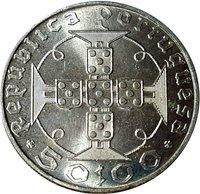
Obverse
Description:
Shielded dates, crowned star.
Inscription:
S. Tomé e Príncipe
1470 1970
V Centenário
1470 1970
V Centenário
Translation:
São Tomé and Príncipe
1470 1970
Fifth Centenary
1470 1970
Fifth Centenary
Script: Latin
Language: Portuguese
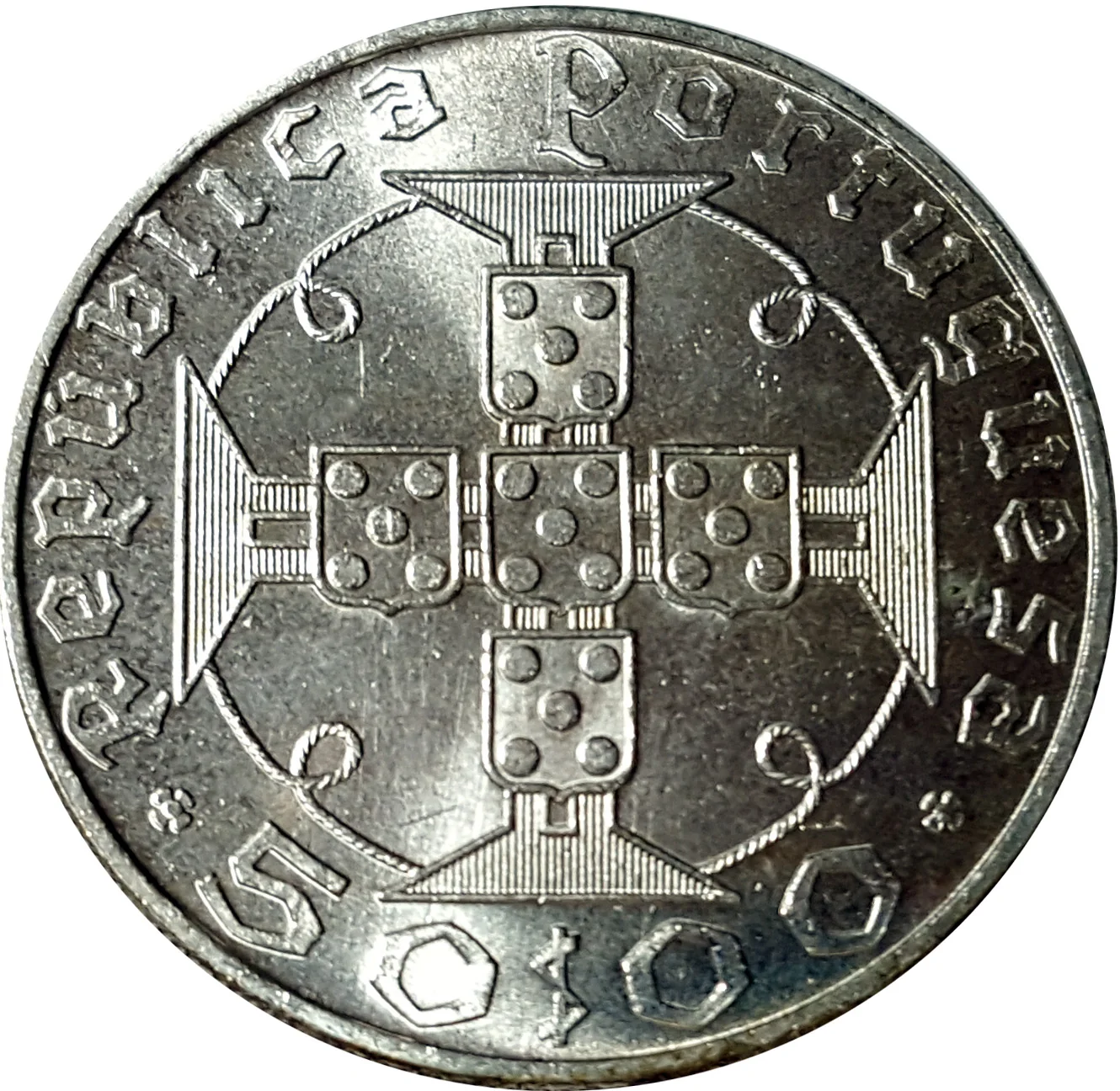
Reverse
Edge
Reeded
Categories
| Symbols> Coat of Arms |
| Symbol> Cross |
Mints
| Name | Mark |
|---|---|
| Imprensa Nacional - Casa da Moeda | — |
Mintings
| Year | Mint Mark | Mintage | Quality | Collection |
|---|---|---|---|---|
| 1970 | — | 150,000 | ||
| 1970 | — | 200 | Proof |
Historical background
In 1970, São Tomé and Príncipe, a Portuguese colony since the 15th century, operated under a currency system fully controlled by Portugal. The official currency was the São Tomé and Príncipe escudo (STPE), which was pegged at par with the Portuguese escudo (PTE). This arrangement meant the colony's monetary policy, money supply, and exchange rates were entirely dictated by Lisbon, with the Banco Nacional Ultramarino serving as the central issuing bank for the territory. The economy was overwhelmingly dominated by plantation agriculture, primarily cocoa, with currency flows tightly linked to the export of this commodity to Portugal.
The currency situation reflected the islands' role within Portugal's wider "Escudo Area" and its colonial economic framework. The escudo facilitated the extraction of value, as profits from the lucrative cocoa exports were repatriated to Portuguese owners and the metropolitan economy. Local use of currency was integrated into a system where the colony ran a trade surplus with Portugal but remained financially dependent, with limited autonomy or industrial development. The currency's stability was entirely derivative of Portugal's own economic management.
This monetary integration was a facet of the broader Portuguese Estado Novo regime's insistence on maintaining its overseas provinces, resisting the wave of decolonization sweeping Africa. However, by 1970, nationalist movements like the MLSTP were gaining traction. The fixed colonial currency system would persist until independence in 1975, when the new nation initially maintained the escudo before introducing the dobra in 1977, symbolizing its economic sovereignty.
The currency situation reflected the islands' role within Portugal's wider "Escudo Area" and its colonial economic framework. The escudo facilitated the extraction of value, as profits from the lucrative cocoa exports were repatriated to Portuguese owners and the metropolitan economy. Local use of currency was integrated into a system where the colony ran a trade surplus with Portugal but remained financially dependent, with limited autonomy or industrial development. The currency's stability was entirely derivative of Portugal's own economic management.
This monetary integration was a facet of the broader Portuguese Estado Novo regime's insistence on maintaining its overseas provinces, resisting the wave of decolonization sweeping Africa. However, by 1970, nationalist movements like the MLSTP were gaining traction. The fixed colonial currency system would persist until independence in 1975, when the new nation initially maintained the escudo before introducing the dobra in 1977, symbolizing its economic sovereignty.
🌱 Common